


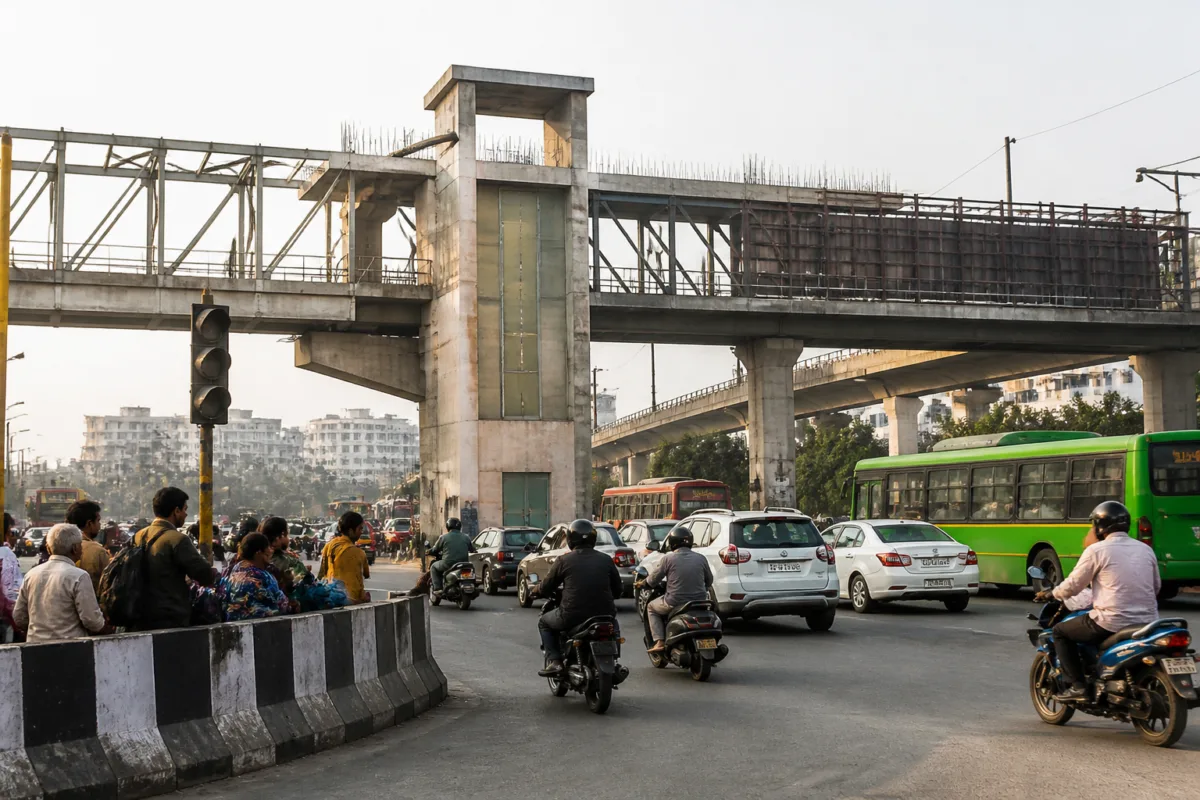
The Delhi Public Works Department (PWD) and traffic police are planning to make the GT Road between Dilshad Garden and Kashmere Gate ISBT signal-free, according to a report by Jagran. The proposal includes four U-turns near two signals in Dilshad Garden and a lift-equipped foot overbridge at Welcome.
The changes are intended to reduce stops on the main carriageway and improve traffic movement between Delhi and Ghaziabad. The report said around 100,000 to 150,000 vehicles use this route from Ghaziabad towards Delhi every day, with congestion particularly heavy during the morning and evening peaks.
Two signals—at Dilshad Garden and Chintamani Chowk—would be removed and replaced with four U-turns around the junctions. The arrangement is intended to allow vehicles to change direction without interrupting the main flow of traffic.
At Welcome, the existing pedestrian signal would be replaced by a foot overbridge. The PWD is expected to build the facility at a reported cost of ₹3.97 crore. The bridge will include a lift for older people and persons with disabilities, according to the report.
The affected corridor runs through a series of major structures and junctions, including the Shahdara flyover, Welcome flyover, Seelampur and Shastri Park flyovers before reaching Kashmere Gate. The report identified three points where vehicles currently stop: the two locations near Dilshad Garden and Chintamani Chowk, and the pedestrian crossing at Welcome.
Eastern Range Deputy Commissioner of Police (Traffic) Shweta Chauhan said efforts were continuing to improve traffic operations by making roads signal-free. The report cited earlier signal-free interventions on Vikas Marg, part of Swami Dayanand Marg and the stretch of Bharatendu Harishchandra Marg between Karkari Mor and Ram Vihar.
The report also noted that congestion continues on the Karkari Mor–Ghazipur section of Swami Dayanand Marg and that the road between Seemapuri and Swami Dayanand Hospital would require similar attention. These locations indicate that removing signals from one corridor may not by itself resolve wider bottlenecks across east and northeast Delhi.
The proposal could reduce signal-related queues on the GT Road, but its effect will depend on how the U-turns accommodate turning traffic and how pedestrians access the Welcome foot overbridge. The report did not specify a construction or implementation timeline for the proposed changes.

