


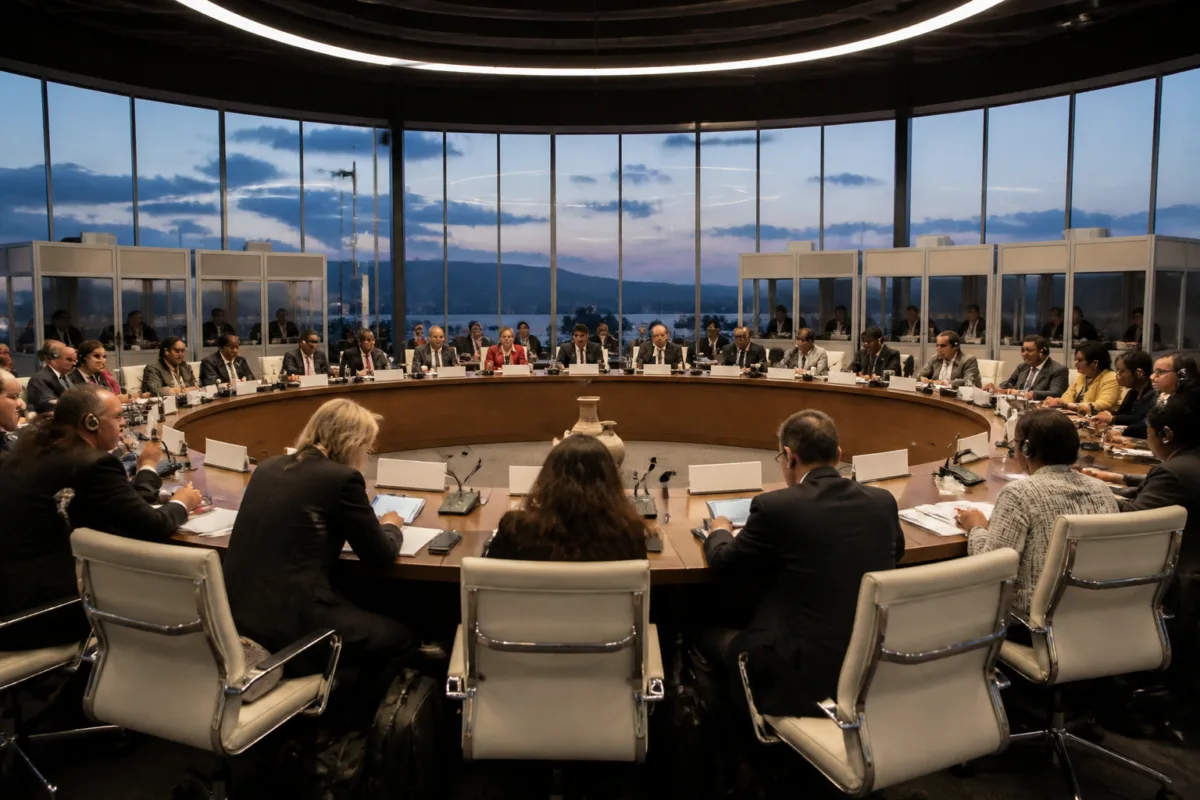
The collapse of the COP31 climate summit after more than 49 hours of overtime has deepened uncertainty over the international framework for cutting fossil-fuel use, with potential consequences for the long-term planning of cities, buildings and infrastructure.
The UN climate summit in Antalya, Turkey, ended on Sunday without agreement on a central cover decision. According to an AFP report published by Deccan Chronicle, negotiations broke down over whether the final text should explicitly call for phasing out coal, oil and gas.
UN Secretary-General Antonio Guterres expressed “very profound frustration” after governments failed to reach an outcome that matched the urgency of the climate crisis. COP31 negotiations chair Chris Bowen, Australia’s climate minister, said he had been unable to bridge what he described as “unbridgeable red lines” among nearly 200 countries.
The summit was chaired by COP31 President and Turkish Environment Minister Murat Kurum. It had been due to end two days earlier, but discussions continued as countries attempted to agree on a common political message. The failure recalled the breakdown of the Copenhagen summit in 2009 and prompted fresh questions about the effectiveness of the COP process.
The disagreement centred on fossil fuels. The European Union pressed for a clearer reference to a transition away from coal, oil and gas, while oil-producing countries opposed language on phasing them out. Ireland’s climate minister, Darragh O’Brien, said his country would not support a decision that omitted fossil fuels, which he called the main driver of climate change. Panama, Vanuatu and the Marshall Islands also objected to the proposed outcome.
The co-hosts, Turkey and Australia, reportedly attempted to secure compromise through a veiled reference to fossil fuels and a proposed global goal to electrify the economy. The electrification proposal was also abandoned along with the wider Antalya Pact. The final discussions additionally faced criticism over a call to expand carbon capture, a technology backed by the fossil-fuel industry and described by the report as costly.
For urban governments, the significance of the breakdown lies in the uncertainty it creates around the wider direction of energy and emissions policy. Cities are major sites of electricity demand, construction activity, transport use and building operations. International decisions on fossil fuels and electrification can influence the policy environment in which public authorities plan energy systems, transport networks and climate-resilient infrastructure. The report does not identify specific city projects or national implementation measures, but it shows that the diplomatic agreement supporting such action remains contested.
The summit also exposed a continuing divide between major polluters and vulnerable countries. Developing nations sought a climate-finance target of $120 billion, but that figure disappeared from the failed deal. The report said smaller nations, including island states, continued to press for stronger action while facing disproportionate exposure to climate impacts.
The negotiations were further strained by disputes over climate science and the role of the Intergovernmental Panel on Climate Change. UK climate negotiator Kate Hughes said the proposed text moved backwards on science and represented a lowest-common-denominator position rather than stronger collective ambition. UN climate chief Simon Stiell warned that the world could not afford a repeat of the outcome.
Countries are now pursuing some climate initiatives outside the formal COP process. Around 60 countries joined a conference in April focused on phasing out fossil fuels, while several nations announced individual plans to move away from coal, oil and gas during COP31. Those efforts may sustain momentum, but the failed summit leaves the broader multilateral process without the unified political statement its organisers had sought.
The outcome also leaves unresolved how quickly governments will align energy, transport and urban development decisions with the Paris Agreement’s 1.5-degree Celsius objective. The AFP report said scientists expect that threshold to be exceeded within a few years if emissions-cutting goals continue to fall short. For cities, the immediate consequence is not a new binding rule but a more fragmented policy landscape in which long-term climate and infrastructure planning may depend increasingly on national and local action rather than a single global agreement.

