


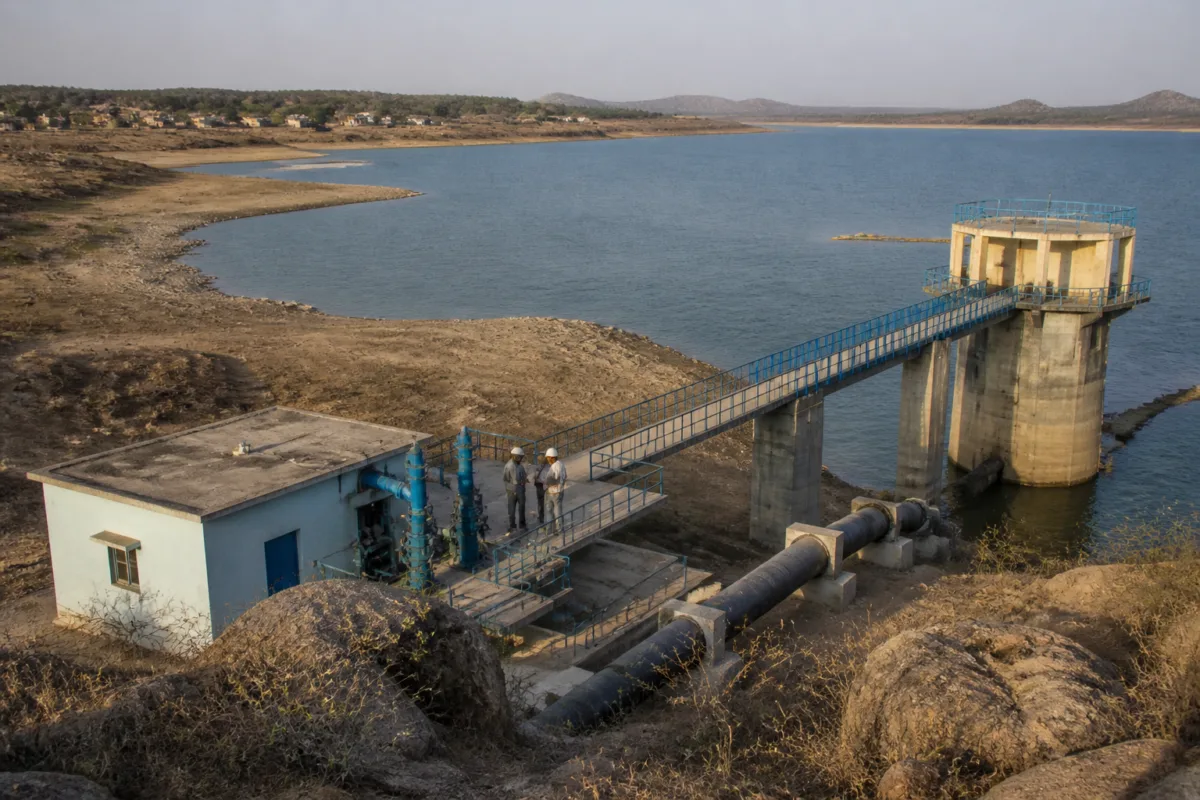
Telangana Chief Minister A. Revanth Reddy said on Sunday that water available in the state’s projects would be reserved strictly for drinking purposes over the next eight months, amid concerns over shortages linked to deficit rainfall.
Addressing the Telangana Pradesh Congress Committee Political Affairs Committee meeting at Gandhi Bhavan in Hyderabad, Reddy said the state was taking steps to prevent a drinking water shortage. He also said the government was maintaining uninterrupted power supply to protect standing crops during a period when monsoon-season demand was peaking at 20,000 MW, according to Deccan Chronicle.
Reddy attributed the agrarian distress to deficit rainfall under El Niño conditions and sought ₹30,000 crore in financial assistance from the Union government. He advised farmers to cultivate only dry crops and said Telangana faced no foodgrain crisis.
The drinking-water direction could affect how water stored in state projects is allocated in the coming months, with supplies prioritised for domestic use rather than other demands. The report did not identify the specific reservoirs, districts or urban water systems covered by the announcement, nor did it provide details of an operating plan for implementing the reservation.
Reddy also said Telangana had become the first state in a century to conduct a caste survey. The committee adopted a resolution seeking the inclusion of an Other Backward Classes enumeration in the 2027 Population Census, and Reddy advised TPCC president Mahesh Kumar Goud to write to Prime Minister Narendra Modi.
The Chief Minister further alleged that electoral-roll revisions could disenfranchise vulnerable groups, including Dalits, Adivasis, tribal communities and women. Those figures and allegations were presented at the political meeting and were not independently verified in the report.
The immediate public-interest measure outlined at the meeting is the planned reservation of available project water for drinking needs over the next eight months. Further details on implementation, monitoring and district-level distribution were not provided.

