


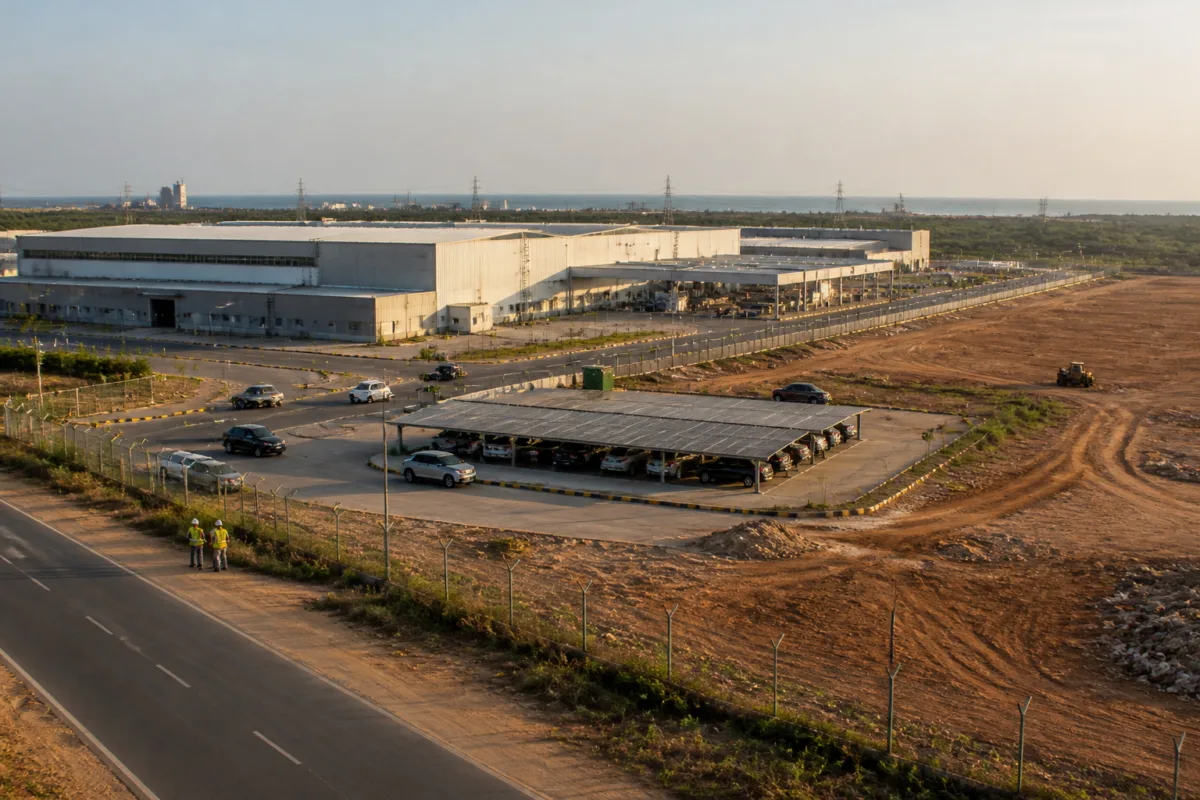
VinFast plans to increase annual production capacity at its electric-vehicle plant in Thoothukudi, Tamil Nadu, from 50,000 vehicles to as much as 1.5 lakh, while delaying its entry into India’s electric-bus market, according to Tapan Ghosh, CEO of VinFast Asia.
The company said it could initially raise capacity to 1 lakh vehicles and later expand to 1.5 lakh, depending on demand. Ghosh did not provide a timeframe for the full expansion. He said the first increase would be completed soon, while speaking to reporters on the sidelines of VinFast’s V-Creator All Star Summit in Nha Trang, Vietnam, held from November 16 to 19.
The Thoothukudi facility is spread over about 450 acres and currently has annual capacity for 50,000 four-wheelers. VinFast has already invested $500 million in the plant and has committed to investing $2 billion in Tamil Nadu over several years. The commitment covers its four-wheeler and two-wheeler businesses, including products and capacity expansion, the company said.
VinFast has also signed a memorandum of understanding with the Tamil Nadu government for another 500 acres. A separate production line for two-wheelers is under development, with the company’s overall investment commitment covering both businesses. The available details do not specify when the additional land would be developed or when the proposed production increases would become operational.
The planned expansion follows an increase in the company’s reported retail registrations in India. Ghosh said monthly registrations had risen from about 300 units when retail sales began in September last year to between 2,500 and 3,000 units now, citing Vahan data. VinFast currently sells the VF6 and VF7 SUVs, the seven-seater MPV7 and the Limo Green model for commercial fleet operators. It plans to introduce two more products next year, he said.
The company has completed 77 showrooms and expects to reach 80 by the end of the calendar year. It also has more than 120 workshops. Ghosh said VinFast would focus on expanding the network as well as improving showroom productivity.
Localisation at the plant is currently about 15 per cent. VinFast said it was working with suppliers to increase local content as production volumes rise and its vendor base develops. The company is also evaluating exports from India, initially targeting right-hand-drive markets, but said it would first address domestic demand and improve localisation.
For India, VinFast has modified its global products through suspension tuning, air-conditioning changes for extreme weather conditions and alterations to battery thermal management. The company offers guaranteed residual values of 75 per cent after two years and 55 per cent after five years, according to Ghosh. Battery warranties range from eight to 10 years, depending on the model, while vehicles receive three years of maintenance-free service.
VinFast is not proceeding with its electric-bus plans for now. Ghosh said the company did not want to enter too many product segments simultaneously and would focus on passenger four-wheelers and two-wheelers before considering buses at a later stage. The decision leaves the company’s near-term Tamil Nadu manufacturing strategy centred on private vehicles, two-wheelers, supplier development and potential future exports.

