


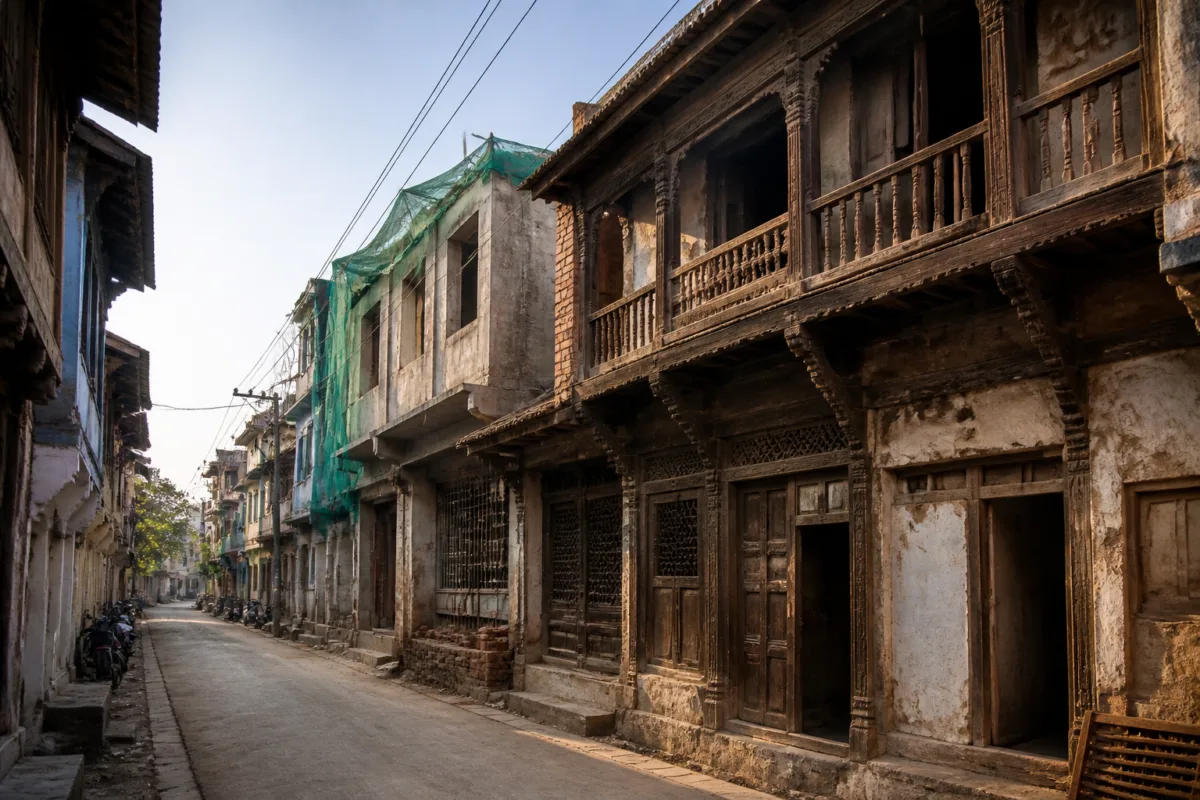
Ahmedabad’s historic pol neighbourhoods are facing deterioration and the loss of old buildings, according to a report by Gujarat Samachar, which cited figures from a 2019 survey and members of the Shreshtha Khadia Abhiyan.
The report said the walled city contains roughly 2,500 heritage properties, most of them residential, and that about 30% are in a severely dilapidated condition. It also said that a 2019 survey of 489 heritage properties found that 38 houses had been completely demolished, 11 properties had become open plots and around 50 old buildings had been replaced by new construction.
Taken together, these figures indicate that about 100 properties in the survey group have either disappeared or lost their original built form. The report attributed this assessment to members of the local campaign. The figures refer to a survey of 489 properties, while the report also uses an approximate figure of 500 in describing the wider situation.
The reported decline has implications beyond individual buildings. Ahmedabad’s pols are compact residential neighbourhoods known for their historic houses, shared spaces and distinctive urban form. The replacement of older structures with new buildings can therefore affect not only heritage façades but also the architectural character and continuity of the precinct.
Gujarat Samachar also reported that several residential properties were being used for commercial activity. The activities cited in the report included gold and silver melting units, iron and plastic workshops, storage facilities, markets and homestays. It alleged that some properties had obtained permission for renovation but were subsequently rebuilt or used for commercial purposes.
Such changes can place additional pressure on residential areas, particularly where workshops, storage or other commercial operations operate within older buildings. However, the report did not provide official enforcement records, the number of properties involved or responses from the Ahmedabad Municipal Corporation and relevant heritage authorities.
The report further said that some historic havelis associated with visits or temporary stays by figures including Mahatma Gandhi, Sardar Vallabhbhai Patel and Subhas Chandra Bose had also fallen into poor condition. These historical associations, like the buildings themselves, require documentary confirmation for each property.
The concerns emerge as Ahmedabad promotes its heritage identity and holds heritage-related festivals. The report argued that public celebrations have not been matched by adequate conservation and enforcement in the pols. It called attention to the need to prevent unauthorised commercial use, protect surviving historic structures and address buildings at risk of collapse or demolition.
The central challenge is to conserve the pols as living neighbourhoods rather than treating them only as tourism destinations. The reported survey figures point to a need for transparent inventories, regular structural assessments, clear rules for repairs and reconstruction, and publicly documented action against unauthorised changes. The source report, however, did not establish which of these measures are currently in place or detail any official conservation programme.

