


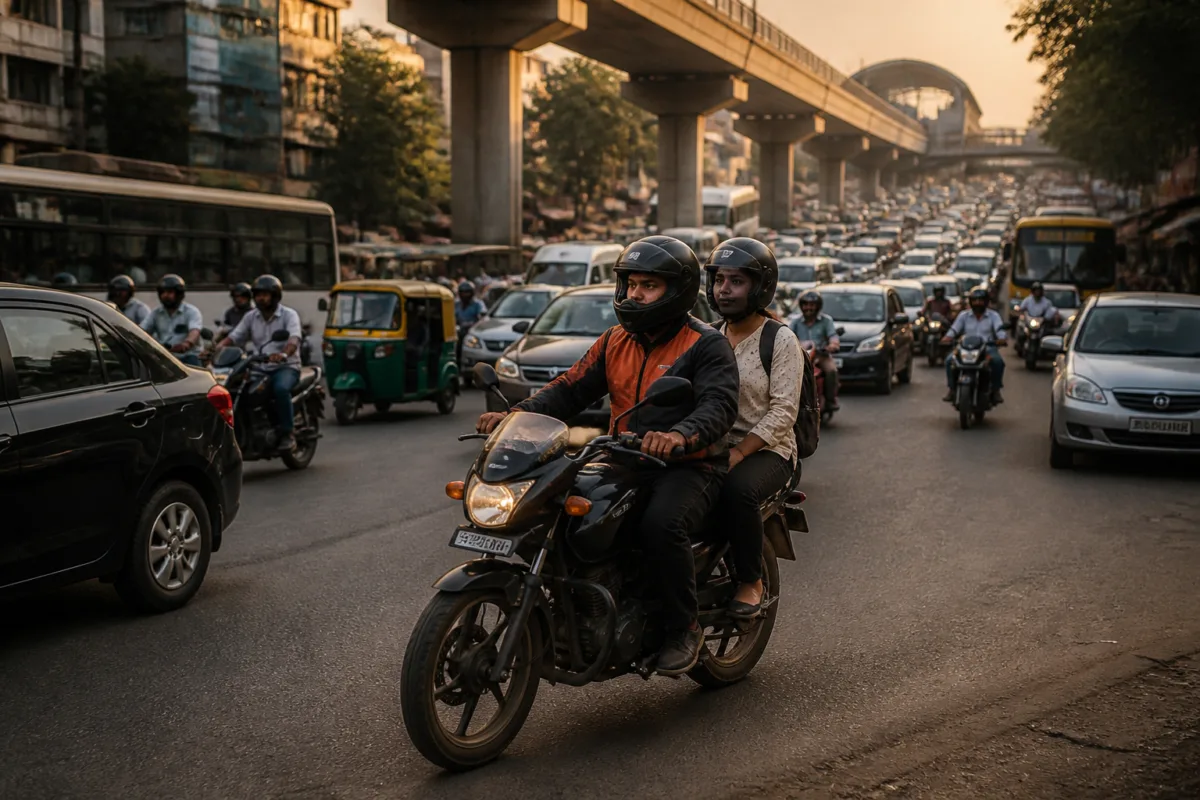
For many Bengaluru commuters, bike taxis have become a lower-cost option for short trips and last-mile travel between Metro stations, workplaces and homes. Their growing appeal is tied to two persistent urban transport problems: congestion that makes short journeys unpredictable and autorickshaw fares that can rise sharply during peak hours.
A comparison cited in a Deccan Herald report shows the difference. A 5.5-km trip from Domlur to M G Road may take about 20 to 25 minutes by bike taxi, compared with 25 to 40 minutes by autorickshaw during peak hours. On popular aggregator platforms, the bike taxi fare for the journey was around Rs 80 to Rs 87. The autorickshaw fare was about Rs 130 to Rs 145, while a priority autorickshaw could cost around Rs 170, depending on demand, travel time and surge pricing.
The savings are particularly relevant for students, young professionals and daily-wage earners who make frequent short-distance journeys. Sreerag Ramanan, an Arekere resident, told Deccan Herald that he saves around Rs 100 to Rs 150 a day by using bike taxis for travel to Sampangi Ramanagar. He said the trips were cheaper and could reduce his evening commute by 15 to 20 minutes.
Another commuter travelling between Banaswadi and Nagavara said a bike taxi cost around Rs 70, compared with Rs 125 to Rs 154 for an autorickshaw. These examples underline the role of two-wheelers in navigating narrow or congested roads, although the reported fares vary with demand and platform pricing.
For commuters, the availability of bike taxis could introduce more competition into Bengaluru’s short-trip market. Aditi R T, a Rajajinagar resident, said autorickshaw fares for journeys of three to four kilometres were especially high during evening peak hours and hoped competition would prompt drivers to reconsider their charges.
Autorickshaw unions, however, have raised concerns about the effect on their livelihoods and the rules governing bike taxis. C Sampath, general secretary of the Adarsha Auto Drivers Union, said unions were advising drivers not to refuse drop locations or demand additional fares. He estimated that autorickshaw business could be affected by at least 15% once bike taxis fully enter the streets.
D Rudramurthy, general secretary of the Auto Rickshaw Drivers’ Union, said the use of white-board bike taxis should stop until proper rules are established. He also argued that bike taxis should be limited to short-distance trips because of safety concerns. His comments referred to a Supreme Court decision but did not specify the decision or the regulatory provisions involved.
The competing positions point to a wider challenge for Bengaluru’s last-mile transport system. Commuters are seeking affordable, reliable alternatives, while autorickshaw drivers want a regulatory framework that addresses competition and safety. The immediate public-interest issue is therefore not only whether bike taxis reduce fares, but also how their operation is regulated alongside existing public and intermediate-transport services.

