

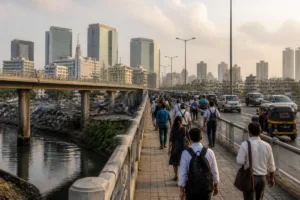
A proposal for pedestrian-only bridges linking Sion and Chunabhatti with Mumbai’s Bandra-Kurla Complex has remained stalled, according to the citizen group Walking Project, which has now released its plans publicly after receiving no response on the proposal’s progress.
The group said citizens began an online campaign about a year ago seeking dedicated crossings over the Mithi River to improve access to BKC from the Kurla-Sion region. Walking Project said proposals were discussed and prepared for officials, but no progress had followed.
The proposed BKC pedestrian bridge would run parallel to the existing motorable BKC connector bridge, according to Vedant Mhatre, programme manager at Walking Project. The group believes the route would allow commuters to get off at Sion and Chunabhatti and walk directly towards the business district instead of relying on longer bus routes, shared autos or congested roads.
The proposal is aimed at reducing last-mile travel for people heading to BKC. Walking Project has also argued that a direct pedestrian connection could ease pressure on Kurla railway station by giving commuters from the Sion and Chunabhatti side another way to reach offices in the business district.
The group’s plans include a bus terminal at the BKC end of the walkway to improve internal connectivity within the business district. It has also suggested a Singapore-style hawker centre at the same end, saying that an active public facility could make the walkway safer while providing office workers with more affordable food options.
The proposal reflects a wider gap in how major business districts are connected to nearby neighbourhoods. BKC has road access and public transport services, but the citizen group’s argument is that existing routes do not provide a direct and convenient walking connection from Sion and Chunabhatti. Its proposal therefore treats pedestrian infrastructure as part of the wider transport network rather than as an addition to road capacity.
The practical value of the plan would depend on issues that have not been resolved in the available report, including the technical design of crossings over the Mithi River, land and clearance requirements, integration with existing roads and footpaths, construction costs, and responsibility for operating and maintaining the route.
Mid-Day reported that it contacted the Brihanmumbai Municipal Corporation and the Mumbai Metropolitan Region Development Authority to ask whether the plans were under discussion. Neither agency had responded by press time. Their positions, along with any formal assessment of the proposal, remain unavailable in the report.
For now, the public release by Walking Project has brought attention to a specific pedestrian-connectivity demand around BKC, but it does not represent an approved project or a confirmed construction timeline. The proposal’s next stage would require a formal response from the relevant authorities and a documented assessment of its feasibility, safety and integration with Mumbai’s existing transport infrastructure.