


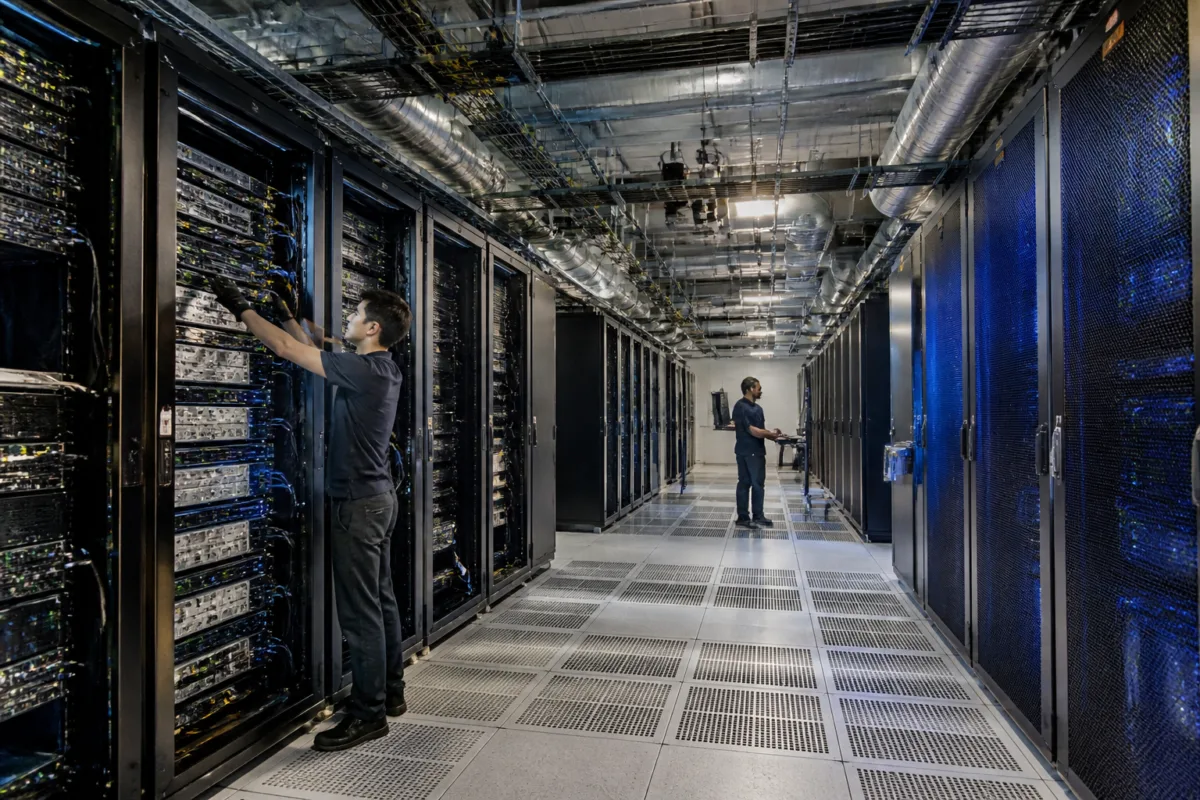
Fresh US controls on advanced artificial-intelligence chips are raising concerns about the future of data-centre investment and cloud-computing capacity across Southeast Asia, according to a report by Aaj Tak Business citing Jefferies’ 19 November GREED & fear report.
The report said the US Bureau of Industry and Security had introduced licensing requirements for US companies exporting AI chips to Malaysia, Thailand, Indonesia, Singapore and Brazil, except for qualifying exports. The reported objective is to prevent Chinese companies from accessing advanced American computing technology through overseas data centres and cloud infrastructure.
The measure is part of a wider tightening of US controls on advanced semiconductors. Chinese companies are already restricted from directly purchasing some high-end American AI chips, but policymakers in Washington have become concerned that computing capacity located in other countries can provide an indirect route to the same technology.
Jefferies estimated that about 240,000 Nvidia AI chips may have been shipped to China since export restrictions were introduced in 2024, according to the report. It also cited estimates from the Institute for Progress that Singapore-based MegaPort was renting approximately 86,000 graphics-processing units to Alibaba and other Chinese customers. These figures were presented as estimates rather than official shipment or utilisation data.
The development places data-centre operators and cloud providers at the centre of the technology dispute. Facilities in countries affected by the reported licensing requirements may face additional compliance obligations when purchasing, hosting or renting access to advanced AI computing equipment. For operators, the issue is not limited to chip procurement: it may also affect financing, capacity planning and the ability to serve customers linked to restricted jurisdictions.
The Jefferies report warned that the restrictions could slow AI infrastructure investment across Southeast Asia. The region has attracted data-centre and cloud investment because of its growing digital economy and access to international connectivity. However, tighter controls could make projects involving advanced accelerators more difficult to finance or operate if investors and operators need to demonstrate that computing capacity will not be redirected to Chinese users.
The pressure is also being felt in the financial structure supporting AI infrastructure. Aaj Tak Business reported that Nvidia has committed substantial capital and commercial support to the ecosystem, including $61 billion in equity investments and $164.5 billion in lease guarantees and cloud-capacity backstops, citing Jefferies. Smaller cloud providers that depend heavily on advanced chips could be particularly exposed if access to equipment becomes more restricted or the cost of compliance rises.
The report also pointed to market stress around CoreWeave, an AI infrastructure company. Its share price had fallen 25% following developments connected to Nvidia, while its bond yield had risen to 15.7%, according to the report. These movements were cited as indicators of the financial sensitivity of companies whose business models depend on rapid expansion of high-performance computing capacity.
For the built environment, the significance of the dispute lies in the changing role of data centres. These facilities require large-scale power, cooling, land, fibre connectivity and specialised equipment. When access to advanced chips or cloud capacity is restricted, the effects can extend beyond the technology sector to the timing, design and financing of new computing campuses.
The reported controls could also influence where future AI infrastructure is built. Operators may favour locations with clearer export-control compliance, stronger customer screening systems and lower regulatory uncertainty. At the same time, countries seeking data-centre investment may face pressure to show that their facilities cannot be used as indirect channels for restricted access to American technology.
China, meanwhile, is accelerating efforts to develop a domestic semiconductor ecosystem. A semiconductor supply-chain map by Goldman Sachs Global Investment Research, cited in the report, identifies Chinese companies operating across chip design, manufacturing, equipment and materials. HiSilicon, Cambricon and Loongson were named in chip design; SMIC and Hua Hong Semiconductor in manufacturing; Naura and AMEC among equipment suppliers; and NSIG and Zhonghuan Semiconductor Materials in materials.
The report estimated that China’s semiconductor equipment market could reach $49 billion in 2025, while its materials market could reach $16 billion. These figures were presented as an indication of the scale of the domestic supply-chain opportunity as China seeks to reduce dependence on American technology.
The immediate question for data-centre developers is how the new licensing requirements will be implemented and which transactions will qualify for exemptions. The Aaj Tak Business report, based on the Jefferies assessment, does not provide the text of a BIS rule or details of individual licences. It does, however, show how export controls are increasingly being linked to the ownership, location and customers of computing infrastructure rather than only to the physical movement of chips.
That shift could make AI infrastructure planning more complex. Developers and cloud operators may need to treat export compliance, customer access and cross-border computing arrangements as core elements of project design alongside power, land and network availability. The wider technology contest between Washington and Beijing is therefore becoming an infrastructure issue, with consequences for where advanced computing capacity is built and who can use it.

