


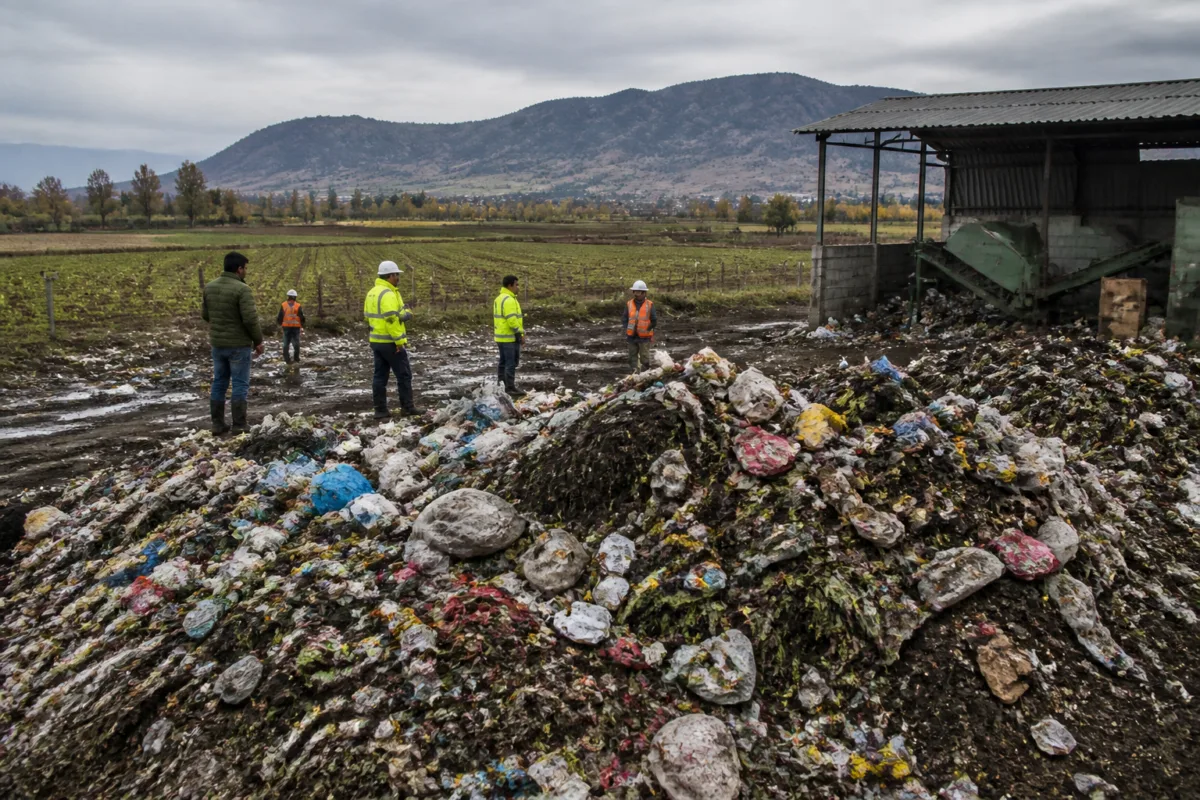
The National Green Tribunal has ordered an expert assessment into alleged environmental damage from municipal and plastic waste dumping near saffron fields in Pampore, Kashmir, directing a joint committee to inspect the site and examine its impact on surrounding crops.
The committee will include a nominee of the Vice-Chancellor of the Sher-e-Kashmir University of Agricultural Sciences and Technology of Kashmir, the Regional Director of the Union Ministry of Environment, Forest and Climate Change, and a nominee of the Member Secretary of the Jammu and Kashmir Pollution Control Committee.
According to the tribunal’s order, the panel will visit the dumping site at Patlibagh-Galander, assess the quantity of municipal and plastic waste, verify the status of required clearances and examine the Material Recovery Facility. It will also assess the effect of the dumping on crops in adjoining areas. The committee has been given eight weeks to complete the exercise and submit its report.
The proceedings followed an application by environmental activist Raja Muzaffar Bhat, who alleged that the Municipal Committee, Pampore, was illegally dumping untreated municipal and plastic waste at the site. He alleged that leachate from the waste was entering underground water sources and moving through channels towards the Jhelum River, which is less than a kilometre away.
Bhat also said the site lies within a notified saffron-growing area protected under Section 3(1) of the Saffron Act, 2007. He alleged that waste dumping was damaging nearby fields and attracting rodents and porcupines that can harm saffron corms and crops.
The application included a report by the Pollution Control Committee’s Divisional Officer in Pulwama. The report pointed to heaps of unsegregated and untreated legacy waste at the Material Recovery Facility, including biodegradable domestic waste, single-use plastic and packaging material.
Saffron is primarily cultivated in India in the Pampore area. The report said the area under cultivation fell from 5,707 hectares in the early 2000s to 3,715 hectares by 2010. The government has said the Economic Revival of J&K Saffron Sector project, launched under the Saffron Mission in 2010-11, halted the decline and kept cultivation at about 3,715 hectares. Growers have disputed that figure.
The tribunal’s committee assessment is expected to establish the extent of waste accumulation, the status of site clearances and whether the dumping has affected saffron cultivation or nearby environmental resources.

