


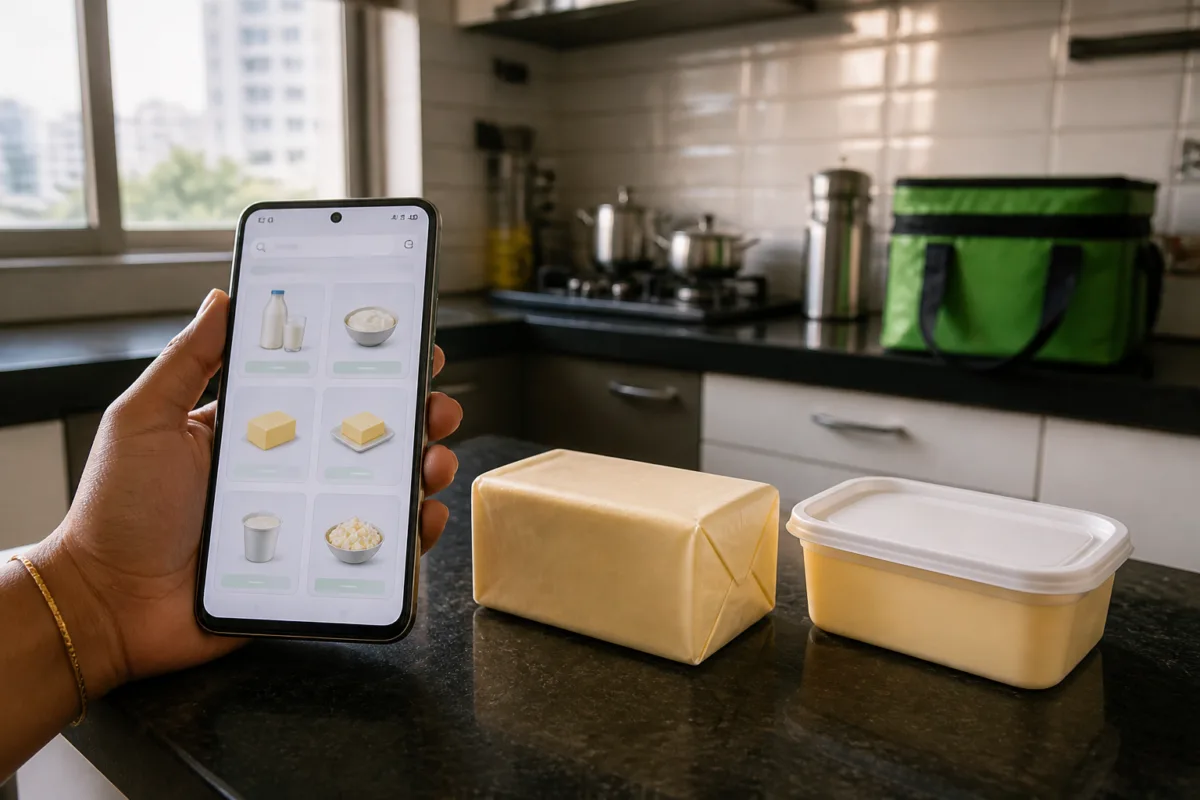
Quick-commerce platforms in Pune are reportedly displaying fat spreads in search results for “butter”, raising questions about food labelling, consumer awareness and regulatory oversight in the city’s rapidly expanding digital grocery market, according to a report by Lokmat.
The report said several quick-commerce applications and websites showed fat-spread products when users searched for butter. It alleged that this could mislead consumers because butter and fat spread can look and taste similar, while being different categories of products.
Under the food safety rules cited in the report, butter made from milk fat may be sold as “butter”, while products made with vegetable oils or non-dairy ingredients must be classified and presented as “table spread” or “fat spread”. The report said selling such products as butter, or labelling them in a way that creates the impression that they are genuine butter, is prohibited.
The distinction matters in a city where residents increasingly use quick-commerce services to order everyday products such as milk, curd and butter. Search placement can influence purchases, particularly when consumers are shopping under time pressure or are unfamiliar with the difference between dairy butter and fat-based spreads.
Lokmat reported that fat spreads commonly contain vegetable oil and food additives, including emulsifiers, stabilisers, colours, preservatives, acidity regulators and antioxidants. It also cited health concerns for people with conditions such as heart disease or diabetes, and those following specific diets. The report did not identify the platforms involved or provide independent medical documentation for those health claims.
The issue also extends beyond household purchases. The report said restaurants and street-food vendors sometimes use fat spread instead of butter to reduce costs. However, it did not provide data establishing the scale of that practice or identify individual businesses.
Sudam Vishwa, identified in the report as a Pune resident, called for action by the Food Safety and Standards Authority of India and the state food and drug administration. He said that searches for “butter” should return genuine dairy products and that platforms displaying fat spreads in those results should be directed to improve their search systems.
Shrikant Karkale, joint commissioner in Pune’s food administration, told Lokmat that butter and fat spread are different products and that consumers should verify product details before buying. He said the department would investigate the matter and take appropriate action.
The report places responsibility on two parts of the digital food-supply chain: the seller or brand that labels a product, and the platform that organises and displays search results. A product may carry a compliant name on its packaging but still be difficult for a consumer to distinguish if it appears prominently under a broader or misleading search term.
For consumers, the immediate safeguard is to check the product name, ingredient list and category on the listing and packaging rather than relying only on the search heading or product image. For regulators, the reported case highlights the difficulty of monitoring online marketplaces where listings can change quickly and may vary by location.
The Pune food administration’s proposed investigation will determine whether any listings breached food-labelling requirements and whether further action is warranted. The report does not state whether notices have been issued or whether any platform has removed or corrected the listings.

