


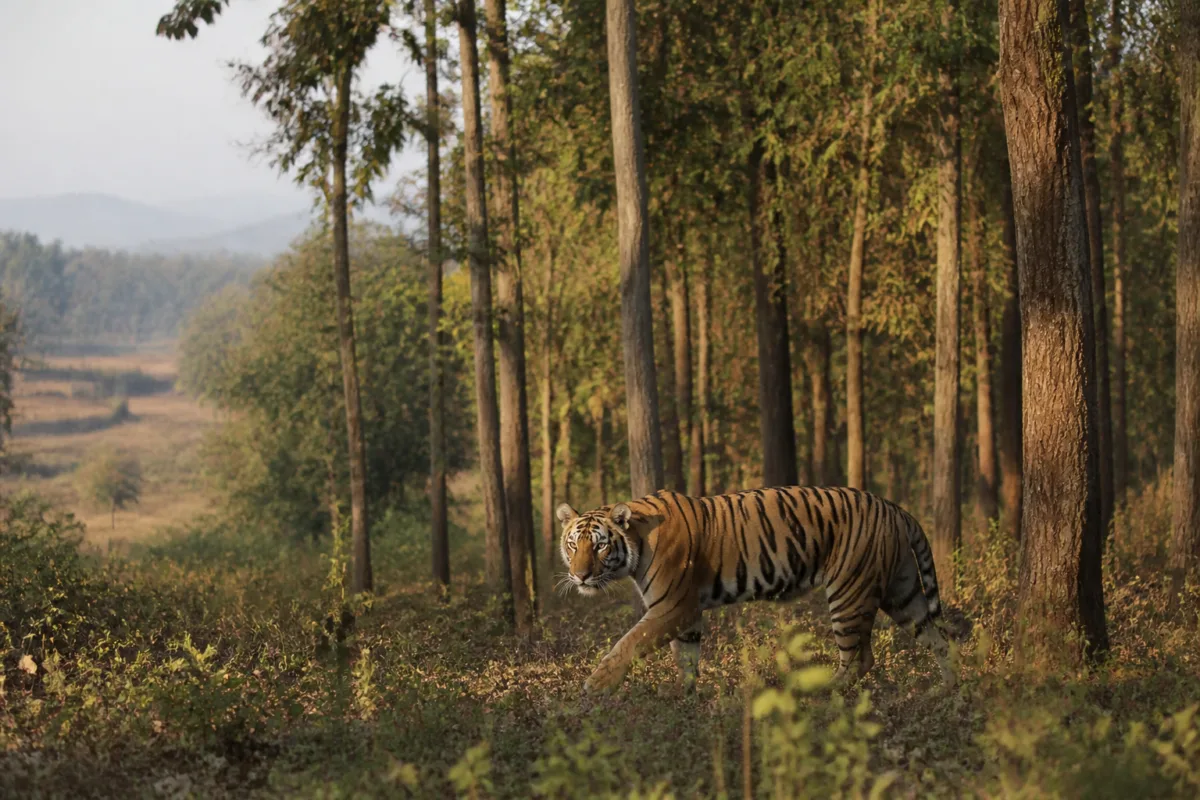
Odisha tiger corridors are becoming increasingly important as young Royal Bengal Tigers move into the state from neighbouring landscapes, but the arrivals also expose gaps in habitat connectivity and long-term conservation planning.
At least seven tigers have entered Odisha from adjoining forests over the past decade, according to records cited by The Times of India. Four of those arrivals were reported this year, including a tiger spotted on November 9 in Debrigarh Wildlife Sanctuary. Only one of the seven appears to have settled in the state: a tiger that reached Similipal Tiger Reserve in January and has shown no evidence of returning to its source landscape.
The movement reflects growing dispersal from tiger habitats in central and southern India. Researchers cited in the report said most of the animals entering Odisha originated in Maharashtra, Chhattisgarh and Madhya Pradesh. Two others used the Eastern Ghats route connected to Andhra Pradesh through the undivided Koraput region.
One radio-collared tiger was confirmed to have come from Andhra Pradesh’s Papikonda Tiger Reserve. It entered the Motu region of Malkangiri district, remained there for several days and later returned to its original landscape. Another tiger detected through pugmarks in Semiliguda, Koraput, is also believed to have gone back.
The pattern positions Odisha as more than a temporary passage route, while also showing that suitable conditions for permanent occupation and breeding have not yet been established across its landscapes. Susanta Nanda, a former principal chief conservator of forests (wildlife), told the newspaper that tigers generally enter Odisha through two routes: from central India via Chhattisgarh and along the Eastern Ghats through northern Andhra Pradesh.
The seasonal nature of these movements is also significant. Wildlife researcher Bivash Pandav said most arrivals occur between August and March, when cooler weather supports long-distance movement. Such movements can connect otherwise separate wildlife landscapes, but they also bring animals into areas where forests, settlements and infrastructure overlap.
Debrigarh illustrates both the opportunity and the risk. A tiger that entered the sanctuary from Telangana’s Kawal Tiger Reserve through Chhattisgarh in December 2022 remained there for about 18 months before moving again. It later died from electrocution near Gomarda Wildlife Sanctuary. The incident shows how a tiger can occupy a landscape with improving ecological conditions and still face hazards beyond the sanctuary boundary.
The tiger most recently seen in Debrigarh may have travelled through Chhattisgarh’s Udanti-Sitanadi Tiger Reserve and may originally have come from Maharashtra’s Tadoba-Andhari Tiger Reserve, based on preliminary stripe-pattern analysis cited in the report. Those findings remain indicative rather than conclusive, but they demonstrate the scale of the connected landscape used by dispersing animals.
Forest officials and researchers have linked Debrigarh’s prospects to several changes within the sanctuary. Villages have been relocated from inside the protected area, habitat restoration has taken place and prey populations have increased. The sanctuary has also recorded the natural dispersal of wild dogs from Chhattisgarh, with a breeding population now established.
The National Tiger Conservation Authority approved a proposal for Debrigarh Tiger Reserve in 2024. The proposed reserve would cover about 804 sq km, including a 353 sq km inviolate core zone and a larger buffer extending into parts of the Hirakud wetland. The proposal has gained renewed attention as tiger movements provide further evidence that Debrigarh is part of a wider ecological network.
However, reserve designation alone would not address every risk identified by the reported movements. Tigers travelling between source habitats and potential home ranges may pass through corridors, human settlements and areas outside protected boundaries. Maintaining those links requires protection against habitat fragmentation, measures to prevent poaching and systems for reporting wildlife movements quickly.
The electrocution death near Gomarda also underlines the need to address hazards along movement routes, not just inside sanctuaries. The report does not identify the specific infrastructure responsible or set out a mitigation plan, but the incident shows that conservation outcomes depend on conditions across the broader landscape.
Local communities are similarly central to the outcome. Forest officials cited in the report said residents would remain important to tiger conservation, particularly in identifying animal movements and supporting safe passage. Community involvement will need to accompany corridor protection and habitat management if Odisha is to retain dispersing tigers rather than remain a transit landscape.
For Similipal, the immediate question is whether the tiger that arrived in January continues to occupy the reserve. Field director Prakash Gogineni said camera traps would be reinstalled next year to establish whether the animal has adopted Similipal as its home range. Fresh images would provide stronger evidence of continued occupation, although they would not by themselves establish breeding.
The larger conservation test is whether landscapes such as Debrigarh, Satkosia and Sunabeda can support a viable population over time. Pandav said that this will eventually require breeding opportunities and stronger habitat connectivity. Nanda described the appearance of a tigress raising cubs in a forest known previously only for passing males as the clearest sign of recovery.
Odisha’s recent tiger arrivals therefore represent both progress and an unresolved planning challenge. The animals’ ability to reach the state indicates that wider forest connections remain functional in places. Their return, disappearance or death also shows that those connections are vulnerable. The next phase of conservation will depend on managing the entire movement landscape, including protected areas, corridors, settlements and potential infrastructure hazards, rather than measuring success only by the number of tigers temporarily recorded.

