


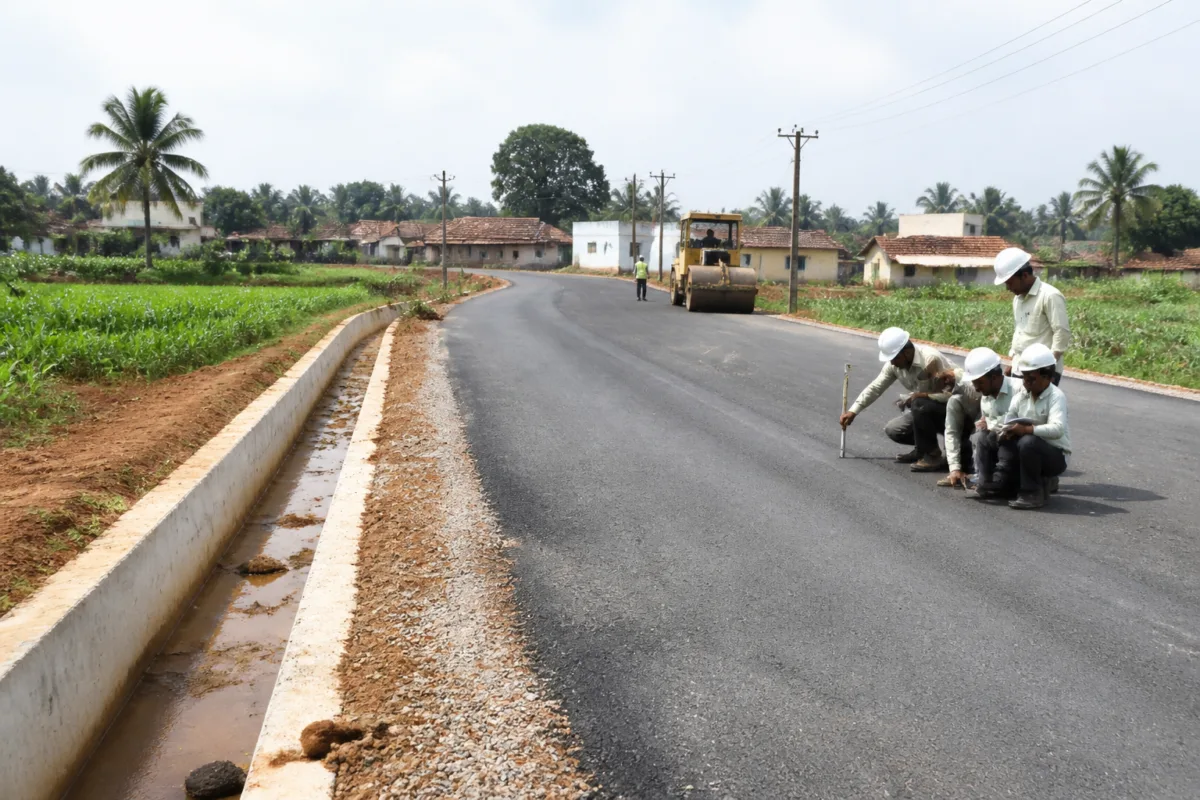
Karnataka has announced rural infrastructure projects worth ₹16,000 crore, including ₹10,000 crore for approximately 15,000 km of roads and ₹6,000 crore for development at the panchayat level.
D.K. Shivakumar announced the projects while launching the Chief Minister’s Rural Road Connectivity Scheme and the Chief Minister’s Rural Development Scheme at Vidhana Soudha in Bengaluru on Friday. He said the programme was intended to strengthen basic infrastructure in rural areas and help reduce migration to cities.
Under the road connectivity scheme, the proposed works include re-asphalting, gravel-road development and drain construction. The estimated cost is between ₹38 lakh and ₹70 lakh per kilometre, depending on the nature of the work. Shivakumar said ₹5,000 crore had already been provided under the Pragathi Patha scheme.
The separate ₹6,000-crore allocation is intended for essential panchayat-level infrastructure, including drainage, drinking water and other basic amenities. Grants will be released after local requirements are identified and approved by the respective Deputy Commissioners.
Shivakumar directed officials to establish a monitoring mechanism and said work should be executed according to approved plans. Officials were instructed to record photographs and videos before and after each project, document the exact coordinates of sites and monitor progress through the Chief Minister’s Dashboard.
He also said no work should begin without a tender process. The government would create WhatsApp groups at panchayat and district levels to share project information, while photographs of officials conducting site inspections would be published in local newspapers and the groups.
Shivakumar warned against spending on roads that were already in good condition and raising bills for work that had not been completed. He said the government had received reports of such irregularities and that transparency and quality would be mandatory.
On housing, he said Karnataka had set a target of distributing 15 lakh housing sites. The first phase would cover five lakh sites across approximately 9,000 acres. The government would assess the infrastructure required for these sites, including roads and drains. The minimum site size for poor families is also proposed to increase from 20×30 feet to 30×40 feet.

