


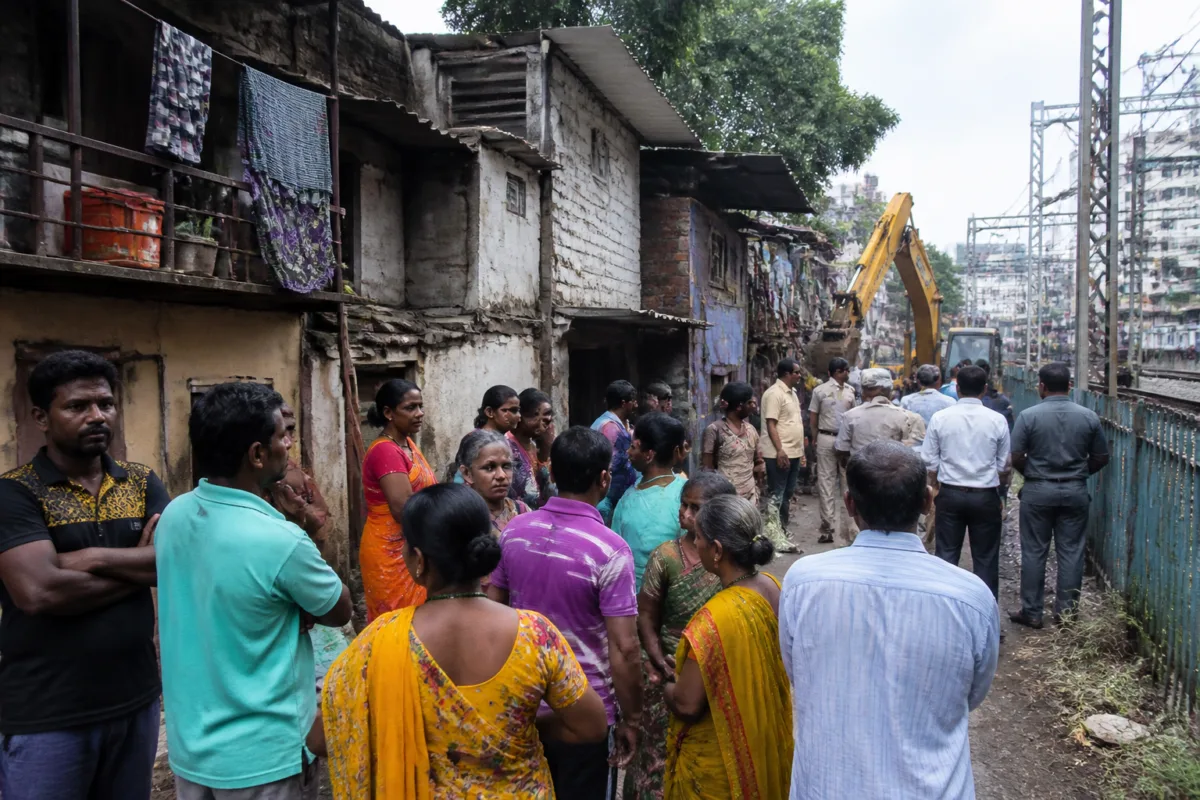
Western Railway halted its planned demolition of 101 houses on railway land near Mumbai’s Prabhadevi station on Friday after intervention by Chief Minister Devendra Fadnavis and Deputy Chief Minister Eknath Shinde, according to Mid-Day’s report.
Railway authorities arrived at the site with police personnel and excavators, prompting residents to oppose the proposed action. The report said Fadnavis and Shinde spoke by telephone with Union Railway Minister Ashwini Vaishnaw, explaining that a rehabilitation plan for the affected residents was being worked out.
Following the intervention, Vaishnaw instructed railway officials to stop the demolition exercise. Western Railway later said the action had been postponed and that the issue involved “a substantial extent of encroachment on railway land”. The railway administration said it was coordinating with the state government to formulate a long-term policy framework for the matter.
Residents told the publication that immediate demolition could have disrupted schooling, livelihoods and access to medical care for families with children and elderly members. They said they were seeking permanent rehabilitation before vacating their homes.
The account also records differing positions on the legal status of the proposed demolition. Residents said the matter was still before the court, while a Western Railway spokesperson said no stay order had been issued during Thursday’s hearing and that the railway was within its powers to proceed.
Advocate Mangesh Chavan, representing the families, said the matter was heard urgently at about 3.15pm. He said the Slum Rehabilitation Authority had indicated that a rehabilitation plan was being worked out, while the Railways had agreed not to take demolition action until the next hearing scheduled for November 26.
According to Chavan, the residents are prepared to give up their houses only if they receive another permanent home at the same location. The immediate demolition threat has therefore been deferred, but the rehabilitation arrangement and the court’s next directions remain unresolved.

