


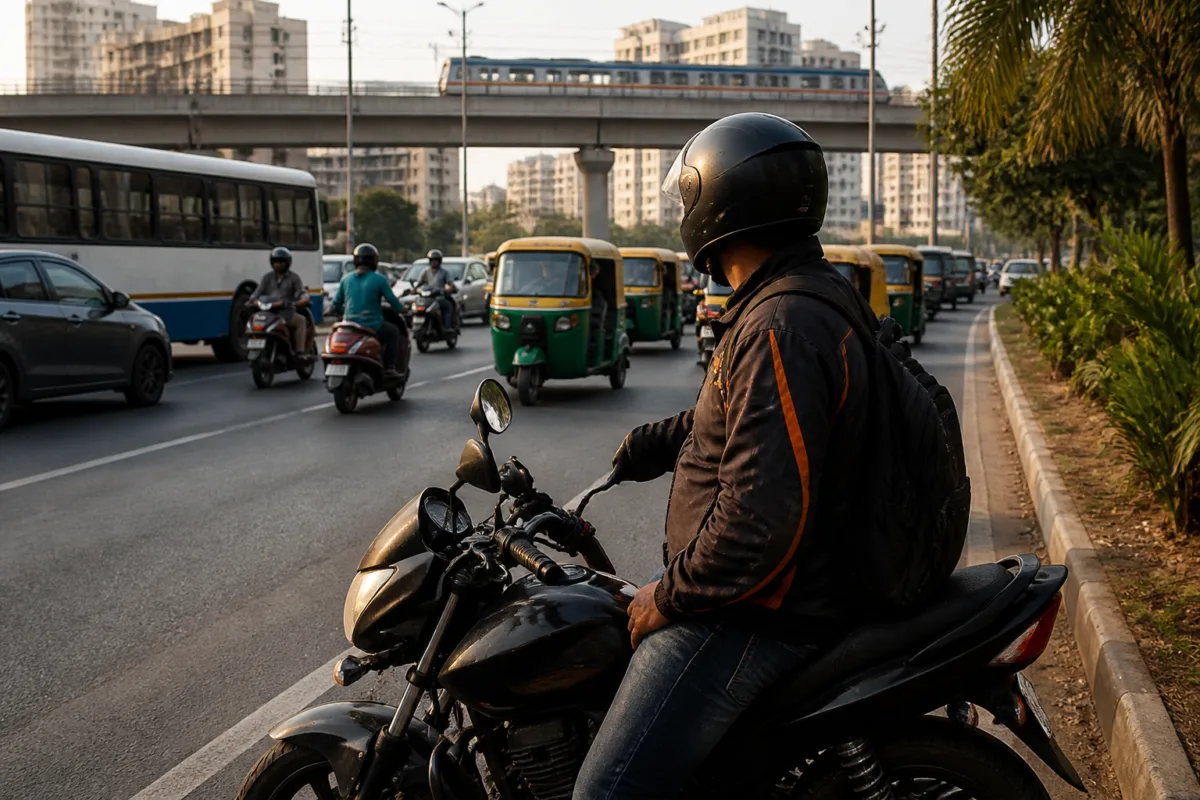
Karnataka’s opposition to bike taxis rests on a wider transport-policy question: whether motorcycles should be recognised and regulated as commercial passenger vehicles, rather than treated simply as private two-wheelers carrying pillion riders.
The state made these arguments in an appeal before the Supreme Court against a Karnataka High Court order that allowed bike-taxi operators and individual motorcycle owners to seek permits to run two-wheelers as taxis. The Supreme Court has since dismissed the appeal, according to the Times of India.
The government argued that the Motor Vehicles Act does not specifically define or recognise bike taxis as a category of public transport. It also cited the Central Motor Vehicles Rules, 1989, which classify vehicles according to intended use but do not expressly include motorcycles in categories meant for commercial passenger transport.
In the state’s view, a motorcycle’s ability to carry a pillion rider did not automatically authorise its use to carry passengers for hire or reward. The government said transport authorities should retain discretion over whether such services are permitted, taking account of local traffic conditions, road safety and regulatory requirements.
Passenger safety was another central concern. The state argued that two-wheeler passengers are more vulnerable than users of autorickshaws and cars because motorcycles lack several protective features available in those vehicles. It also raised concerns about women’s safety and referred to expert material on the higher fatality risks associated with two-wheeler accidents.
Insurance was a related gap. The government questioned whether existing arrangements would provide adequate protection and compensation to passengers in the event of a fatal accident. It also pointed to the absence of a clear mechanism for dual registration or for converting private motorcycles into commercial vehicles.
The state further argued that large-scale bike-taxi operations could worsen Bengaluru’s traffic conditions. Motorcycles carry fewer passengers than buses, Metro trains and other forms of public transport, it said. The government also referred to “dead kilometres”—the distances riders travel without passengers while waiting for bookings, moving towards potential customers or repositioning themselves. Such trips, it argued, could add vehicles to already busy roads without providing equivalent passenger mobility.
This argument places bike taxis within a broader question about how cities should assess app-based transport. A service may offer short-distance connectivity and another earning option for riders, but its urban value depends on how it interacts with mass transit, road capacity, safety rules and existing commercial transport. The report does not provide independent traffic or emissions data quantifying the effect of bike taxis in Bengaluru; the congestion and pollution concerns are the state government’s submissions.
Karnataka also rejected the suggestion that its position amounted to a blanket restriction on commercial motorcycle use. According to the government, riders could continue to earn through food delivery, logistics, e-commerce and courier services linked to platforms such as Swiggy, Zomato, Amazon and Flipkart. Its objection, it said, was limited to carrying passengers for hire or reward.
The dispute has also involved pressure from established transport unions. The report cites opposition from auto and taxi drivers’ unions, including alleged confrontations in which auto drivers assaulted bike-taxi riders and took their mobile phones and helmets. These allegations are reported claims and are not the central basis of the state’s regulatory case.
The government’s political considerations were also linked to the size of the existing transport workforce. Bengaluru has more than 3.7 lakh autorickshaws and over 3 lakh taxis, according to the report. The state argued that the interests of drivers and their families could not be ignored while deciding whether to allow a new passenger-transport category.
The bike-taxi dispute therefore extends beyond a contest between platforms and unions. It raises unresolved implementation questions about commercial registration, passenger insurance, safety standards, enforcement, data sharing and the relationship between app-based two-wheeler services and public transport. The reported dismissal of the state’s Supreme Court appeal removes one legal challenge, but the policy issues identified by Karnataka remain relevant to any framework for motorcycle-based passenger services.

