


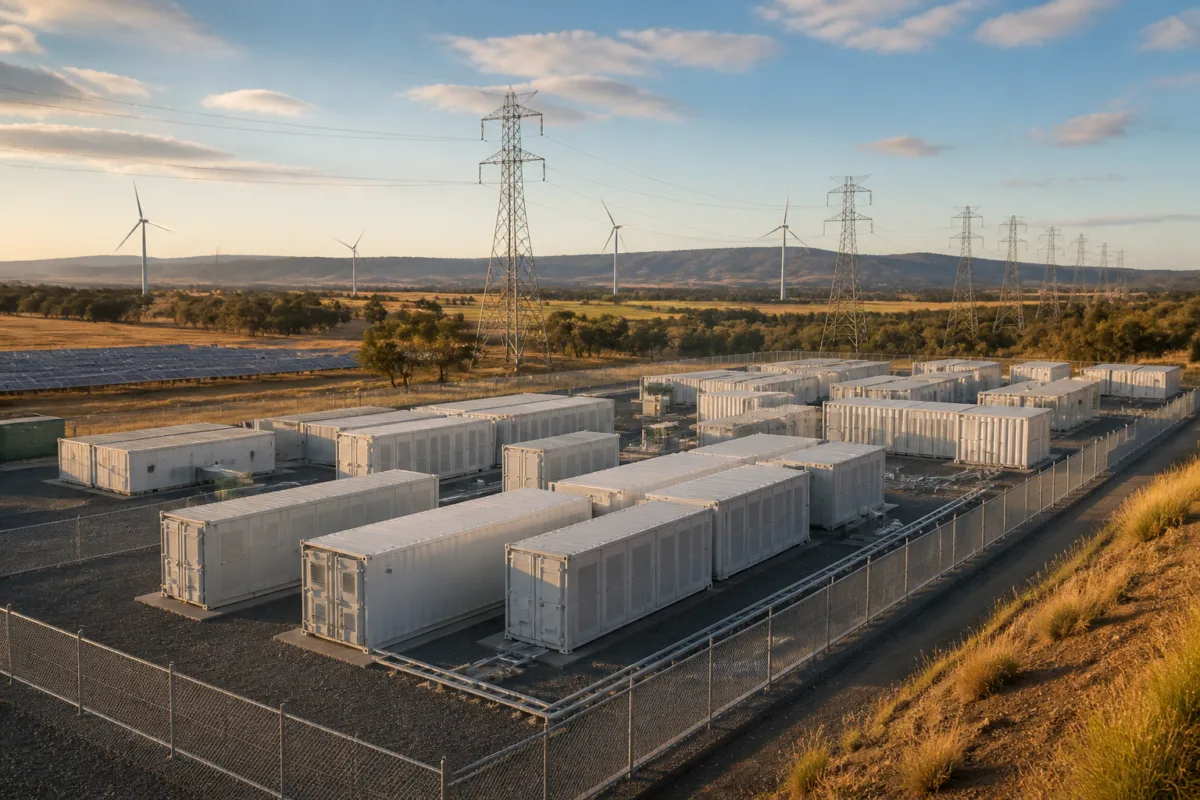
EDF Power Solutions Australia has acquired the Holloway battery energy storage system (BESS) project from SynCo Global, in a move that adds a planned 250 MW/1,000 MWh storage facility to Australia’s New England Renewable Energy Zone.
The project is under development and is designed to provide four hours of storage. Commercial operations are scheduled to begin in 2029, according to Renewable Watch.
The New England Renewable Energy Zone includes solar and wind power projects and has access to key grid infrastructure. The location is intended to connect the storage project with renewable generation and the wider electricity network, although the report does not provide details on construction status, approvals, financing or the project’s offtake arrangements.
Battery energy storage systems can hold electricity for later use, allowing power generated at one time to be supplied when demand or network requirements change. The Holloway project’s stated configuration would provide a substantial storage duration compared with shorter-duration battery projects, but the available report does not specify how the facility will be dispatched or which grid services it will provide.
The acquisition forms part of EDF Power Solutions’ wider renewable energy and storage portfolio. In October 2026, EDF Power Solutions North America and the New York Power Authority announced a partnership to develop the 240 MW Rich Road solar project in Canton, St. Lawrence County, New York. The New York Power Authority, through its wholly owned subsidiary New York Renewable Energy Development Holdings Corporation, is to hold a 51 per cent majority stake, while EDF Power Solutions will remain a minority owner.
In August 2026, EDF Power Solutions North America also signed two 25-year power purchase agreements with NV Energy for the Winston Energy project in Lyon County, Nevada. That project combines 400 MWac of solar capacity with a 400 MW/1,600 MWh battery energy storage system and is expected to commence operations in October 2029.
The Holloway acquisition highlights the growing role of utility-scale batteries alongside renewable generation and grid infrastructure. Its stated 2029 operating date means the project’s contribution will depend on development, approvals and construction milestones that have not been detailed in the available report.

