


A proposed requirement for Delhi homeowners to arrange periodic structural audits could create a significant financial and implementation challenge, particularly in unauthorised and unplanned colonies, according to a report by Jagran.
The report states that a structural assessment of a 100-square-yard house could cost between Rs 4 lakh and Rs 7 lakh. It also says that an assessment cited by former MCD executive engineer J P Verma cost Rs 4 lakh and took three months to produce a report after the building collapse in Lalita Park.
The figures raise questions about how a city-wide audit requirement would be funded and enforced if the Municipal Corporation of Delhi makes property owners responsible for the process. The report says a possible rule could require buildings to undergo structural audits every 15 to 20 years, although it does not provide a final notification or implementation schedule.
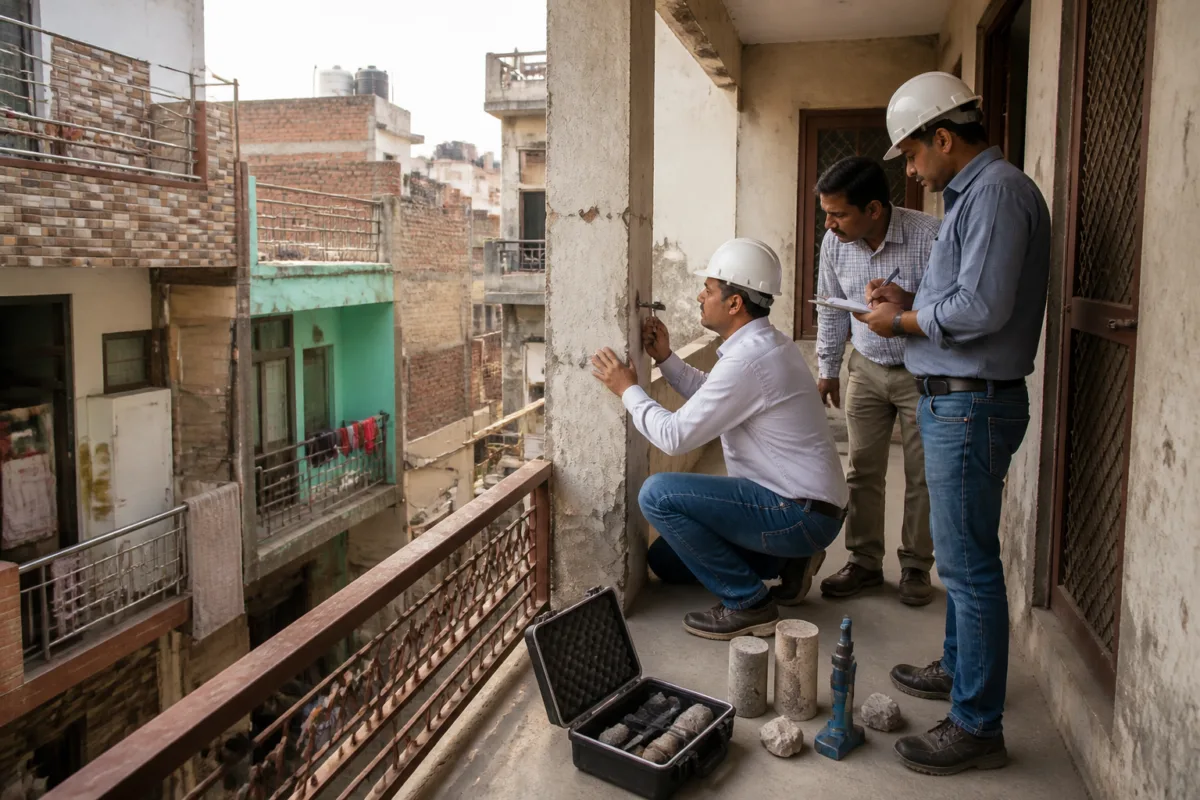
A structural audit is more extensive than a visual inspection. According to the report, engineers examine elements such as pillars, collect construction-material samples and send them for laboratory testing before issuing a certificate on the building’s structural condition. MCD is reported to have about 700 structural engineers whom property owners may contact for audits.
The proposed arrangement would therefore involve more than identifying visible cracks or other external signs of deterioration. A building can appear sound from the outside while having weaknesses within its structural system, the report notes. Scientific testing may be needed to identify those risks.
The cost is likely to be a major barrier for households. Jagran compares the proposed audit expense with the lower cost of obtaining ownership rights under the PM-UDAY scheme. The report says that even payments of around Rs 10,000 to Rs 50,000-60,000 under that process have not persuaded all eligible residents to come forward. An audit costing several lakh rupees could be considerably harder for households to undertake.
The physical layout of many colonies adds another layer of difficulty. In planned colonies, engineers may be able to inspect buildings with relatively clearer access and separation. In unauthorised and unplanned areas, however, houses may share walls, stand immediately next to one another or lack conventional pillars altogether. These conditions can make it difficult to assess one structure without affecting access to adjoining properties.
The report says that MCD currently identifies dangerous buildings primarily through visual surveys. Such inspections can help officials flag visible problems, but they may not establish the actual strength of a building’s internal structure. A mandatory scientific audit would represent a more demanding process, requiring professional inspection, material testing, laboratory reports and certification.
The central policy question is whether a uniform requirement can work across Delhi’s very different building types. Applying the same audit process to a formally planned property and a densely built unauthorised-colony house could produce unequal costs and practical obstacles. The report does not specify whether the proposed framework would include subsidies, phased compliance, technical standards for difficult sites or financial assistance for lower-income households.
Until MCD issues a formal rule, the scope of the proposal remains unclear. The unresolved issues include who would pay, how auditors would be appointed, how adjoining structures would be handled and what consequences would follow if owners did not comply. Without answers to these questions, a structural-audit mandate could improve the identification of hidden building risks but also place a substantial burden on residents.

