


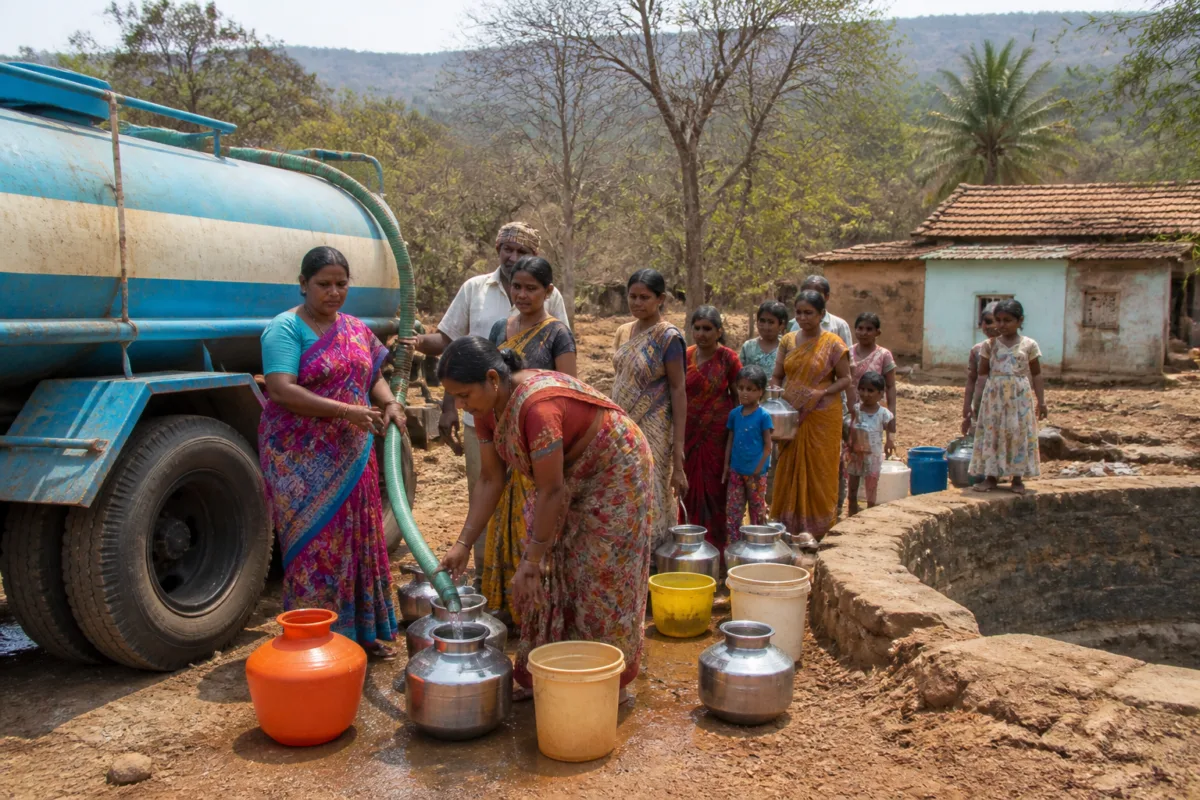
Chikkamagaluru district in Karnataka is facing an early drinking-water crisis, with shortages reported in 40 villages across 31 gram panchayats and tanker supplies reaching 16 villages, according to a Times of India report published on November 19.
The crisis has emerged before summer, with residents in several villages reportedly waiting with pots and buckets for water. Some children are missing school to help collect supplies, while wells that previously held water throughout the year have run dry. The report attributes the shortages to falling groundwater levels and drying traditional water sources.
Deputy commissioner Bhanwar Meena has directed officials to take preventive measures and ensure that drinking water and fodder remain available. Departments have been asked to coordinate, prepare a comprehensive list of affected villages and identify permanent wells in rural areas.
Where necessary, officials have also been instructed to discuss access to privately owned wells to secure drinking-water supplies. The administration is expected to remain alert in the coming weeks and work towards maintaining supply until the monsoon begins.
For residents of the 16 villages already receiving tanker water, the vehicles are currently the main immediate relief measure. The report does not specify the tanker frequency, the volume supplied or the number of people covered in each village.
The district is also preparing for pressure on livestock. Animal husbandry deputy director B Gurushanthappa told officials that Chikkamagaluru has 4,05,340 livestock, including cattle, buffaloes, sheep and goats, requiring about 11,275 tonnes of fodder each week.
Officials said 2,10,842 tonnes of fodder is currently available from gomalas, forest areas, fallow lands and perennial fodder crops. Fodder seed kits have been distributed to livestock owners with irrigation facilities, and another 11,358 tonnes of dry fodder is expected to be produced by mid-December.
The deputy commissioner has directed officials to promote fodder cultivation and provide details of functioning goshalas in the district. The immediate challenge for the administration is to sustain tanker-based drinking-water access while identifying more durable sources for villages whose groundwater and traditional wells have already weakened.

