


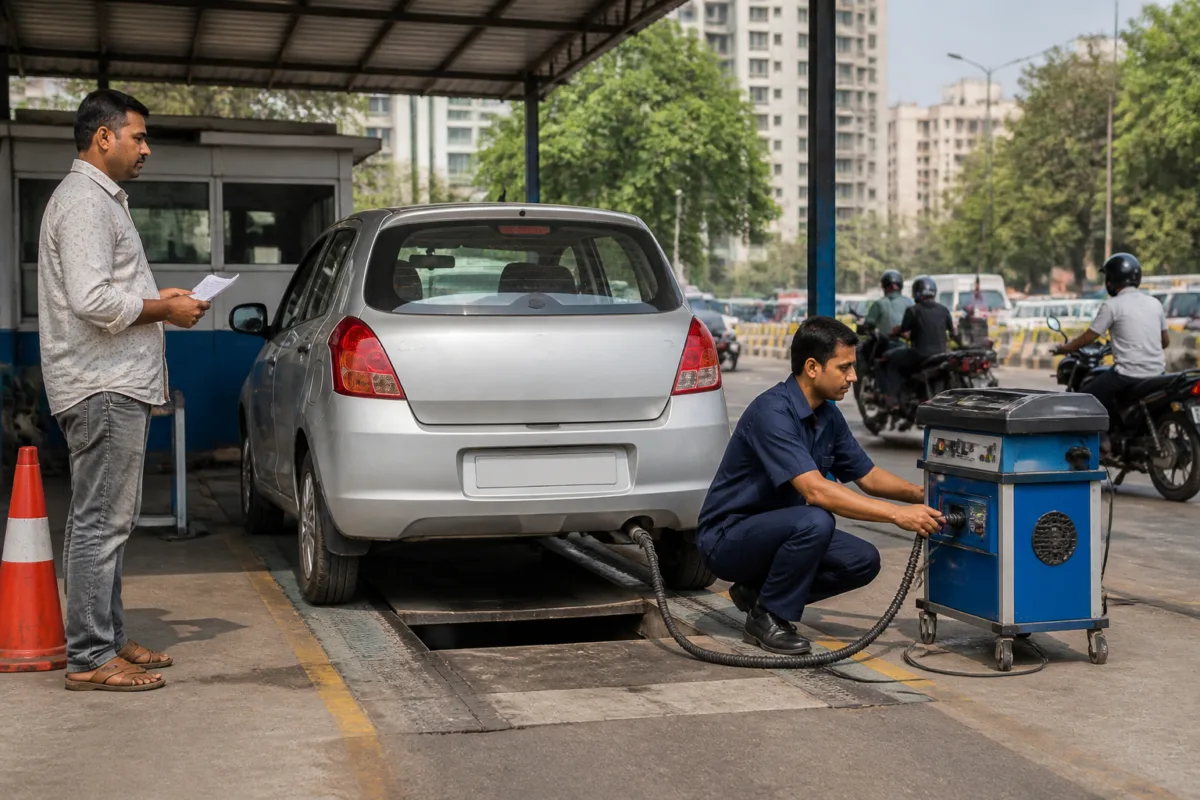
The Ministry of Road Transport and Highways has notified revised rules for Pollution Under Control certificates, introducing different validity periods based on a vehicle’s emission standard, age and category, Economic Times reported on Thursday.
Under the Central Motor Vehicles (Sixteenth Amendment) Rules, 2026, Pollution Under Control certificates for BS-VI-compliant non-transport vehicles will be valid for three years if the vehicle is up to six years old. Vehicles more than six years old but not exceeding 10 years will require annual renewal, while vehicles older than 10 years will require renewal every six months.
For BS-VI-compliant transport vehicles, certificates will be valid for two years for vehicles up to six years old. Annual renewal will apply to vehicles more than six years old and up to 10 years old, while vehicles older than 10 years will require renewal every six months.
The revised rules prescribe shorter validity periods for vehicles complying with older emission standards. Vehicles meeting BS-I, BS-II and BS-III norms will receive certificates valid for three months. BS-IV vehicles will receive certificates valid for six months.
The notification also sets out how renewals will take effect. If an application is made within the 10 days before an existing certificate expires, the renewed certificate will take effect from the expiry date of the existing certificate. If renewal is sought after expiry, the new certificate will take effect from the date of renewal.
Existing PUC certificates will come under the revised validity provisions at their first renewal after the rules take effect. The rules will take effect from the date of their publication in the Official Gazette, according to the report.
The changes amend Rule 115 of the Central Motor Vehicles Rules, 1989. Every vehicle must carry a valid PUC certificate issued or renewed by an agency authorised by the relevant state government, and the certificate must be produced to designated authorities on demand.

