


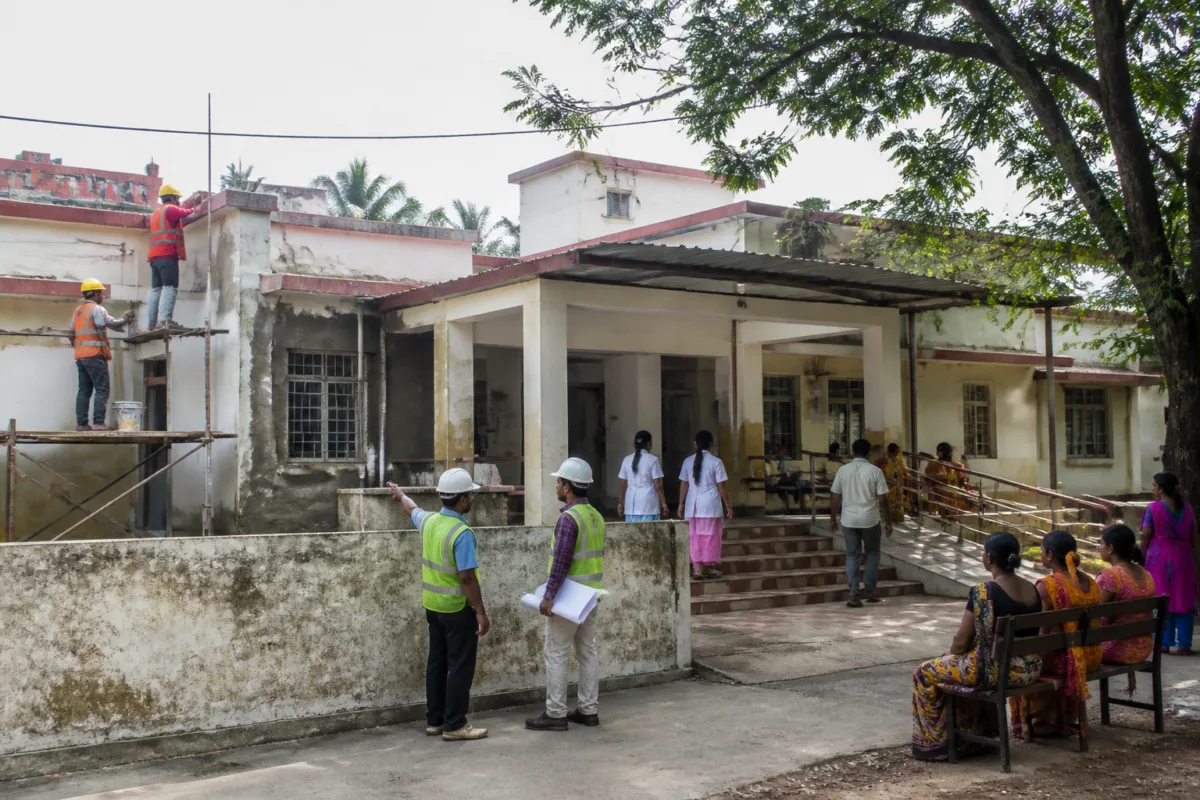
Thane district has made a provision of about ₹165.95 crore to modernise primary health centres and model rural hospitals, while work to convert Ulhasnagar’s Central Hospital into a 500-bed advanced facility is also being accelerated, according to a review of the district’s development plan.
The review was held at the district collector’s office in the presence of MP Dr Shrikant Shinde. The plan covers healthcare, government schools, civic amenities, development of Dalit settlements and measures to control pollution in the district’s rivers.
The proposed health-sector allocation is intended to improve infrastructure at primary health centres and model rural hospitals, strengthen treatment systems and provide better services to patients, the report said. The plan focuses on improving the availability and quality of healthcare in both rural and urban parts of the district.
The district administration has also accelerated the process of converting Ulhasnagar Central Hospital into a 500-bed modern hospital in its first phase. The report did not specify the project’s construction cost, completion date or current physical progress.
Government schools operated by the zilla parishad, municipal corporations and municipalities are to be modernised by 26 January 2028. The administration has completed an assessment of facilities ranging from school entrances and classrooms to toilets and kitchens. About ₹220 crore has been made available through reallocation for repairs, new classrooms and modernisation, according to the report.
The school plan includes libraries, laboratories and artificial-intelligence laboratories. Instructions have also been issued to consider adding classes from Standards 8 to 10 according to student numbers and local requirements, as well as starting semi-English-medium schools.
The development plan includes measures for the revival of the Waldhuni and Ulhas rivers. In coordination with the Maharashtra Pollution Control Board and the National Environmental Engineering Research Institute, the administration plans to prevent untreated sewage from entering the rivers.
Officials have been instructed to use drone surveys to identify sources releasing polluted water into the rivers. In rural areas, the plan also proposes cluster-based solid-waste management, composting and enclosed waste-processing plants.
The review focused on implementing the proposed works within set timelines. The report did not provide project-wise schedules, tender details, the implementing agencies for each work or details of how the health and school allocations will be released.

