


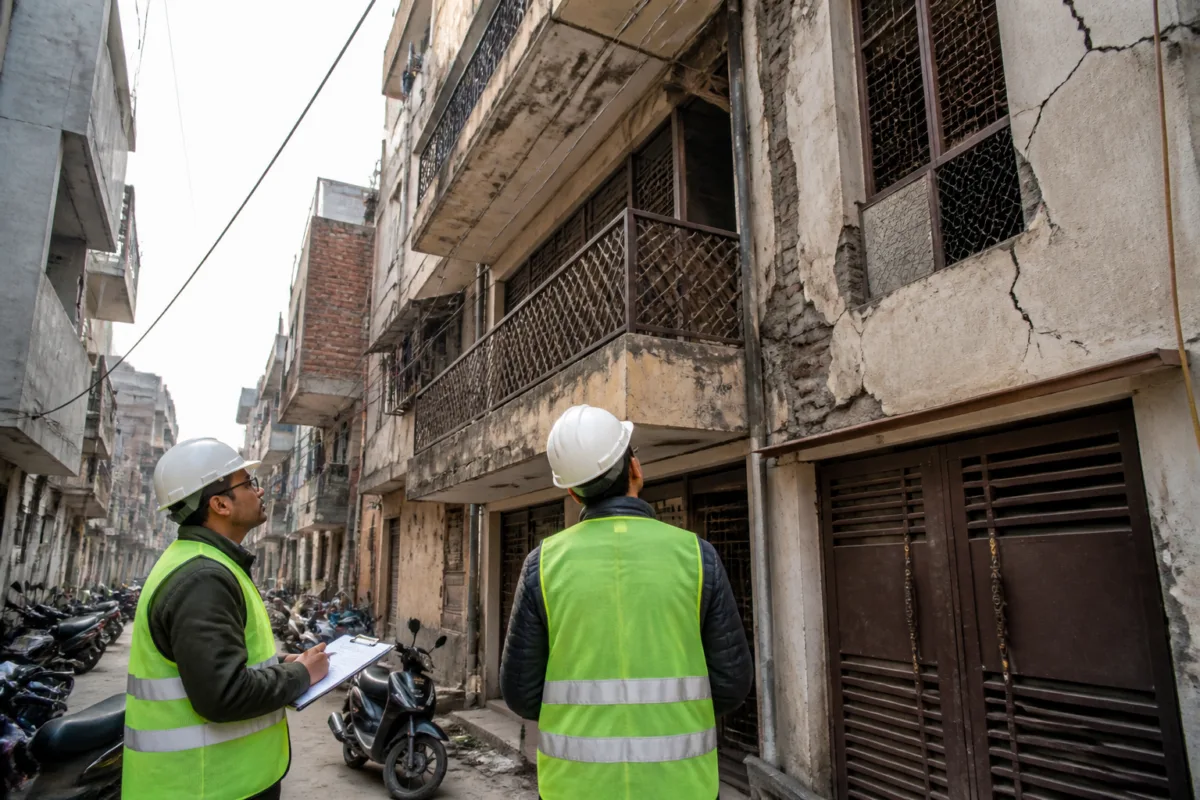
Delhi’s proposed building safety audit could require 40 lakh person-hours for an initial survey, according to estimates that the Municipal Corporation of Delhi (MCD) has submitted to the Central government. The exercise follows directions from the Union home ministry to prepare a roadmap for checking fire and structural safety in the capital’s buildings.
The reported estimate is based on an assessment of more than 40 lakh buildings in Delhi. If one person spends one hour surveying each building, the exercise would require 40 lakh working hours, or about five lakh working days. With 500 personnel assigned exclusively to the task, the initial survey would take about 1,000 working days, or slightly more than four years, according to the MCD’s calculations.
The figures describe an initial survey rather than a complete structural investigation. The proposed form would record the building’s age, covered area and visible structural defects, along with whether documents such as a fire no-objection certificate or approved building plan were available. The report says a more detailed scientific structural audit would follow the survey and could cost several lakh rupees per building.
The home ministry’s direction came after building collapses and deaths in Delhi during October, according to the report. It asked the MCD to prepare a roadmap for fire and structural safety audits. A senior municipal official said the corporation had submitted details of the time and resources that would be required, while the Central government would have to decide whether the survey should proceed and what deadline should apply.
The estimates underline the difference between announcing a city-wide safety review and implementing one at scale. Even a basic screening exercise would require a large field workforce, standardised inspection methods and a system for recording and prioritising defects. The reported proposal would also require officials to distinguish between visible warning signs, missing approvals and conditions that need specialist structural testing.
The arithmetic also explains why the exercise cannot be treated as a routine inspection programme. The report says one person working eight hours a day would need about 2,033 years to survey all the buildings. Its four-year estimate for 500 personnel assumes that every worker spends the full working day on surveys, without other responsibilities, and that the work proceeds for about 250 days a year after weekly and public holidays are excluded.
A city-wide audit would therefore depend on decisions beyond the MCD’s initial estimate: the number and qualifications of surveyors, the role of structural engineers and fire-safety specialists, the inspection protocol, the treatment of unauthorised or undocumented buildings, and the process for action after a dangerous condition is identified. The report does not specify these arrangements or provide a final government-approved timetable.
For residents, the immediate significance is that the proposed exercise could create a common baseline on building age, visible defects, fire clearances and planning documents. However, a survey by itself would not make buildings safer unless findings are independently assessed, urgent risks are acted upon and owners and public agencies are given clear responsibilities. The next step rests with the Central government, which must determine whether to commission the proposed survey and how its city-wide scope should be managed.

