


Patients who change hospitals may be able to access earlier prescriptions, diagnostic reports and treatment records through an ABHA ID, provided the relevant healthcare institutions use compatible systems and the patient gives consent, according to a Jagran report.
ABHA, or Ayushman Bharat Health Account, is a 14-digit digital health ID created under the Ayushman Bharat Digital Mission. It is intended to connect a patient’s digital medical records across participating hospitals, clinics and diagnostic centres.
The system is designed to address a common problem during a change of hospital: patients may have to collect old reports and treatment documents again, while doctors may lack information about earlier consultations or tests. Where records are available digitally and the institutions are connected to the ABDM network, a new hospital can request access to earlier records after receiving the patient’s consent.
However, creating an ABHA ID does not automatically place a patient’s complete medical history in the account. The records must first be generated digitally by a hospital, laboratory or other healthcare provider and then linked to the ID. The availability of records therefore depends on both the institution’s digital systems and its participation in the ABDM network.
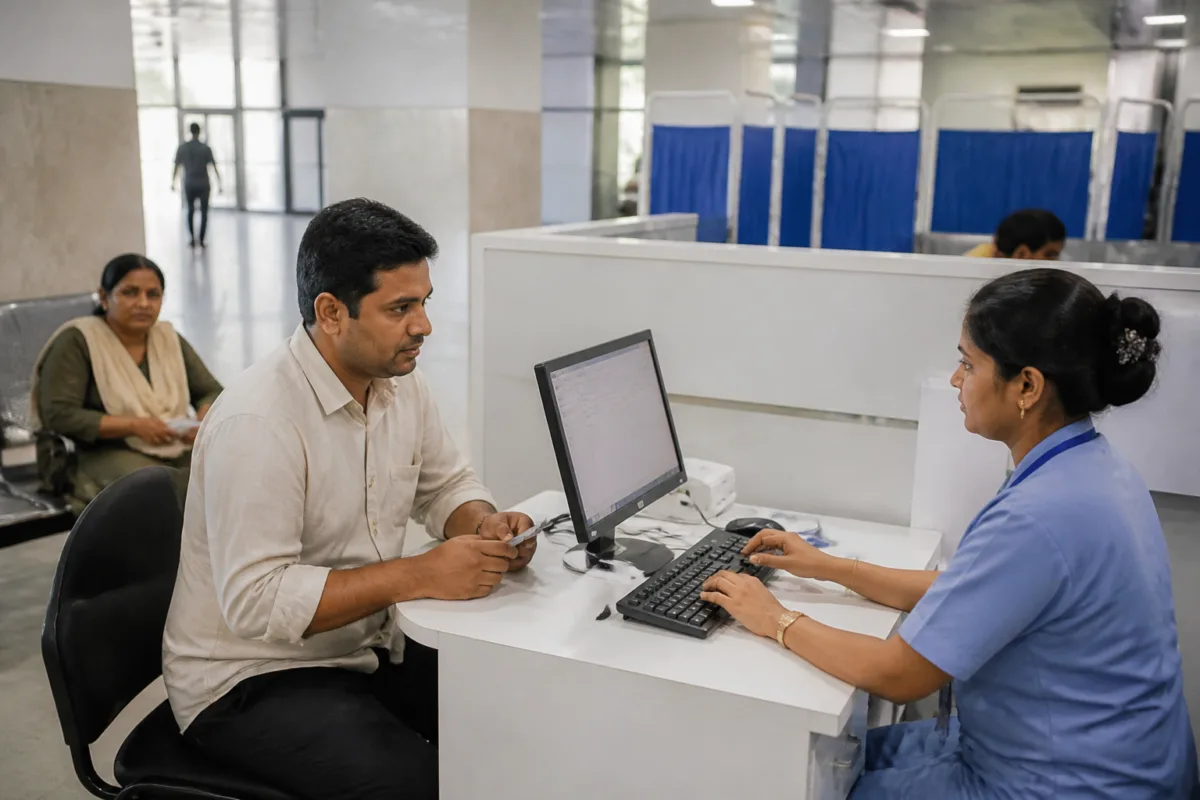
The report states that patients can create an ABHA ID free of charge either online or with assistance at an ABDM-linked health facility. People whose Aadhaar-linked mobile number is unavailable, or who do not have a smartphone, can seek help at a participating facility. Depending on the arrangements there, identity verification may be completed through biometric or face authentication.
A smartphone is not mandatory for using the service, according to the report. Patients can obtain assistance at a hospital for identity verification and consent-related steps. The practical experience, however, will depend on whether the hospital has an ABDM-enabled system and staff support for linking and sharing records.
Consent is central to the process. Medical information cannot be shared with another hospital or doctor without the patient’s consent. When a new hospital sends a request to view earlier records, patients are advised to review the request before approving it. The report also states that previously granted consent can be withdrawn through the ‘My Consent’ section of the official ABHA application by selecting the relevant consent and using the ‘Revoke’ option.
Patients can check the ABDM Health Facility Registry to find information about registered hospitals, clinics and diagnostic centres. The report advises confirming before a visit whether a facility supports digital health-record linking and sharing, since the service is not automatically available at every healthcare institution.
The arrangement could make it easier for doctors to review earlier treatment and test information when patients move between providers. It may also reduce the need to carry paper reports and could help avoid repeated tests in cases where earlier digital records are available. These benefits are conditional, however: the institutions must be registered with the ABDM network, the records must exist in digital form, and the patient must authorise access.
For patients, the key distinction is between having an ABHA ID and having usable linked records. The ID provides an account through which records can be connected and shared, but it does not replace the need for participating healthcare providers, compatible digital systems and informed consent.

