


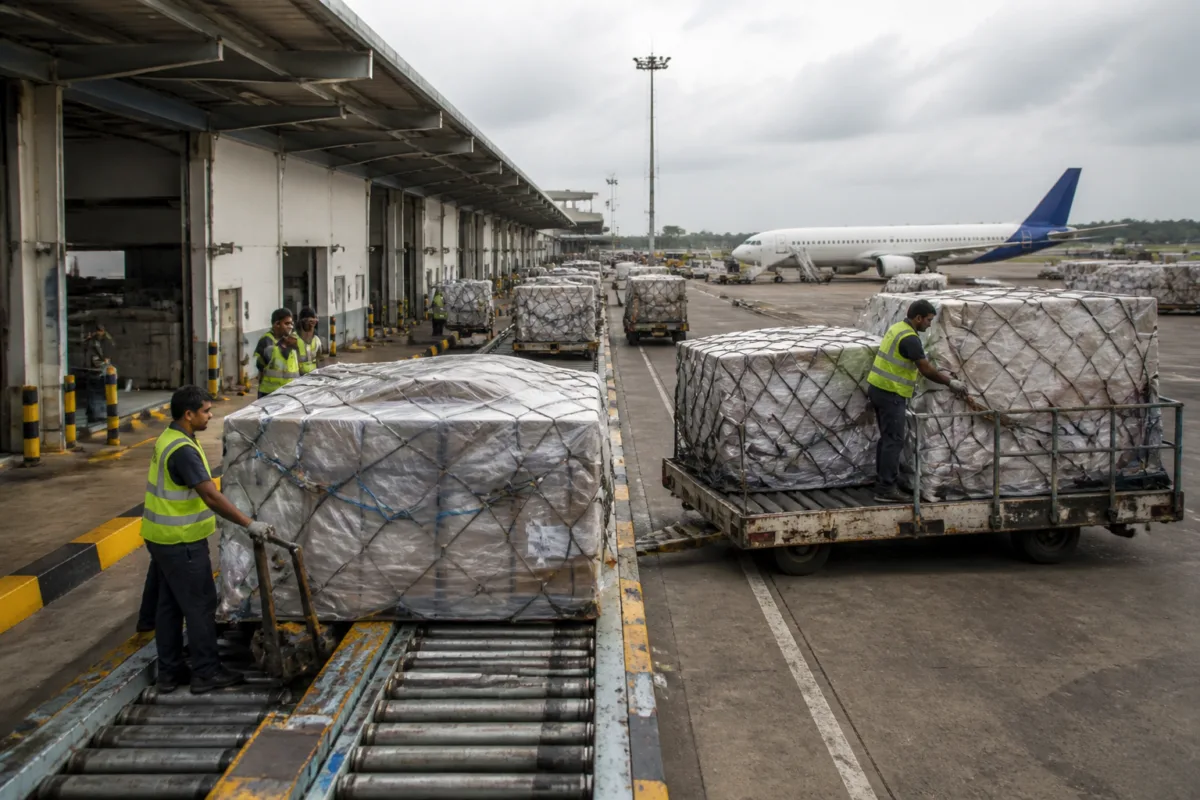
Cochin International Airport has commissioned India’s first transfer cargo security hold area, a facility designed to move domestic-international and international-domestic cargo through the airport’s operational zone while reducing repeated security checks and transfer delays.
The facility at Kochi was inaugurated by Chief Minister V.D. Satheesan on 18 November. It has been established with the cooperation of the Bureau of Civil Aviation Security, the Central Industrial Security Force and Customs, according to a report by Malayala Manorama.
Under the earlier process, cargo arriving from a domestic airline for transfer to an international flight, or moving in the opposite direction, was taken out of the airport’s operational area and transported to the cargo terminal. It was then subjected to security screening before being moved back for loading onto the connecting flight.
This process could take up to three days, the report said. With the new transfer cargo security hold area, screening can be completed close to the operational zone before the cargo is transferred to the onward aircraft. The time required for cargo movement is expected to fall to a matter of hours.
The airport also expects the new arrangement to reduce security-screening procedures by about 95 per cent compared with the existing system. The reduction is intended to shorten cargo dwell time and lower the cost associated with moving consignments between different parts of the airport and repeating inspection processes.
The facility has been set up in accordance with guidelines issued by the Bureau of Civil Aviation Security for airports seeking to speed up transfer cargo movement. Its functioning will require coordination between airport operations, security agencies, Customs and airlines, reflecting the multiple institutional checks involved in aviation cargo handling.
S. Suhas, managing director of Cochin International Airport Limited, said the facility would strengthen Kochi’s role in international cargo movement by eliminating repeated security checks and reducing the time and cost of transfers. He said the airport aims to use its air links with Gulf and East Asian destinations to move cargo from different Indian cities to international markets.
The initiative is also linked to the airport’s plans to examine the possibility of extending the cargo network to Europe, according to Suhas. The report did not provide a cargo-volume target, investment figure or detailed operating schedule for the new facility.
For cargo moving through Kochi, the immediate operational change is that transfer screening can take place near the airport’s operational area rather than requiring consignments to complete the earlier terminal-based movement cycle. The next stage will depend on how airlines, security agencies, Customs and the airport integrate the facility into regular transfer operations.

