


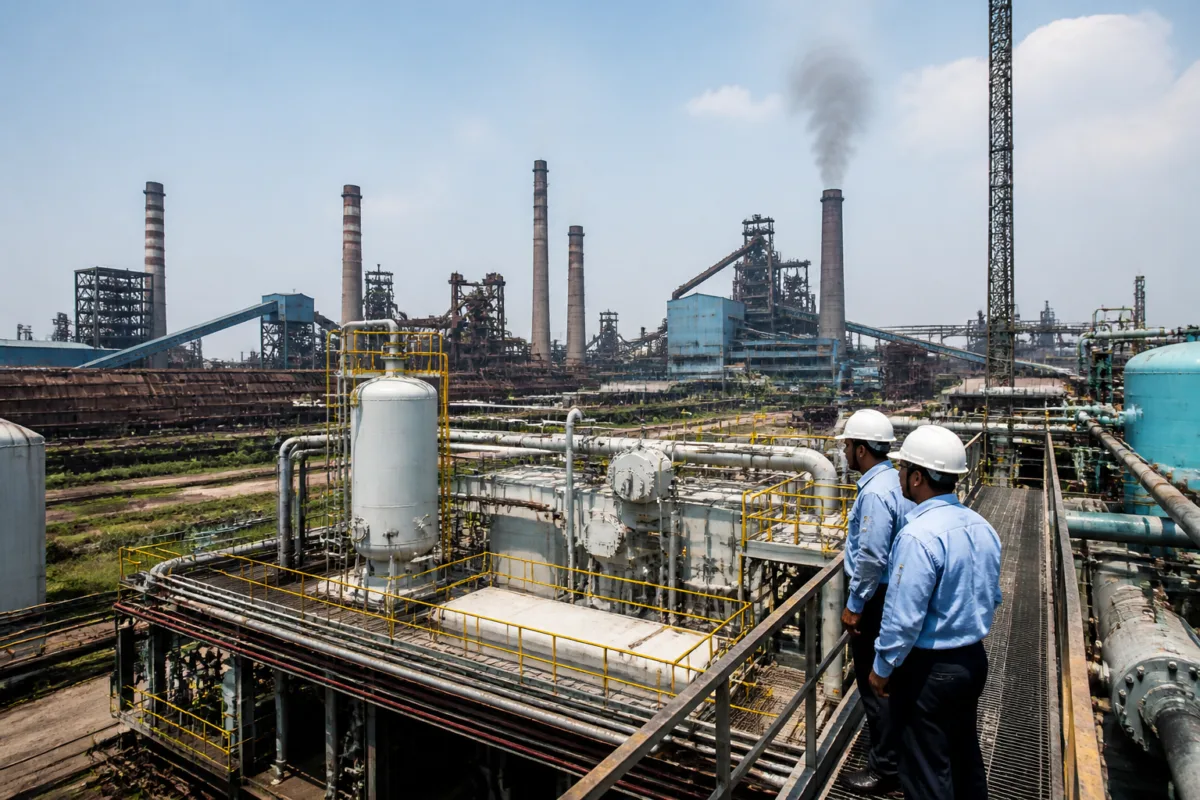
Tata Steel plans to produce high-purity hydrogen from gases generated during steelmaking at its Kalinganagar facility in Odisha, in a project the company described as the first of its kind in India. The proposed facility will have a planned capacity of 10 tonnes per day and is intended to use existing steel-plant infrastructure to support emissions reduction.
Tata Steel and Houston-based Utility Global will first undertake joint Front-End Engineering and Design (FEED) studies for the project. The studies will support a Final Investment Decision (FID) by Tata Steel’s board before construction proceeds.
The project will use Utility Global’s H2Gen technology, an electrochemical process designed to produce high-purity hydrogen from carbon monoxide-rich gases generated at steel plants. The gases, known as off-gases, are produced during the steelmaking process and would otherwise form part of the plant’s wider emissions and energy-management challenge.
If the board approves the investment after the FEED stage, the collaboration will move to the installation and operation of the hydrogen plant at Kalinganagar. The announcement does not specify the expected project cost, construction schedule or the intended end-use of the hydrogen.
Utility Global has previously demonstrated the technology using actual blast furnace gas at a steel producer’s facility in Canada. Tata Steel said the Kalinganagar initiative would allow the technology to be assessed within the scale and operational complexity of an existing steel plant rather than in an isolated demonstration setting.
“For any technology to make a meaningful contribution to steel decarbonisation, it needs to work at the scale and complexity of an operating steel plant,” Subodh Pandey, Vice-President for Technology, R&D, New Materials Business and Graphene at Tata Steel, said in a statement. He added that technologies such as H2Gen could support emissions reduction while leveraging existing infrastructure.
The proposed facility forms part of Tata Steel’s broader portfolio of low-carbon steelmaking projects. The company has committed to achieving net-zero emissions by 2045, making the Kalinganagar project one component of its longer-term operational decarbonisation strategy.
For the steel industry, the project places attention on whether gases already generated within an integrated plant can be converted into a usable low-carbon industrial input. The immediate next step is the completion of the FEED studies, followed by Tata Steel’s board-level investment decision. Installation and operation will depend on a successful FID.

