


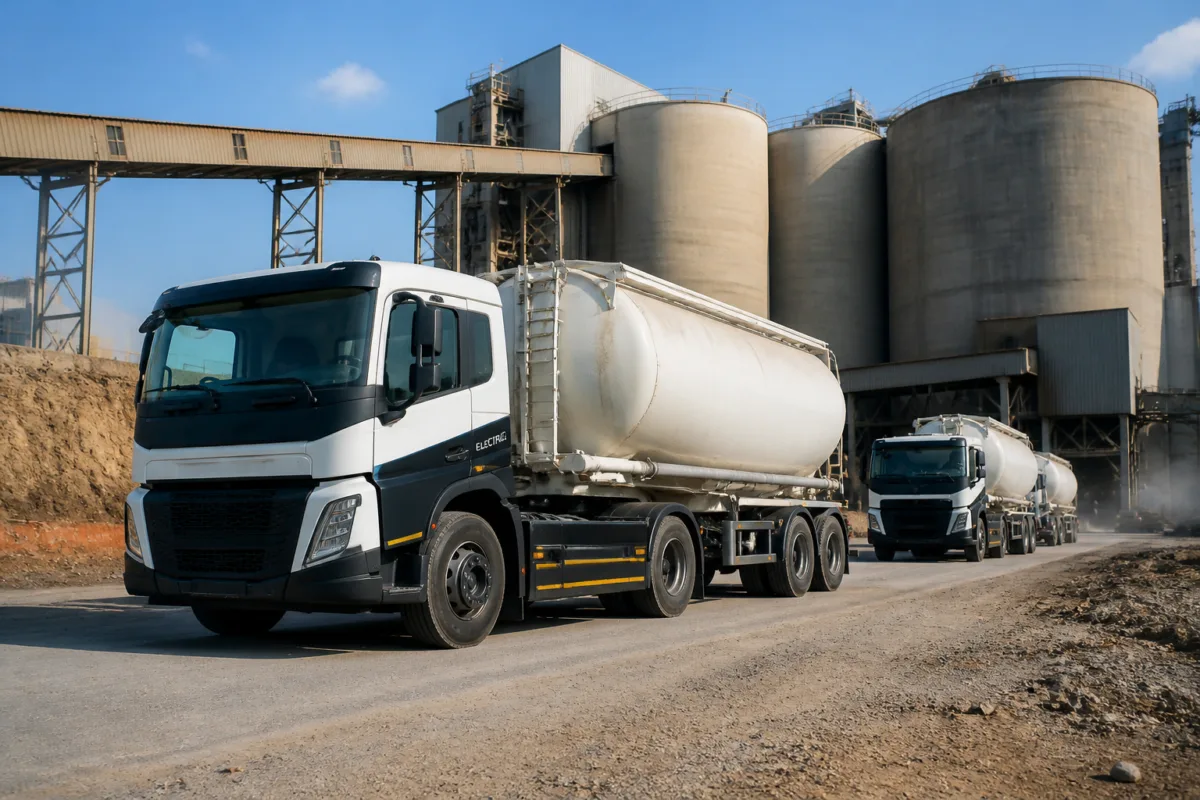
Adani Cement has started deploying its first fleet of heavy-duty electric trucks at the Sanghi Plant in Gujarat, with plans to expand the fleet to more than 2,000 vehicles by 2030 as it seeks to reduce emissions and logistics costs.
The company said the initial deployment is part of a phased electric vehicle logistics programme for transporting cement and clinker. The first phase is expected to reach 410 electric trucks by March 2027, with deployment already beginning at the Sanghi Plant.
According to Adani Cement, the planned 410-truck fleet could reduce more than 25,000 tonnes of carbon dioxide emissions annually and replace the equivalent of 11 million litres of diesel consumption each year. The company did not provide details in the announcement on the number of trucks currently operational, the vehicle manufacturers or the charging infrastructure supporting the initial deployment.
By 2030, Adani Cement aims to move 10 per cent of its road logistics volume through electric trucks. This would take the planned electric fleet to more than 2,000 vehicles across routes used to transport clinker and cement in India.
Vinod Bahety, CEO of the Cement Business at the Adani Group, said the deployment at Sanghi was the beginning of a wider plan. “We have identified multiple routes across India for EV-based transport of clinker and cement,” he said. Bahety added that electrifying trucks would reduce the company’s carbon footprint and limit the impact of diesel price volatility on logistics costs.
The announcement places road freight at the centre of the cement company’s emissions reduction efforts. Cement production is energy-intensive, but the movement of limestone, clinker and finished cement between plants, warehouses and markets also creates a significant transport requirement. The company said the electric truck programme is intended to contribute to reducing its Scope 3 emissions, which include emissions generated across its value chain rather than directly from its own facilities.
Adani Cement attributed the planned shift to changes in the relative economics of energy and transport. It said diesel prices had increased by 60 per cent over the past decade, while lithium-ion battery pack costs had declined by around 70 per cent and solar tariffs had fallen by 47 per cent over the same period.
The company said diesel trucks emit approximately 0.7375 kilograms of carbon dioxide per kilometre. It added that electric trucks powered by renewable energy could eliminate up to 100 per cent of freight emissions, although the actual reduction would depend on the source of electricity used for charging and the operating conditions of each route.
The deployment also highlights the infrastructure requirements behind industrial fleet electrification. Moving heavy cement loads over long distances will require suitable charging locations, grid capacity, vehicle uptime management and route planning. The company’s announcement did not disclose the planned charging network, investment involved or the routes selected beyond the initial deployment at the Sanghi Plant.
India is the world’s second-largest cement producer, and road transport remains important to the movement of raw materials, intermediate products and finished cement. Adani Cement said its electric truck programme forms part of its wider net-zero efforts, with further route deployments planned as the company expands the initiative.

