


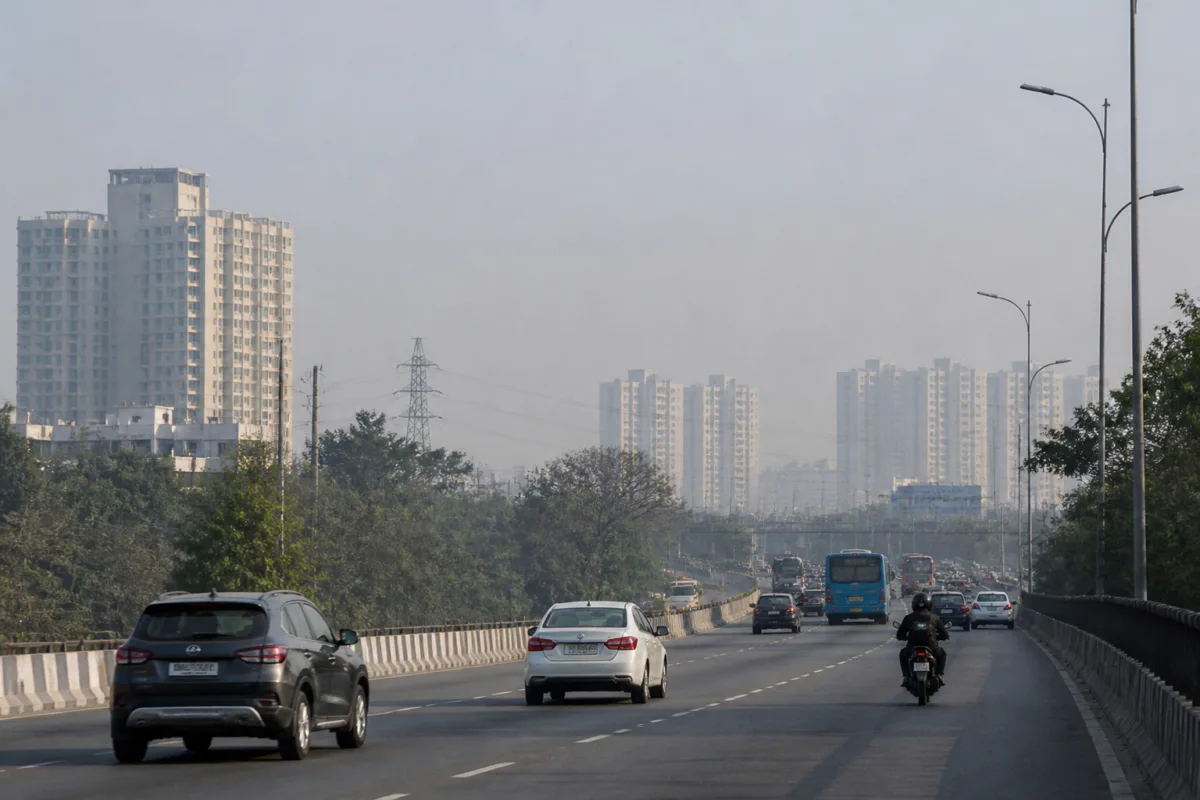
Delhi-NCR air quality improved enough for the Commission for Air Quality Management (CAQM) to withdraw restrictions under Stage 3 of the Graded Response Action Plan (GRAP) with immediate effect, but the less stringent Stage 1 and Stage 2 measures will continue across the region.
The decision followed a decline in Delhi’s Air Quality Index (AQI) to 204 and a continuing downward trend recorded by the GRAP sub-committee, according to information released by CAQM. The commission said the withdrawal of Stage 3 restrictions would provide relief from the additional curbs imposed during the latest deterioration in air quality.
However, the decision does not mean that pollution-control measures have been withdrawn. CAQM said all rules and restrictions operating under GRAP Stages 1 and 2, as notified through its October 30, 2026 order, would remain in force. Authorities will therefore continue pollution monitoring and the measures prescribed under the first two stages of the response plan.
Delhi’s AQI had reached 382 on November 6, when the worsening conditions and forecasts of further deterioration prompted CAQM to impose GRAP Stage 3 across Delhi-NCR. Stage 3 represents a higher level of restrictions than the measures already operating under Stages 1 and 2, with additional controls applied when air quality worsens.
The latest decision changes the operating conditions for activities and enforcement agencies across the national capital region, although the source report does not specify the individual Stage 3 restrictions being lifted or provide a revised list of permitted activities. The continuation of Stages 1 and 2 means that baseline pollution-control requirements remain applicable to construction, road dust, transport and other regulated activities covered by the GRAP framework.
The regional nature of the decision reflects the way winter air pollution is administered across Delhi-NCR. CAQM coordinates the response across the national capital and neighbouring areas, while local agencies implement the measures in their respective jurisdictions. That arrangement means that a change in Delhi’s AQI can lead to a region-wide adjustment in restrictions, subject to the commission’s assessment of air-quality trends.
CAQM said it would continue monitoring the AQI in the coming days. Further decisions on the GRAP framework will be based on the direction of air-quality conditions and the commission’s assessment of the trend. The withdrawal of Stage 3 therefore reduces the severity of the current restrictions but leaves Delhi-NCR under active pollution-control measures.

