


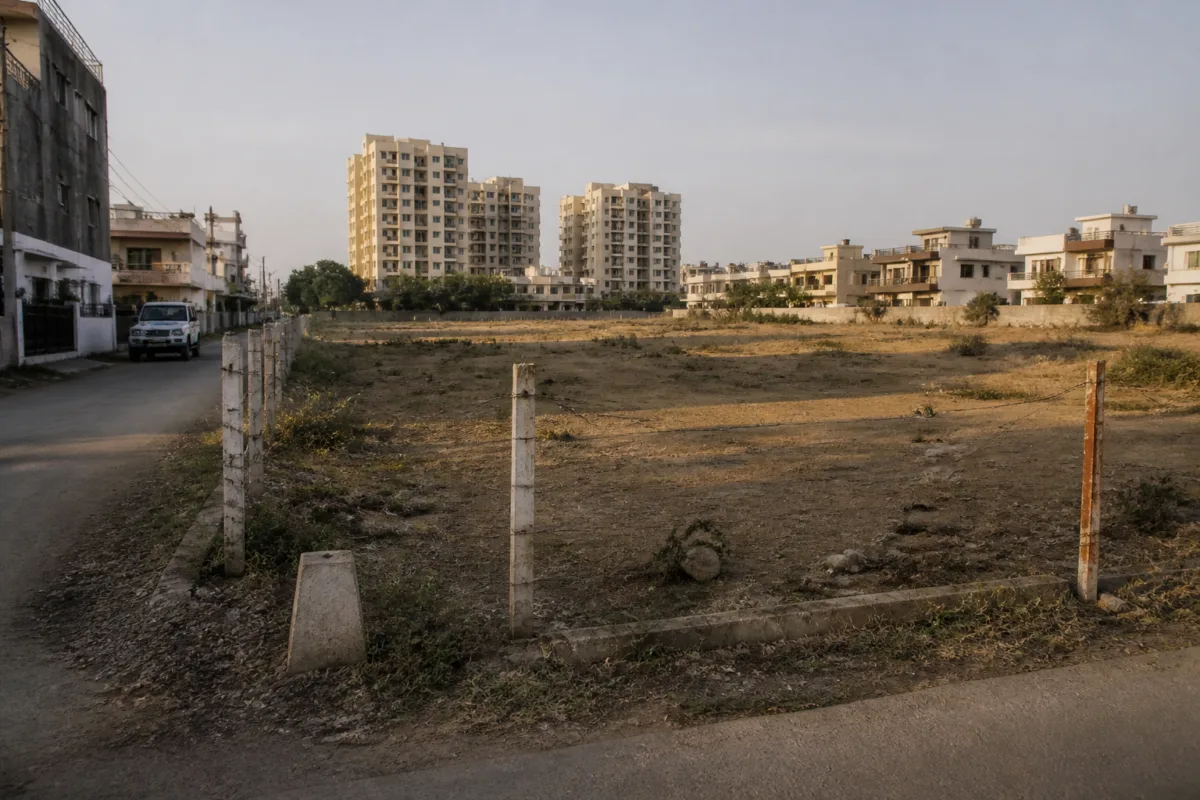
A proposed allocation of a 978-square-metre municipal plot in Vadodara to former cricketer Yusuf Pathan has reopened a 14-year dispute over public land, valuation and the limits of discretionary allotment. The immediate controversy is political, but the chronology described by Divya Bhaskar points to a larger governance question: how should urban authorities dispose of valuable land when an earlier allotment proposal was rejected, possession has been contested and court proceedings are still part of the record?
The plot is located near Pathan’s residence in Tandalja and is identified as Final Plot No. 90 of Town Planning Scheme 22. According to the report, the Vadodara Municipal Corporation’s standing committee is considering a proposal to allocate the land after the state urban development ministry issued a resolution on 13 August 2026 concerning the gifting of land. The municipal commissioner sent the proposal to the standing committee on 20 October.
The proposal has triggered opposition from the Gujarat Congress. State Congress president Amit Chavda alleged that the land, valued at approximately ₹20.53 crore, was being made available to Pathan after he extended support to the National Democratic Alliance following his election as a Trinamool Congress member of Parliament. That political allegation is the party’s claim and is not independently established in the material supplied. The reported administrative record, however, shows that the dispute predates Pathan’s political affiliation by more than a decade.
Pathan first sought the plot in a letter to the municipal commissioner on 3 March 2012. The request concerned the 978-square-metre parcel beside his bungalow. Proposals to proceed with the allotment were moved in municipal meetings on 30 March and 8 June that year. The proposed arrangement was reportedly a 99-year lease without a public auction. The price cited at the time was ₹57,270 per square metre.
The state government rejected the proposal on 9 June 2014, according to the chronology published by Divya Bhaskar. The rejection is central to the present dispute because it established that the earlier attempt to transfer the plot without an auction had not received the required approval. The issue then remained unresolved for years, while the municipal corporation and Pathan later took opposing positions over possession and the status of the land.
On 6 June 2024, the corporation ordered action to remove what it described as an unauthorised occupation, after referring to the earlier rejection of the allotment proposal. The report says Pathan challenged that decision before the Gujarat High Court. A single judge dismissed his petition on 21 August 2025. Pathan subsequently filed an appeal before a division bench on 4 February 2026.
During proceedings on 8 June 2026, the High Court questioned how possession of government land had been obtained if the land had not been legally allotted and the required amount had not been paid. The bench also raised questions about the role of municipal officials. Those observations, as reported, make the administrative trail as important as the political controversy: the dispute concerns not only who may receive the land, but also how possession was allowed to develop before the legal and financial conditions of allotment were settled.
On 15 June, Pathan’s lawyer sought time to advance submissions based on a state government policy concerning land allotments to international cricketers. The source does not provide the text of that policy or explain how it applies to the Tandalja plot. That missing detail matters. A policy-based exception can be assessed only through its eligibility conditions, approval process, valuation rules and relationship with general municipal land-disposal procedures.
The corporation then prepared to auction seven plots. The proposal placed before the standing committee on 18 June included the Tandalja parcel. Its estimated upset value was stated as ₹2.10 lakh per square metre, putting the total value at approximately ₹20.53 crore. This figure is substantially different from the ₹57,270-per-square-metre rate cited in connection with the 2012 proposal. The two figures belong to different points in the dispute and may reflect different valuation exercises, but the supplied report does not establish the methodology behind either amount.
That valuation gap is one of the most consequential unresolved elements in the case. Municipal land is an urban asset: its disposal affects public revenue, future planning options and the credibility of the rules applied to other applicants. If a property is transferred at a rate below its current market or reserve value, the authority must be able to show the legal basis, public purpose and approval chain for doing so. If it is auctioned, the process must establish how competing demand and the land’s value are to be tested. The material supplied does not show the final terms of the proposed allocation or whether the standing committee has approved them.
The legal proceedings also complicate any simple account of the controversy. The report says Pathan withdrew his appeal from the High Court on 31 August 2026. It does not state that the court approved the proposed municipal allocation or that the withdrawal resolved the underlying questions about past possession. Nor does it provide the text of the August state resolution or the October municipal proposal. Those documents would be necessary to determine whether the current process is a fresh allotment, a settlement of the earlier dispute, a lease, a gift or another form of transfer.
The public-interest issue extends beyond the identity of the proposed beneficiary. Municipal corporations routinely control land needed for roads, public facilities, open spaces, services and planned development. Their decisions therefore require a clear distinction between public purpose and individual benefit. A request made by a prominent citizen may enter the system through a formal application, but the final decision still depends on the governing law, the authority competent to approve it, the valuation method and the availability of a transparent process.
Chavda’s criticism focused on unequal access to land. He contrasted the reported proposal with the difficulty faced by ordinary and economically weaker families seeking small residential plots. He also alleged that rules are applied differently depending on a person’s relationship with the government. These are political claims, but they identify the equity test that any public-land decision must confront: whether similarly placed applicants would receive the same consideration and whether the reasons for an exception are recorded and publicly defensible.
The dispute therefore reveals three layers of urban administration. The first is the municipal layer, where the commissioner and standing committee process the proposal and control the corporation’s land assets. The second is the state layer, which previously rejected the no-auction proposal and later issued the reported resolution on gifting land. The third is the judicial layer, which has examined possession, payment and official responsibility. When these layers act sequentially over 14 years, the absence of a clear public record can itself become a source of uncertainty.
The known chronology confirms that the land was requested in 2012, that a no-auction lease proposal was rejected in 2014, that the corporation initiated action over the disputed possession in 2024, that the matter reached the High Court, that an auction proposal was prepared in June 2026, and that a state resolution and municipal allocation proposal followed later in the year. It does not yet establish the final legal form of the transfer, the applicable policy, the amount to be paid, or whether the standing committee and general body have approved the proposal.
Those are the facts that should determine the next stage of scrutiny. The immediate milestone is the Vadodara Municipal Corporation’s meeting, where the proposal is expected to be considered. Until the resolution, valuation documents, applicable policy and approval record are made clear, the central issue remains unresolved: whether the proposed transfer represents a legally supported settlement of a long-running land dispute or a departure from the public process previously applied to the same urban parcel.

