


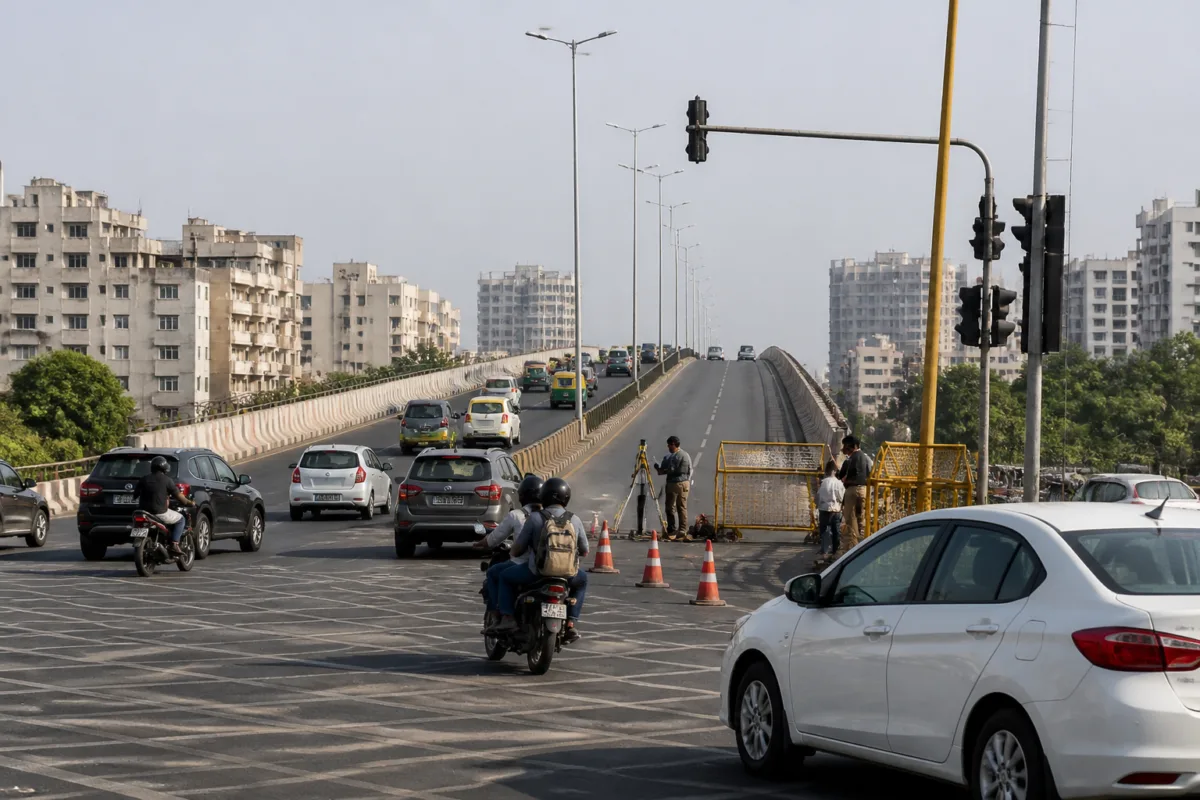
The Tathya Patel accident case has taken a new turn in Ahmedabad, with five friends who were allegedly travelling in the car during the Iskcon Bridge crash reportedly changing their statements in court on the question of the vehicle’s speed. The trial is under way before the Ahmedabad Rural Sessions Court in the case linked to the deaths of nine people.
The five witnesses—Malvika Patel, Shan Soni, Dhvani Panchal, Aryan Panchal and Shreya Patel—were in the car with Patel on the night of the crash, according to Gujarat Samachar – Ahmedabad. During the police investigation, their statements were recorded before a magistrate under Section 164 of the Code of Criminal Procedure.
The report says the witnesses had earlier told the magistrate that Patel was driving at very high speed and that the occupants had repeatedly asked him to slow down. They allegedly stated that he did not respond to their warnings and that the driving led to the crash. During the ongoing trial, however, the five witnesses have reportedly departed from those earlier statements on the issue of speed and have become hostile witnesses.
A hostile witness is not automatically removed from a case. The court evaluates the testimony given during trial alongside earlier statements, cross-examination and other evidence placed on record. The report does not provide the full text of the witnesses’ latest depositions or specify the precise portions that were treated as contradictory.
The case also includes camera footage from a motorcycle rider, findings from the Forensic Science Laboratory and the Regional Transport Office, and data obtained from the vehicle manufacturer, according to the report. These materials have been described as technical evidence relating to the vehicle and the crash. The published account does not set out the underlying speed calculations, the footage sequence, the RTO findings or the manufacturer’s data in detail.
Legal experts cited in the report said the witnesses changing their position would not necessarily weaken the prosecution case if the technical material independently establishes the circumstances of the crash. Their assessment, as reported, is that scientific and technical evidence may carry greater weight than changed oral testimony in a serious criminal trial when the material is properly presented and tested before the court.
The development highlights the difficulty of relying on eyewitness accounts in high-profile road-crash prosecutions. Statements recorded during an investigation and testimony delivered during a trial are assessed through the legal process, while the court must determine the evidentiary value of each piece of material before reaching a decision.
The trial remains pending before the Ahmedabad Rural Sessions Court. The supplied report does not state the next hearing date, the prosecution’s next procedural step or when the court is expected to deliver its judgment.

