


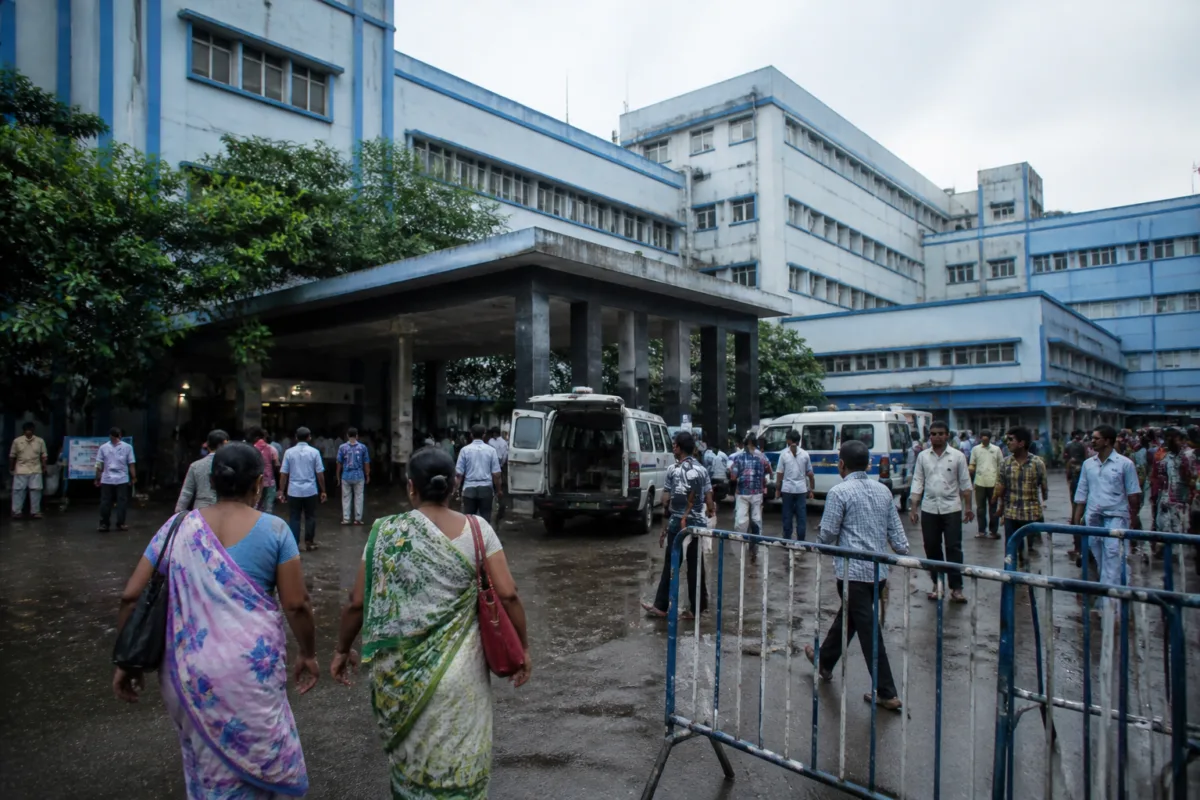
A 77-year-old woman from Howrah died at Kolkata’s SSKM Hospital on Tuesday morning after her family alleged that a delay in responding to a sharp rise in her blood pressure worsened her condition. Her son, Utpal Manna, has demanded a departmental inquiry and a death audit of the hospital’s hyper-acute stroke unit.
Hospital sources said Anjana Manna died at 10.45 am while undergoing treatment. She had been admitted to the Anex Ramrik Hospital unit of SSKM on Monday night for a neurological condition, according to the report. Her son had brought her from Bagnan in Howrah at about 8 pm.
The family alleged that Utpal noticed his mother’s blood pressure had risen to 185/90 during visiting hours at about 4 pm on Monday. He said he informed nurses who were seated near the patient’s bed, but claimed that no immediate intervention followed. According to his account, one nurse told him to speak to a doctor instead.
Utpal further alleged that a nurse questioned him about the types of stroke after he identified himself as a medical technologist. He claimed that medication to reduce his mother’s blood pressure was administered only after 20 to 25 minutes. During that period, he said, her condition deteriorated and she had to be moved to the intensive care unit before being placed on ventilator support.
The allegations have not been independently established in the supplied report. The account was presented by the patient’s son, while hospital sources confirmed the death. The report also said that health department sources were aware of the incident and that the nurse concerned had reportedly been moved to another department.
The family has questioned whether transferring the nurse is sufficient and has sought a formal departmental investigation. Utpal said the hyper-acute stroke unit is a specialised facility and alleged that 17 patients were being managed by two nurses at the time. He disputed the possibility that excessive patient load had prevented timely attention to his mother.
His demand for a death audit extends beyond the individual case. He has argued that deaths in a specialised stroke unit should be examined through a formal process, similar to audits conducted in other public-health settings such as dengue and maternal deaths. Such an audit would be intended to establish the sequence of events, the timing of clinical intervention and whether hospital procedures were followed.
The case also highlights the dependence of lower- and middle-income families on public hospitals for specialised treatment. Utpal said his family could not afford private healthcare and had gone to SSKM expecting access to dependable treatment. He also questioned how families should escalate urgent concerns inside a large public hospital when a patient’s condition changes rapidly.
The report did not include a detailed response from SSKM Hospital authorities on the allegations, the reported transfer of the nurse or the family’s demand for a death audit. The next formal steps would be a departmental inquiry and an assessment of the treatment record and response timeline, if ordered by the hospital or health authorities.

