


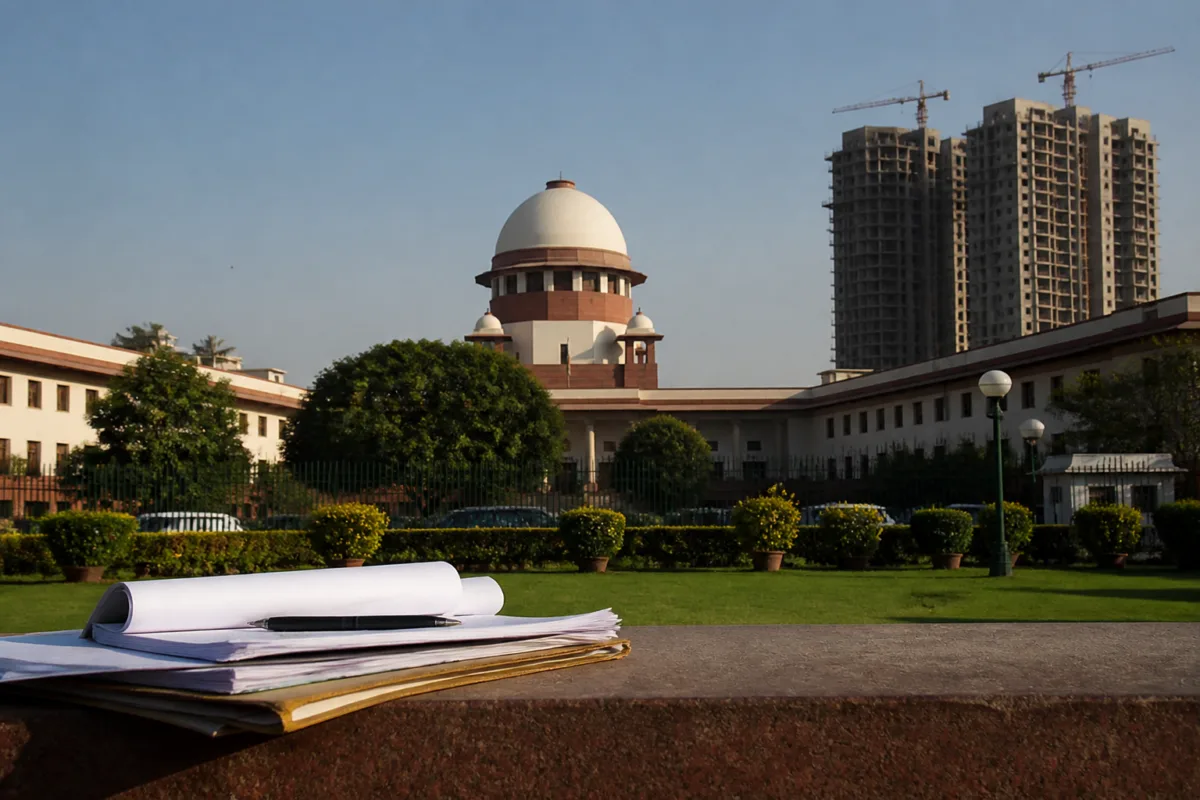
The Supreme Court has completed hearings on arrangements to complete 16 stalled Supertech housing projects in Noida and reserved its order after hearing arguments on the proposed role of the National Buildings Construction Corporation (NBCC), its fees and the projects’ financial viability.
The case concerns the future of thousands of homebuyers whose residential units remain incomplete. The court heard submissions from all sides on the mechanism for completing the projects and on whether NBCC should participate in their construction and delivery.
Attorney General R. Venkataramani, appearing for NBCC, told the court that the public sector construction agency was prepared to withdraw if homebuyers did not want its involvement. He also questioned why NBCC should be drawn into disputes between groups of homebuyers supporting different financiers.
Venkataramani referred to the Amrapali projects and said NBCC was willing to complete Supertech’s unfinished projects on its specified terms if directed by the Supreme Court. The agency’s proposed fee structure, including a 1% marketing charge within an overall fee of 8%, was discussed during the hearing.
The court also examined the financial feasibility of the projects and a request for relaxation of provisions relating to safety and quality under the Real Estate (Regulation and Development) Act. These issues are significant because any completion arrangement would have to balance the need to restart construction with the regulatory requirements applicable to housing projects.
Supertech Eco Village-2 received specific attention during the hearing. The project has 7,134 units, and the parties discussed the construction status of those homes. The supplied report did not provide a final assessment of the project’s financial position, the extent of construction completed or the timeline for delivery.
The hearing places the question of institutional responsibility at the centre of the stalled-project dispute. While NBCC has indicated that it can undertake completion work if ordered by the court, its participation remains linked to the consent of homebuyer groups, the proposed fee structure and the financial viability of individual projects.
With the arguments concluded, the next formal step is the Supreme Court’s order. Its decision will determine the framework, if any, for NBCC’s involvement in the 16 projects and clarify how the competing demands of homebuyers, financiers, regulators and the stalled developer are to be addressed.

