


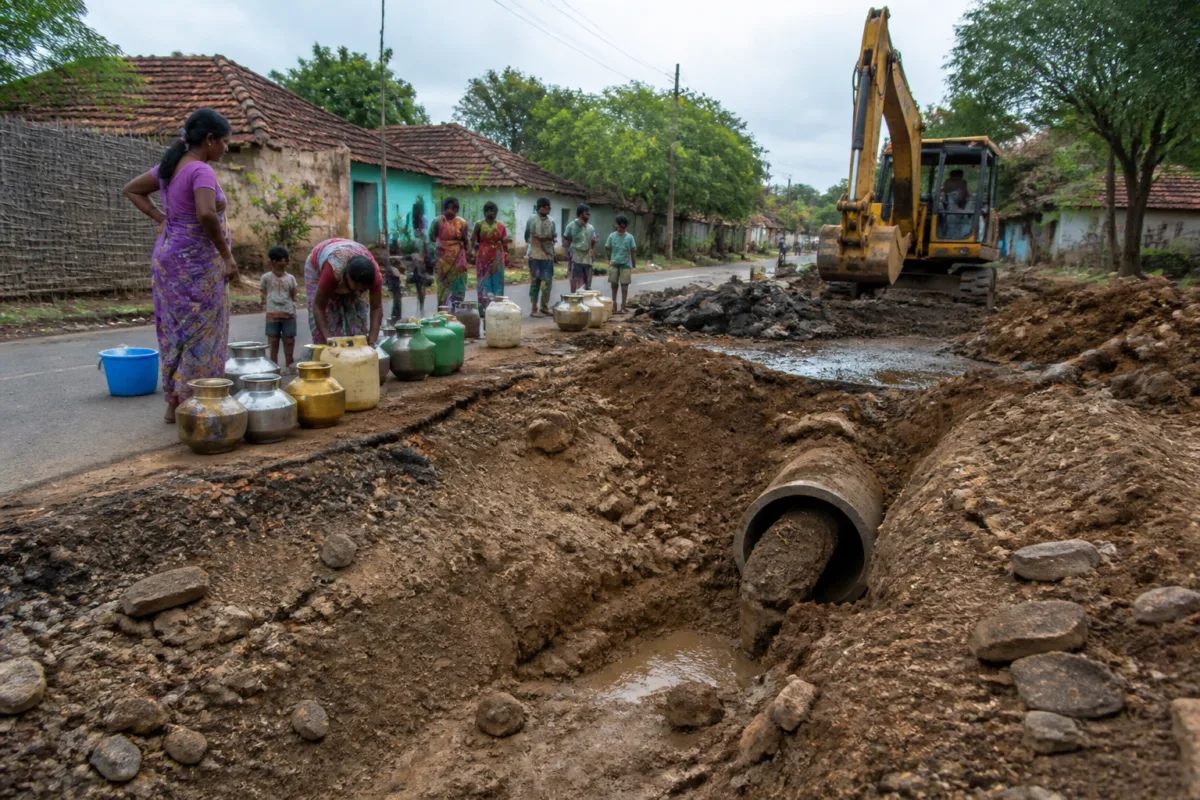
The Rishida water crisis in Kalahandi’s Karlamunda block has entered its 12th day, with piped drinking-water supply from the Tel river remaining disrupted and hundreds of families across several neighbourhoods facing difficulty obtaining water. The disruption has reportedly followed damage to a supply pipeline during road construction work in the village.
According to a report by Dharitri – District News, the pipeline was allegedly damaged while road work being carried out by the Public Works Department was under way. Residents have accused the contractor of acting carelessly, but the report does not include a response from the contractor or an independent confirmation of how the damage occurred.
The affected supply system draws water from the Tel river and serves Rishida, a densely populated village in the block. The disruption has affected Kumbharapada, Kandhapada, Gandhinagar Pada, Ramjipada, Colonypada, Salandiamunda, Matrupuri and Daily Market Pada, according to the report.
Residents in these areas have reportedly been forced to deal with an acute shortage of drinking water. The incident highlights the immediate public cost of poor coordination when road construction intersects with existing utility networks. In this case, the water-supply system is administered through the rural water and sanitation authorities, while the road work falls under the Public Works Department, creating a need for the two departments to coordinate repairs and site access.
The rural water and sanitation department reportedly informed the Public Works Department’s junior engineer about the disruption. The reported repair process requires the contractor to complete the necessary earthwork and related site activity before the pipeline can be repaired by the concerned department and water supply restored.
However, villagers have alleged that neither the contractor nor the junior engineer has taken the required steps. Residents have also complained that the junior engineer responsible for the area has not been answering public calls. The report does not state whether the department has issued a formal repair deadline, arranged an alternative water supply or recorded the complaint through a public grievance mechanism.
The prolonged outage has also triggered concerns about accountability for utility damage during public works. A road project can disrupt buried or surface-level water infrastructure, but restoring essential services requires clear responsibility for identifying the damaged asset, making the worksite safe, completing supporting earthwork and financing or authorising the repair. The Rishida case, as described, shows how residents can remain without a basic service while departments and contractors wait for the next step to be completed.
Women from the affected areas have warned that they may take to the main road and begin protests if the water supply is not restored immediately. Residents have called on local elected representatives, the block development officer and the district administration to intervene and resolve the crisis. The next reported step is intervention by these authorities and the completion of the work required for pipeline repairs and restoration of piped water.

