


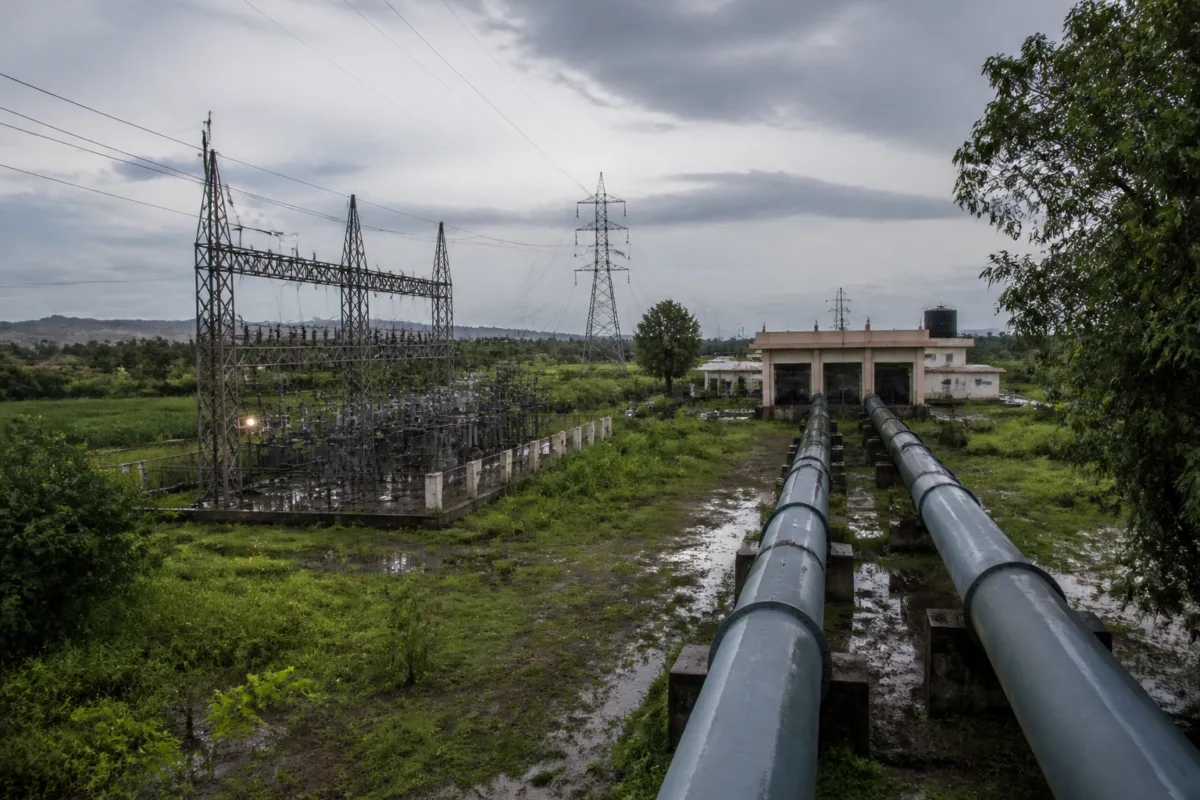
Nagpur’s water supply system is showing how a power-distribution weakness can become a citywide public-service risk. Maharashtra State Electricity Distribution Company Ltd (MSEDCL) has reported 31 interruptions on the 33 KV feeder serving the Navegaon Khairy pumping station between June and September, while the Nagpur Municipal Corporation (NMC) recorded 112 power trippings across its water treatment plants and pumping installations during the same period.
The figures are not directly comparable. The NMC count covers multiple water facilities, whereas MSEDCL’s number refers specifically to the feeder supplying Navegaon Khairy. But together they reveal a common vulnerability: the reliability of Nagpur’s water system is closely tied to the performance of electricity infrastructure located well outside the immediate urban footprint.
Navegaon Khairy is not a marginal installation in the city’s water network. It supplies raw water to four treatment plants—three at Gorewada and one at Godhani—which together cater to nearly 65% of Nagpur. Any prolonged disruption at the pumping stage can therefore affect the movement of raw water before treatment begins. The system’s exposure is not only about the number of outages, but also about how difficult it is to provide full-capacity backup when the main supply fails.
The existing arrangement depends on a 33 KV feeder connected to the 132 KV Mansar extra-high-voltage substation. The feeder, commissioned in 2015, runs for 32 kilometres through forests, villages, agricultural fields and canals. MSEDCL has identified several possible causes of faults along this route, including heavy rain, storms, lightning, animal movement and falling tree branches.
This geography matters because a long overhead or exposed transmission route creates more points at which the water system can lose power. The pumping station has a sanctioned load of 4,775 KW, making it a large electricity-dependent installation. A fault cannot be treated as a local switch failure if the line supplying it passes through varied terrain and requires access, inspection and repair across a broad corridor.
MSEDCL’s breakdown of the interruptions also shows that the problem was unevenly distributed across the four-month period. The feeder recorded five interruptions in June, six in July, 11 in August and nine in September. The higher number during August and September coincides with the period in which heavy rainfall, storms and vegetation-related faults can place additional stress on exposed power infrastructure, although the supplied report does not establish a single cause for each interruption.
The utility has responded with maintenance rather than waiting for the proposed long-term network change. It says it has begun fortnightly patrolling and conducted a walk-down survey of the entire feeder. Tree branches and creepers have been removed at vulnerable locations. MSEDCL has also replaced 10 underground cable end termination kits, two old 33 KV air-break switches and 50 polymer pin insulators. Damaged guarding and earthing have been repaired.
These interventions are important because they address several different failure points. Vegetation clearance and patrols target external threats along the route. Replacing termination kits, switches and insulators addresses equipment condition. Repairs to guarding and earthing concern the safety and physical protection of the electrical network. The measures indicate that the utility is treating reliability as a combination of corridor management, component replacement and electrical protection rather than as a single repair task.
However, the short-term work does not remove the structural limitation in the backup arrangement. MSEDCL has acknowledged that alternative supply through the 33 KV Parsheoni feeder is constrained. The feeder is approximately 75 kilometres long and serves three substations—Parsheoni, Navegaon and Dhawalapur—as well as other high-tension consumers. It is therefore technically difficult to provide the pumping station with full-capacity backup for extended periods.
This is the central institutional issue in the episode. Backup capacity is not determined only by whether another line exists on a network map. It depends on the capacity of that line, the number of facilities already connected to it, the distance involved and the operational requirements of each consumer. A nominal alternative supply may not be a practical substitute for the primary feeder when a high-load pumping station needs sustained power.
For the city, the consequence is that redundancy remains limited even though an alternative feeder is available. The water utility and the electricity utility are consequently linked through infrastructure decisions that may have been planned and operated by separate institutions. NMC depends on reliable electricity to move and treat water, while MSEDCL must manage a feeder that also serves other substations and high-tension consumers. The reliability of one public service is shaped by the capacity and priorities of another network.
MSEDCL has submitted a proposal for a new 132 KV EHV substation near Navegaon Khairy as a long-term solution. The proposed facility is expected to reduce dependence on the existing long feeder and improve supply reliability. The report does not provide the project’s cost, approval status, land details, construction schedule or commissioning date. Those details will determine whether the proposal is an immediate infrastructure intervention or a longer-horizon network upgrade.
A new substation near the pumping station would change the physical logic of supply. Instead of relying as heavily on a 32-kilometre feeder from Mansar, the installation could receive power through a network designed closer to the point of demand. That may reduce exposure to faults along the existing route, but the extent of the improvement will depend on the final design, connected capacity and availability of genuine alternate supply. The supplied information does not establish whether the proposed substation itself will provide full redundancy or only a shorter primary connection.
The episode also illustrates why water-supply reliability cannot be assessed only at treatment plants or distribution reservoirs. The vulnerability begins earlier, at the interface between the raw-water source, pumping infrastructure and the electricity network. If the pumping station cannot operate, treatment capacity elsewhere in the system may not be fully usable because the raw water does not reach the plants at the required rate.
The numbers make the dependence clear. The pumping station has a sanctioned load of 4,775 KW. Its main feeder recorded 31 interruptions in four months, including 11 in August and nine in September. The station supplies four treatment plants serving nearly 65% of Nagpur. These figures do not by themselves establish the duration or service impact of every interruption, and the report does not state that each tripping caused a citywide water shortage. They do show, however, that a facility serving a large share of the city’s treatment system is exposed to recurring power interruptions and has a constrained backup option.
For urban infrastructure planning, that distinction is significant. Outage frequency and outage duration are different measures, and a system can tolerate brief interruptions more easily than repeated or prolonged failures. The available information focuses on the number of trippings, not the total downtime, the quantity of water lost, the duration of pumping stoppages or the effects on supply schedules. These are the operational indicators that will be needed to judge whether the maintenance measures are reducing risk in practice.
The arrangement also raises a question about how essential municipal facilities are prioritised on shared electricity networks. Parsheoni’s 75-kilometre feeder serves multiple substations and high-tension consumers, so backup decisions involve competing loads. The report does not describe the operating protocol during a failure, whether the pumping station receives priority, or whether temporary generation capacity is available. Those details would clarify how the system manages an interruption before permanent network upgrades are completed.
For now, the evidence points to a layered response. MSEDCL is carrying out frequent inspections and component-level repairs to reduce immediate faults. At the same time, it has proposed a new 132 KV substation to address the longer feeder dependence. NMC’s reporting of 112 trippings across its water installations provides the broader municipal context, while MSEDCL’s 31 interruptions identify one specific electricity supply point within that system.
The larger urban question is whether critical water infrastructure has enough electrical redundancy to remain dependable during the weather and operational stresses that affect long corridors. Nagpur’s case shows that the resilience of a water system is not determined only by reservoirs, treatment plants or pipelines. It also depends on the design of the power network that keeps pumps running.
The immediate facts are established: Navegaon Khairy’s feeder recorded 31 interruptions between June and September; the main supply route is 32 kilometres long; the alternative Parsheoni feeder is constrained; maintenance work has been undertaken; and a new 132 KV substation has been proposed. What remains to be tracked is whether the repairs reduce interruption frequency, how long outages last, and when the proposed substation receives approvals and becomes operational. Those milestones will determine whether Nagpur’s water system moves from temporary fault management towards durable power reliability.

