


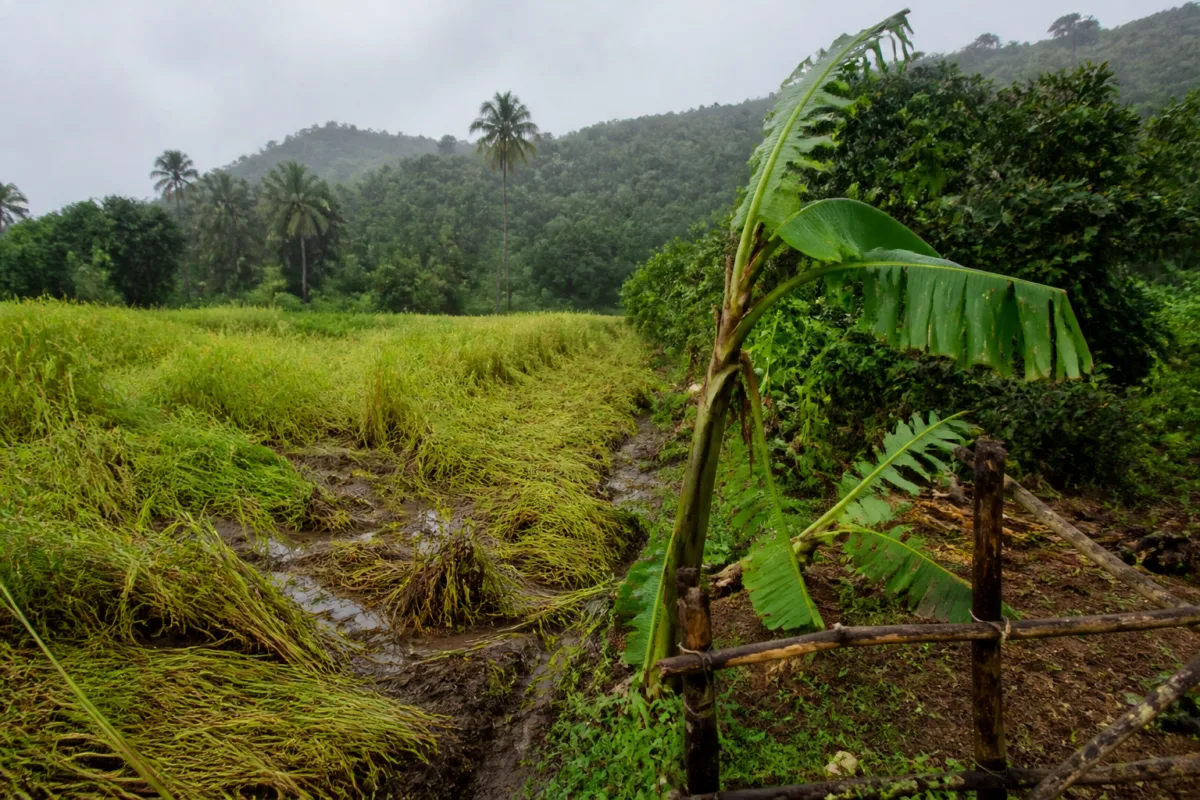
Canacona farmers are reporting extensive crop damage from monkeys, wild boars and buffaloes, prompting calls for stronger protection measures and relief as the human-animal conflict spreads across several villages in south Goa.
Farmers said the damage is affecting paddy fields as well as banana, pineapple and coconut plantations. Krishna Velip, a progressive farmer from Poinguinim, said crop destruction was no longer limited to wild boars and buffaloes, with monkeys also eating tender paddy shoots and damaging other crops.
Umesh Velip said the growing population of wild boars and monkeys had also become a threat to residential properties. The reported impact extends across Cotigao, Amonem, Shiseval, Khargal, Poinguinim and Loliem, as well as Sadolxem and Shristhal.
The crop losses have placed additional pressure on farmers who depend on cultivation and orchards for their livelihoods. The reported damage covers both seasonal paddy cultivation and plantations, indicating that the conflict is affecting farms through different stages of production rather than being confined to one crop.
Deputy Conservator of Forests (South, Territorial) Santosh Kumar Reddy acknowledged the problem and said the forest department was taking steps to retain animals within demarcated forest areas. These measures include planting fruit-bearing trees, creating waterholes and developing grasslands inside forests.
Reddy also advised farmers to use government subsidies available for power fencing. Such fencing is intended to create a physical barrier between cultivated land and animals entering farms, although the report does not specify the subsidy amount, eligibility conditions or the number of farmers who have already received assistance.
The forest department is preparing a comprehensive five-year management plan to address the growing human-animal conflict. The plan is expected to cover the department’s longer-term approach to managing animal movement and reducing encounters around farms and residential areas, though details of its funding, targets and implementation timeline have not been provided.
The issue also involves coordination between forest and agriculture authorities. Farmers and orchard owners have decided to meet the local agriculture officer to seek effective solutions, adding a formal administrative response to the mitigation steps being prepared by the forest department.
For Canacona’s farming communities, the immediate concern remains preventing further damage to standing crops and plantations. The next developments will depend on the farmers’ meeting with the agriculture officer, access to power-fencing subsidies and the forest department’s preparation of the five-year management plan.

