


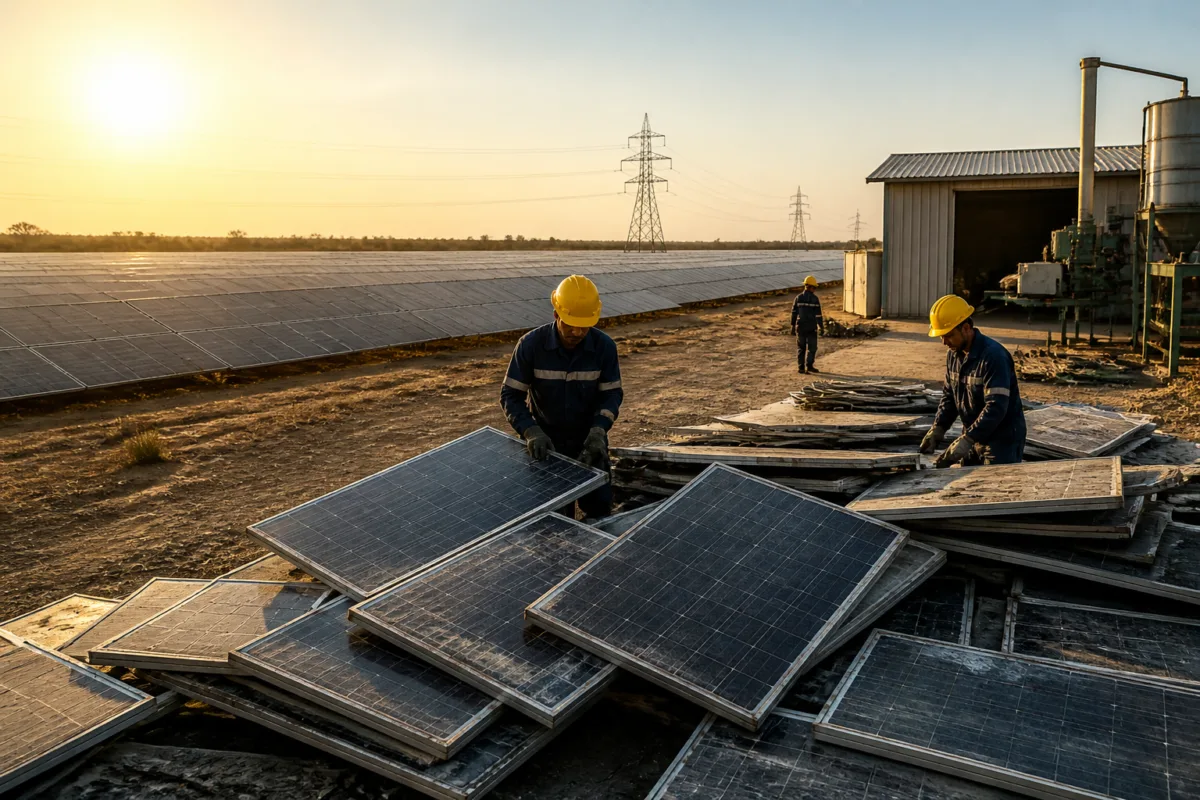
Gujarat’s solar expansion is creating an infrastructure problem that the state’s power plans cannot solve through generation capacity alone. The state is projected to produce 11,528 tonnes of solar photovoltaic waste by 2030, while its recycling ecosystem still lacks dedicated collection networks, commercial-scale processing capacity, digital traceability and clear financial incentives, according to a July 2026 report by the Gujarat Rajya Institution for Transformation (GRIT) cited by the Times of India.
The issue is not limited to panels reaching the end of their expected 25-to-30-year operating life. Manufacturing scrap, defective modules, breakage during transportation and installation, faulty installation and damage caused by storms, floods and hailstorms are already contributing to the waste stream. That changes the planning question. Solar waste is not a distant disposal problem that will begin only when the first large generation of projects is retired; it is an industrial and municipal management issue that grows alongside capacity additions.
Gujarat had 25.5 GW of installed solar capacity as of December 2025, making it one of India’s largest solar markets. The figure reflects the scale of the state’s energy transition, but it also indicates why end-of-life management cannot remain an informal or fragmented activity. Solar installations are spread across utility-scale sites, industrial premises and rooftop systems. The waste generated by these locations will differ in volume, timing and accessibility, requiring a system that can track panels from installation through reuse, repowering, recycling or disposal.
The GRIT report identifies gaps at several points in that chain. Stakeholder consultations cited in the report point to limited collection infrastructure, a shortage of commercial-scale recycling technology, weak digital traceability and inadequate financial incentives. The report also notes the absence of dedicated collection centres and the dependence on informal scrap dealers for panels coming from dispersed rooftop installations. These weaknesses could make it difficult to identify where panels are located, determine whether they can be reused and ensure that damaged modules reach facilities capable of recovering their materials.
The material value of discarded panels is one reason the emerging waste stream is also being viewed as an industrial opportunity. Solar modules contain silicon, silver, copper, aluminium and glass that can potentially be recovered and reintroduced into manufacturing. Solar energy consultant Jaideep Malaviya told the Times of India that recovery could create a secondary raw material market, support domestic manufacturing and reduce dependence on virgin resources. That opportunity, however, depends on the economics and logistics of dismantling and processing panels at scale.
India’s projected growth makes the question larger than Gujarat. The GRIT report estimates cumulative solar waste at around 100 kilotonnes in financial year 2023, rising to 340 kilotonnes by 2030 and approximately 19,000 kilotonnes by 2050. About 67% of the projected waste by 2030 is expected to be concentrated in five states: Gujarat, Rajasthan, Karnataka, Tamil Nadu and Andhra Pradesh. The concentration of waste in a small group of major solar states creates a potential basis for specialised recycling clusters, but it also means that capacity and standards in these states will shape how India manages the material consequences of solar growth.
The state’s existing solar fleet is beginning to create a replacement cycle. Gujarat was among India’s early adopters of solar power, and some large installations are now approaching two decades of operation. At the same time, newer modules offer higher output and improved performance within the same land footprint. Developers and operators are therefore increasingly considering repowering existing projects by replacing older panels. Repowering can improve electricity generation from established sites, but it also creates a concentrated flow of used modules that need to be assessed, moved, dismantled and either reused or recycled.
Reuse is emerging before recycling reaches full commercial scale. Solar companies in South Gujarat are shifting older panels from sites with high electricity requirements to locations where demand is lower and land is more available. Rakesh Trivedi, director of Solar Smart Power Pvt Ltd, said used panels can be installed at client sites with lower power demand, while damaged panels currently generated are taken back by manufacturers for recycling at their plants. This model extends the operating life of panels and delays disposal, but it requires reliable information about module condition, performance and ownership.
Reuse also cannot absorb every panel entering the waste stream. Modules damaged by extreme weather, transportation or installation may not be suitable for redeployment. Panels with severe degradation may produce too little power for their original location, even if they remain useful elsewhere. The distinction between a reusable panel, a repairable component and a material for recycling therefore becomes important for both environmental management and commercial viability. A collection system that treats all discarded panels as ordinary scrap could lose recoverable value and increase the risk of unsafe or inefficient processing.
Weather-related damage adds another layer of uncertainty to the timing and geography of waste. Gujarat’s solar installations are distributed across districts and exposed to storms, flooding and high-wind events. The source report identifies these events as contributors to premature module failure. That means waste volumes will not be determined only by installation age. They will also reflect asset location, mounting quality, maintenance practices and the severity of local weather events. The available material does not establish a district-wise forecast, but it shows why a purely age-based recycling plan would be incomplete.
The institutional responsibilities are also still taking shape. Tejas Patel, former president of the South Gujarat Solar Association, said there were no clear guidelines or policies for handling solar power plant waste at present. He also said the Surat Municipal Corporation had announced incentives for waste recycling, including solar waste, while noting that one recycling plant was operating in Chennai. Surat’s offer of leased land is an attempt to address the physical and investment barriers facing the sector, but land alone cannot create a recycling ecosystem. Collection arrangements, technology, compliance requirements, feedstock certainty and long-term commercial incentives will determine whether facilities can operate continuously.
One proposed project illustrates the scale of private investment being considered. Kalpesh Kalathia, chairman of Kosol Energie, said the company plans to establish a solar panel recycling facility in Kachchh in partnership with a European company. The proposed unit would involve an investment of about Rs 40 crore and have a stated capacity of around 6,000 panels per day. The project remains a company plan as described in the report; the supplied material does not provide an operational date, final approvals or details of the technology to be used.
The proposed Mega Eco-Industrial Park at Botad, identified under the North Gujarat Economic Master Plan, is another possible institutional location for integrating solar PV recycling, resource recovery and circular manufacturing. Such an industrial approach could link waste processing with the production of secondary materials, but the source material does not establish whether solar recycling has been formally incorporated into the park’s implementation plan. That distinction matters because identifying a potential site is different from creating a functioning supply chain.
The central policy challenge is coordination. Solar developers, manufacturers, EPC companies, municipal bodies, scrap dealers, recyclers and state agencies each encounter different parts of the waste stream. Without traceability, panels removed from a rooftop installation may enter informal channels with little documentation. Without collection points, even responsible owners may find it difficult to move small quantities economically. Without predictable volumes, recycling companies may hesitate to invest in machinery. And without clear incentives or rules, reuse, recovery and safe disposal may compete on uneven terms.
The numbers show why these issues require attention before Gujarat reaches the projected 11,528 tonnes of waste in 2030. India’s solar waste is expected to rise from around 100 kilotonnes in financial year 2023 to 340 kilotonnes by 2030, while the long-term projection reaches approximately 19,000 kilotonnes by 2050. These figures are projections cited in the GRIT report, not records of waste already processed. Their significance lies in the short window available to establish collection and processing systems before waste volumes become substantially larger.
Gujarat’s solar story is therefore entering a second infrastructure phase. The first phase focused on land, generation capacity, transmission and project deployment. The next must account for what happens when panels are damaged, replaced, reused or retired. The evidence supplied in the report confirms the scale of the projected waste stream and identifies the principal capacity gaps, while questions about final policy design, facility approvals, processing standards and implementation timelines remain open. The state’s next milestones will be the development of dedicated collection systems, clearer operating guidelines and the conversion of proposed recycling investments into functioning capacity.

