


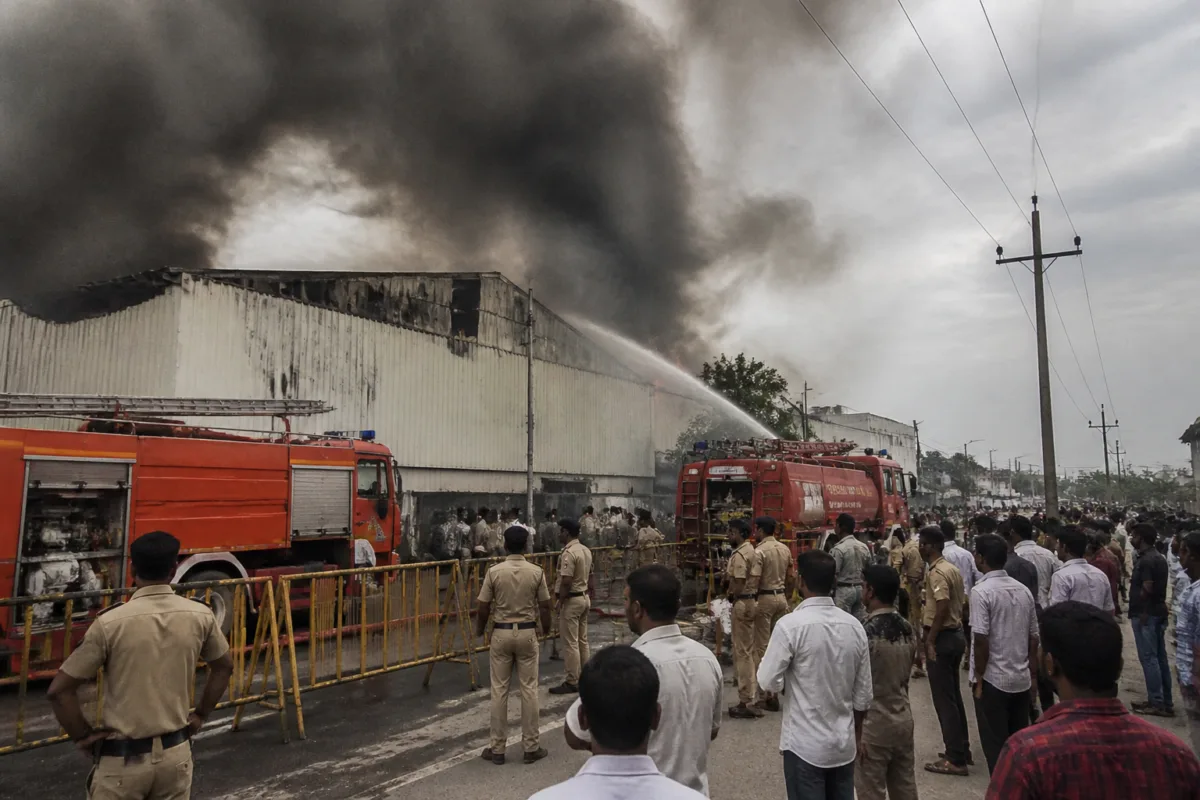
A major fire broke out at an electronics warehouse in Bavla, Ahmedabad district, on November 15, with firefighting efforts reportedly disrupted after the responding vehicles ran out of water and the local municipality could not provide sufficient tanker support.
According to a report by Sandesh, the fire erupted suddenly inside a large warehouse storing electronic goods and warehousing materials. The combustible stock allowed the blaze to spread rapidly, sending thick black smoke over the surrounding area and triggering panic among residents and businesses nearby.
Two fire tenders reached the site soon after the incident was reported and began spraying water on the flames. However, the water carried by the vehicles was exhausted within a short period. The fire tenders then had to leave the location to refill, according to the report, creating a gap in the firefighting operation while the fire continued to intensify.
The report attributed the shortage of firefighting water to an inadequate number of water tankers available with the Bavla municipality. It did not specify the municipality’s total tanker capacity, the number of additional vehicles requested or whether support was sought from neighbouring civic bodies.
Bavla police, including the police inspector and other personnel, reached the site as the emergency response continued. Police cordoned off the surrounding area, moved members of the public to a safer distance and managed traffic near the warehouse, the report said.
The exact cause of the fire had not been established at the time of publication. The extent of the financial loss was also not yet known, and the report did not mention any confirmed deaths or injuries. Fire personnel were continuing efforts to bring the blaze under control.
The incident has also triggered anger among local residents and traders over the municipality’s preparedness for emergencies involving commercial and industrial storage facilities. The reported difficulty in maintaining a continuous water supply raises an immediate operational question for smaller urban local bodies: whether their firefighting systems have adequate access to water, tankers and backup arrangements when a major fire exceeds the capacity of the first responding vehicles.
The next official steps will depend on the fire department’s final assessment of the incident, including the cause of the fire, the extent of damage and the response resources deployed at the warehouse.

