


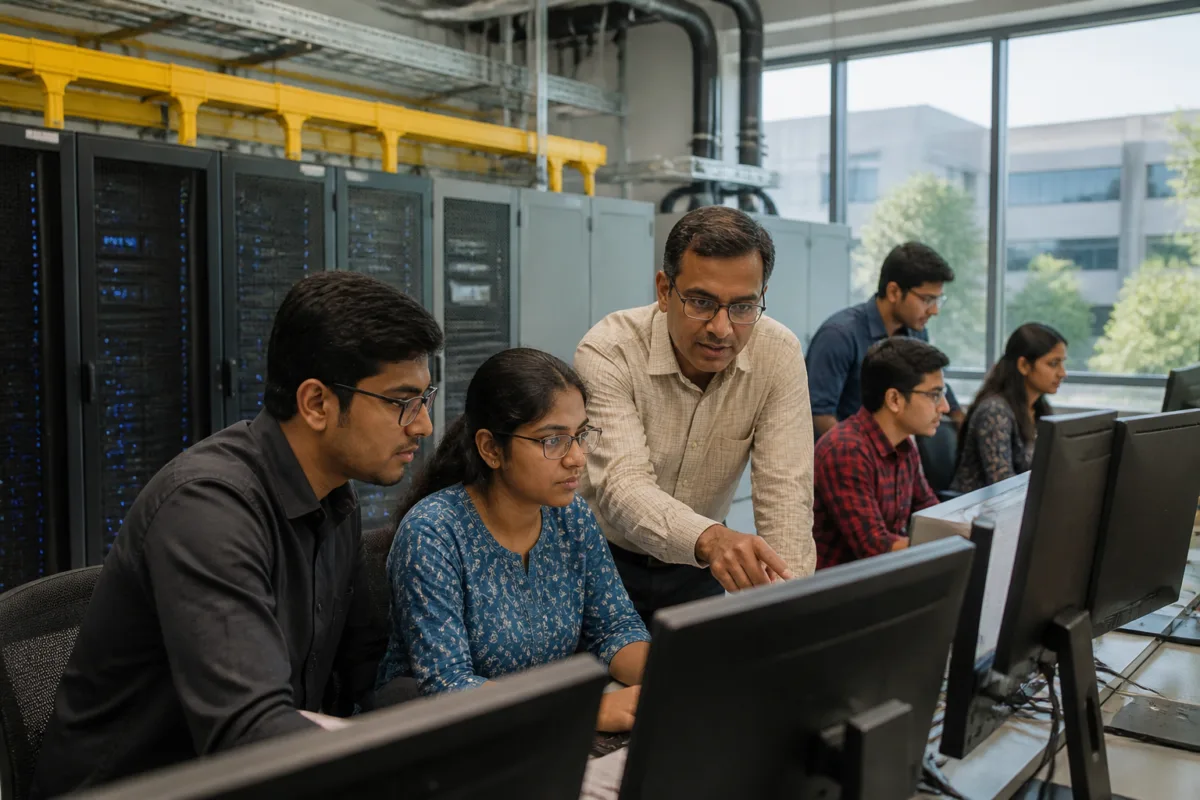
IIIT Pune and the Centre for Development of Advanced Computing (C-DAC) have signed a memorandum of understanding to give students and faculty access to PARAM supercomputing infrastructure, advanced laboratories and training in artificial intelligence, data science and high-performance computing.
The agreement, signed by C-DAC Pune centre head Sanjay Vandhekar and IIIT Pune director Dr Vinit Kansal, is intended to strengthen cooperation in information and communication technology, research and education. It will allow academic learning to be linked more closely with practical research on advanced computing systems.
Under the partnership, IIIT Pune students and faculty will be able to work on C-DAC’s PARAM supercomputer and use its laboratories for research. The institutions said the arrangement would also create opportunities to work on projects of national importance, although the report did not specify the projects or the access schedule.
The agreement covers the development of undergraduate, diploma and certificate courses in areas including high-performance computing, data science and embedded systems. C-DAC experts will provide training to IIIT Pune faculty members and students in advanced computing technologies.
Postgraduate and PhD students will receive joint supervision from experts at both institutions. IIIT Pune and C-DAC also plan to submit joint proposals for research and development funding, according to the terms outlined in the agreement.
Kansal said access to computing infrastructure and specialised skills was necessary for research in artificial intelligence, data science and emerging technologies. The partnership with C-DAC, he said, would provide students and faculty with practical exposure to advanced computing systems.
Vandhekar said joint research, new courses and training programmes with IIIT Pune would contribute to strengthening the country’s advanced computing capabilities. The agreement brings together IIIT Pune’s academic expertise and C-DAC’s experience in advanced computing.
The partnership reflects the growing importance of shared research infrastructure in technology education. Access to high-performance computing can support research that requires significant processing capacity, but the supplied report does not provide details on the number of students to be covered, the duration of the agreement, the projects to be undertaken or the funding expected under the proposed joint applications.
The next steps announced through the agreement are the development of new courses and training programmes, joint supervision of higher-research students, practical access to C-DAC facilities and the preparation of collaborative funding proposals.

