


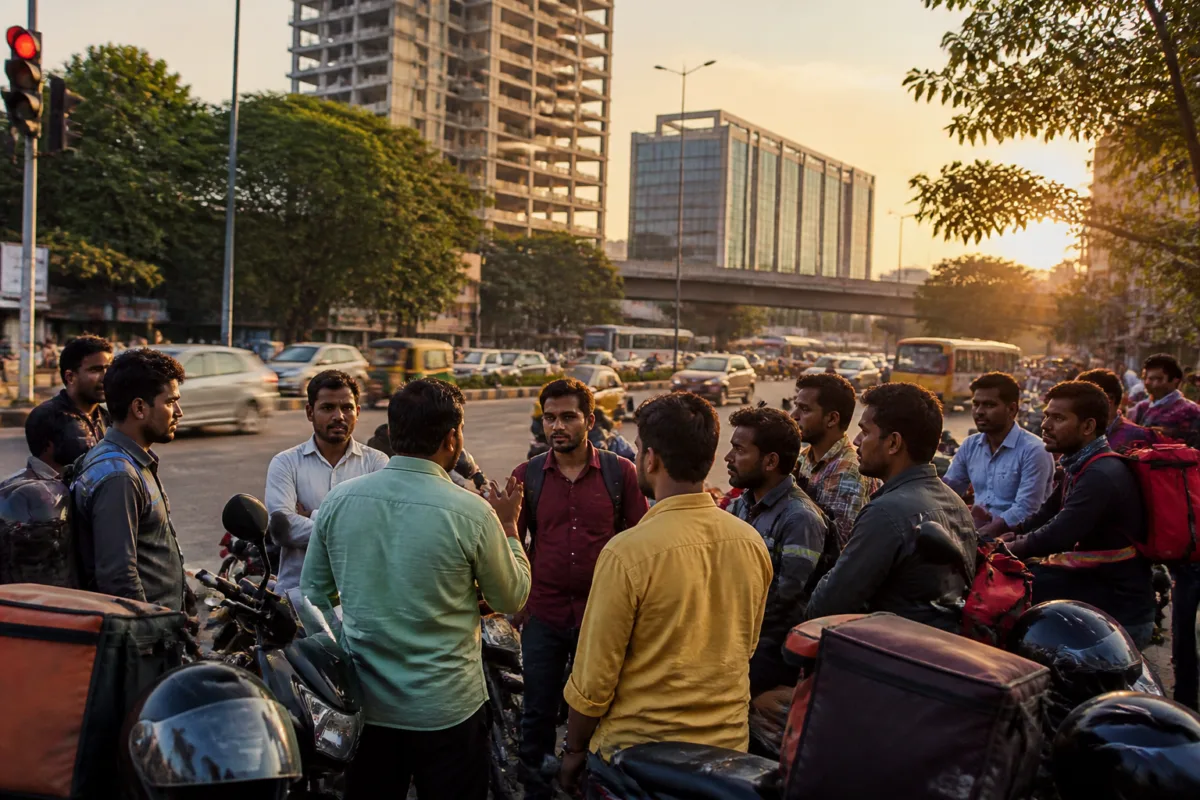
The Telangana Gig Workers’ Social Security and Welfare Scheme has drawn criticism from BRS General Secretary T Jeevan Reddy, who questioned whether its announced benefits address the central problem facing educated young people working in the gig economy and demanded a monthly unemployment allowance of ₹4,000.
Reddy’s remarks followed the launch of the scheme by Leader of the Opposition in the Lok Sabha Rahul Gandhi. Speaking to ANI, Reddy said the state’s gig workers were largely educated youths who had taken up platform-based work because government jobs were unavailable. He argued that the scheme should include direct income support rather than only insurance and welfare provisions.
The scheme announced by Gandhi provides ₹5 lakh in accident insurance and ₹10 lakh in health insurance for gig workers. It also includes a provision under which one per cent of workers’ earnings would be contributed towards a pension. The announced package further refers to workers’ rights over their data and earnings, as well as Wi-Fi-enabled rest centres at various locations.
Gandhi said the initiative followed a meeting he held with Telangana’s gig workers in 2023. According to his statement, workers had then shared their hardships, needs and demands, with an assurance that they would receive protection. He described the new measures as legal rights for gig workers and said the programme was intended to provide dignity and security to people engaged in hard work.
Reddy questioned the distinctiveness of the insurance benefits, saying the state had already announced an insurance scheme for families and elderly people holding ration cards and living below the poverty line. He also referred to coverage available under the Rajiv Arogya scheme, which he said extended up to ₹10 lakh. His criticism focused on whether the new scheme offered benefits specifically designed around the employment conditions of gig workers.
The disagreement highlights two different approaches to gig-worker welfare. The announced scheme is centred on protection against accidents and medical expenses, pension savings, control over work-related data and earnings, and access to designated rest facilities. Reddy’s demand instead focuses on income insecurity and the lack of stable employment, arguing that workers should receive a monthly allowance because many entered gig work after failing to find government jobs.
The measures are significant for Telangana’s urban labour market because gig workers operate through app-based delivery, transport and service platforms, linking household consumption with a workforce that often lacks the conventional protections associated with formal employment. The source material does not specify the number of workers covered, the implementing department, the funding mechanism, the eligibility rules or the timeline for issuing the insurance and pension benefits.
The scheme’s practical impact will therefore depend on how the announced provisions are converted into enrolment, claims, pension contributions and accessible facilities. The available statements establish the benefits announced and the political criticism around them, but do not provide operational details on implementation. Further information from the Telangana government on these mechanisms will determine how the programme is delivered to workers across the state.

