


The Samruddhi Mahamarg is being presented by Maharashtra’s ruling Bharatiya Janata Party as a symbol of infrastructure-led progress, but the highway’s reported safety record raises a harder question: can a road be celebrated as a development milestone when hundreds of people have died on it since it opened?
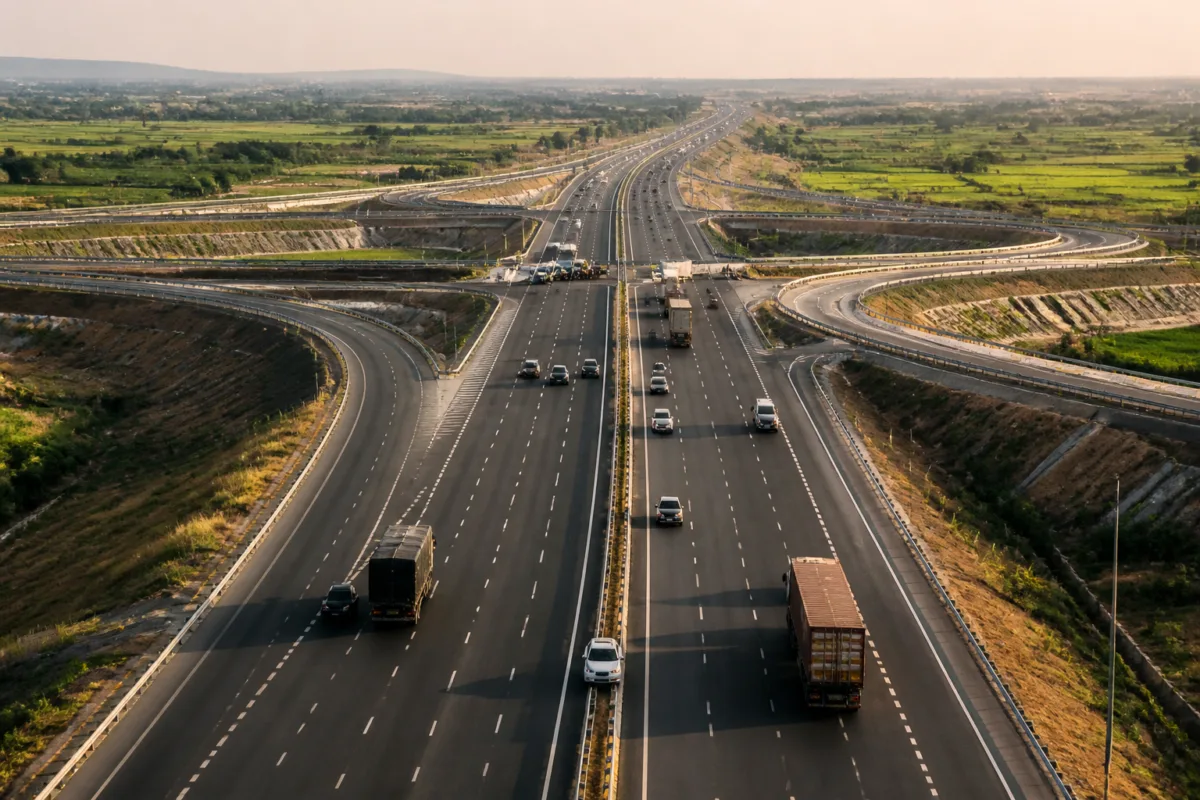
The contrast came into focus after the official BJP Maharashtra account on X shared a scenic aerial image of the highway on 14 November 2026. The post described the Samruddhi Mahamarg as “India’s next level” and said Maharashtra had opened new roads. It presented the highway’s interchanges, surrounding farmland and sweeping alignment as evidence of the state’s infrastructure progress.
A report by Loksatta – Nagpur, however, cited highway traffic department figures showing that the road recorded 1,700 accidents, including 270 fatal accidents, between its opening and the end of 2025. More than 300 travellers were reported to have died and over 1,000 were seriously injured. The figures, as reported, include the deaths of 25 passengers in a bus fire near Sindkhed Raja in Buldhana district on 1 July 2023. The report also said the accident count had increased during the subsequent year, but did not provide a revised total.
That gap between image and outcome is not merely a dispute over political messaging. It points to a central institutional problem in large transport projects: construction and visual scale are easier to communicate than safety performance. A highway can be wide, modern and visually impressive while still producing severe consequences if vehicle speeds, driver behaviour, emergency response, road design and enforcement do not work together.
The Samruddhi Mahamarg was opened to traffic on 11 December 2022. It was described by the government as a new phase in Maharashtra’s development. The project’s public identity has consequently been tied to economic growth, faster regional movement and the physical integration of the state. The BJP’s social media post continues that narrative by using an aerial perspective, landscaped surroundings and large interchanges to represent the highway as a national-quality asset.
But the reported accident numbers change the terms of that narrative. The Loksatta report’s cited total of 1,700 accidents is not a single isolated incident or a short-lived operational disruption. It is a cumulative record covering different types of crashes, including 270 classified as fatal. The more than 300 reported deaths indicate that the safety question is not limited to property damage or temporary traffic disruption. It concerns the basic public function of the road: moving people without exposing them to avoidable risks.
The available material does not establish why the crashes occurred. It does not provide a breakdown by location, time, vehicle type, weather, road geometry, driver behaviour or emergency response. It also does not identify whether the incidents were concentrated at interchanges, on open stretches or near specific districts. Those gaps matter because aggregate accident figures can show the scale of a problem but cannot, by themselves, identify the remedy.
Even so, the figures create a clear accountability requirement. A major road is not assessed only through its length, engineering features or appearance from above. Its performance must also be understood through the frequency and severity of crashes, the speed at which help reaches injured people, the operation of enforcement systems and the ability of authorities to respond to recurring risk locations. None of those indicators was addressed in the BJP post described by Loksatta.
This is where the highway’s institutional structure becomes important. The road’s public image is shaped by political communication, while accident data is associated with the highway traffic department. These are different forms of information serving different purposes. A political post highlights achievement and visual appeal. Traffic data records harm and operational outcomes. Neither can replace the other, but a credible public account of infrastructure must hold both together.
The reported figures also show why the opening of a highway should not be treated as the end of a project. Once a road begins carrying traffic, its risks become visible through actual use. Patterns that may not be apparent during design or construction can emerge through driver behaviour, vehicle mix, night-time travel and the interaction between road users and interchanges. The source material does not say which of these factors shaped the Samruddhi Mahamarg’s record, but it makes clear that the post-opening phase has produced a substantial safety burden.
The 2023 bus fire is particularly significant because it illustrates the difference between ordinary crash counting and the broader question of highway safety. According to the report, 25 passengers from Wardha died after the bus caught fire near Sindkhed Raja. The incident is included in the fatality record cited by the highway traffic department. The supplied material does not establish the cause of the fire or whether any specific road feature contributed to it. It does, however, show how a single event can make the human consequences of a transport corridor visible far beyond the immediate crash site.
The distinction between infrastructure promotion and infrastructure governance is therefore central. Promotion asks whether a project can be presented as evidence of development. Governance asks whether the asset is being monitored, maintained and operated in a manner that protects users. The same highway can satisfy the first test visually and still face serious questions under the second.
The numbers cited by Loksatta should also be read with care. The report says the data extends to the end of 2025 and that the total increased during the following year, but it does not publish the newer figure. The article therefore supports a documented minimum rather than a final current toll. It also does not provide a comparison with other expressways, a traffic-normalised crash rate or an official explanation from the highway authority. Without those details, it would be premature to rank the Samruddhi Mahamarg against other roads or to assign responsibility for each incident.
What can be established is narrower but important. The road opened in December 2022. By the end of 2025, the cited traffic department data recorded 1,700 accidents and 270 fatal accidents, with more than 300 deaths and over 1,000 serious injuries reported. A political communication published on 14 November 2026 focused on the highway’s visual character and development symbolism. The two facts are not mutually exclusive, but the second does not answer the questions raised by the first.
For citizens, the difference is practical. A road promoted as a major development corridor is likely to attract long-distance travellers, commercial traffic and private vehicles. Users need more than assurance that the route is modern or scenic. They need reliable information about safety conditions, enforcement, emergency response and known danger points. The supplied report does not show whether such information was included in the promotional communication or made available alongside it.
The larger urban and regional planning question is whether Maharashtra measures infrastructure success mainly through delivery and visibility, or whether it also publishes the operating evidence needed to judge public value. The Samruddhi Mahamarg connects this question to road safety, but the principle applies across transport infrastructure. A corridor becomes part of a functioning mobility system only when its design, regulation, emergency services and public communication work together.
The reported accident record does not, on its own, prove that the highway’s design is defective or that every death was preventable. It does establish that the road’s safety performance deserves the same public attention as its aerial photographs and political endorsements. The next meaningful step would be a fuller official account of the accidents: updated totals, locations, causes, severity, response times and measures taken after recurring incidents. Until that evidence is available, the Samruddhi Mahamarg remains both a visible infrastructure achievement and a significant unresolved road-safety question.

