


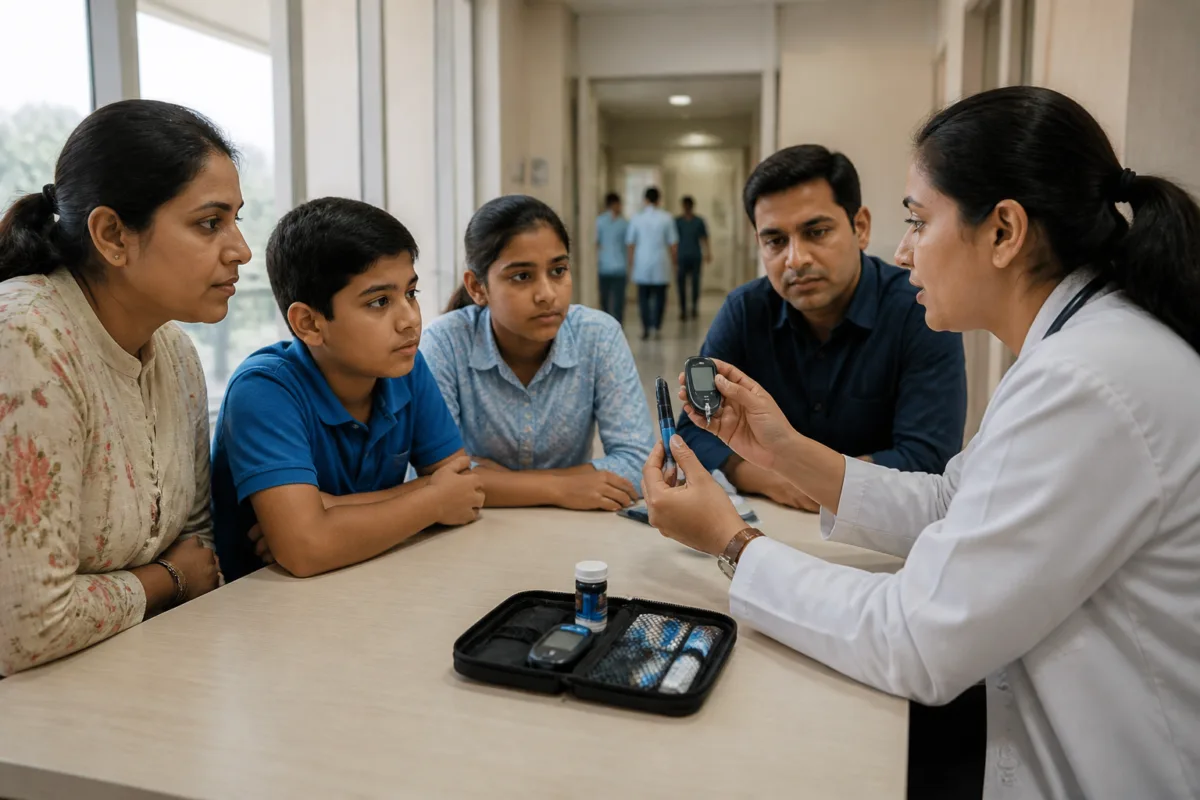
The PGIMER study of 97 children with type 1 diabetes shows that medical control and emotional well-being cannot be separated in paediatric care. One in five children in the study crossed the threshold for significant psychological maladjustment, with mental health problems associated with higher long-term blood sugar levels, high blood sugar episodes and hospitalisations. The finding shifts attention from insulin delivery alone to the wider system that determines whether children can manage a lifelong condition at home, in hospital and at school.
The study, published in the Journal of Pediatric Endocrinology and Metabolism, examined 59 boys and 38 girls aged between four and 15 years. All had been diagnosed with type 1 diabetes at least six months earlier and were on regular follow-up. Although the group’s average mental health scores were comparable with local healthy population norms, 20% of the children showed psychological difficulties serious enough to cross the study’s threshold for maladjustment.
That distinction matters. A group average can appear broadly normal while concealing a vulnerable minority facing substantial distress. The study did not describe every child as psychologically unwell. Instead, it identified a sizeable group whose behavioural or emotional needs could be missed if paediatric diabetes services focus mainly on glucose readings, insulin doses and physical complications.
The pattern of problems was varied. Conduct disorders were reported in 24.5% of the children, while habit-related behaviours such as bedwetting, thumb-sucking and pica were identified in 24%. Emotional distress linked to physical illness affected 23%, anxiety was reported in 10% and depression in 7%. These categories may overlap in individual children, but together they show how the demands of treatment can appear through behaviour as well as through directly reported sadness or anxiety.
The treatment burden is central to understanding the findings. Prof Rakesh Kumar of PGIMER’s department of pediatrics said children may face eight needle pricks a day along with dietary and other restrictions. He also said parents sometimes describe a child as stubborn or unwilling to listen without recognising the psychological burden behind the behaviour. In this account, what appears to be non-compliance may also be a sign that the treatment routine has become difficult for the child to sustain.
The evidence links this burden to clinical outcomes. Depression had the strongest association with long-term blood sugar averages, measured through HbA1c, followed by behavioural difficulties and low intelligence. Mental health problems intensified with high blood sugar episodes, recent hospital stays and the total number of hospitalisations. HbA1c and total hospitalisations independently explained 7.5% and 16% of the variation in psychological scores, respectively.
These figures do not establish that poor glucose control directly causes psychological problems, or that psychological distress alone causes hospitalisation. They do show that the two dimensions of care are connected. A child who is repeatedly hospitalised may experience disrupted schooling, anxiety and treatment fatigue. At the same time, emotional or behavioural difficulties can make regular monitoring, injections and diet management harder. The study’s implications therefore extend beyond a request for occasional counselling: they point towards coordinated care in which clinical and psychological information is considered together.
The study also illustrates how treatment access and family circumstances shape that care. Nearly 48% of the children came from lower socio-economic backgrounds, 39% lived in joint or extended families and 96% lived with both parents. Six per cent had associated thyroid problems and 11% had coeliac disease. These details show that diabetes management takes place within households with different levels of financial capacity, caregiving support and medical complexity.
The researchers noted that strong family networks and joint-family living in India may provide emotional support and coping mechanisms. The finding should not be read as evidence that families can substitute for formal services. Instead, it highlights the role that households already play in delivering daily care. Parents supervise injections, respond to hypoglycaemia risks, manage food restrictions and negotiate with schools. When formal support is limited, the responsibility is concentrated inside the family.
The treatment patterns reported in the study also indicate uneven access to newer or more intensive care. About 72% of the children followed a standard three-injection routine involving pre-mixed morning and evening shots and a pre-lunch dose. Only 14% used four daily injections of newer insulin options. Around 73% checked their blood sugar at least three times a day, 20% administered their own injections and 25% had tissue changes at injection sites.
The study does not establish why individual families used particular regimens. It does, however, place the findings within a setting where treatment choices, monitoring practices and recurring costs matter. At the World Diabetes Day programme held at PGIMER, speakers highlighted the financial burden of insulin, monitoring strips and sensors for families in resource-constrained settings. They also pointed to the anxiety surrounding life-threatening hypoglycaemia and the disruption of parents’ sleep.
This is where paediatric diabetes becomes a public-service issue rather than only a clinical one. A child’s ability to remain healthy depends on more than the availability of a prescription. It depends on uninterrupted access to insulin, the ability to monitor blood sugar, timely hospital care, informed caregivers and an environment in which treatment can be carried out safely. The event’s call for publicly funded diabetes care programmes addressed this wider chain of support.
The institutional challenge is distributed across several settings. Hospitals manage diagnosis, follow-up and complications. Families carry out daily treatment. Schools influence whether children can check glucose, take insulin, eat appropriately and participate in activities without embarrassment or discrimination. Government health systems influence affordability and continuity of supply. None of these responsibilities can fully resolve the problem alone.
The call for diabetes-friendly schools therefore has a practical basis in the study’s findings and in the concerns raised at the PGIMER event. Speakers said teachers and peers may not understand glucose checks, insulin administration or the needs of children during examinations and physical activity. The supplied evidence does not quantify how many schools lack such support, but it identifies school-based care as an operational gap that can affect education and emotional well-being.
The question is not simply whether a child is enrolled in school. It is whether the school environment can accommodate the routines required by type 1 diabetes without turning treatment into a source of exclusion. A child who cannot safely check glucose, take insulin or respond to symptoms during the school day faces a problem that sits between health administration and education administration. The proposed response—sensitised staff and dedicated support—would require coordination beyond the hospital.
The PGIMER findings also raise questions about how success is measured in paediatric diabetes programmes. HbA1c is essential for assessing long-term blood sugar control, but the study shows that hospitalisations, behaviour and emotional distress are also relevant indicators of how a child is coping. If these dimensions are not recorded together, services may identify deterioration only after it has become a clinical crisis.
The researchers concluded that routine mental health screening and multidisciplinary support should become part of paediatric diabetes care from the beginning. That recommendation is grounded in the finding that psychological difficulties were common and closely related to physical control and hospital visits. It also reflects the practical reality that children and families must manage the condition continuously, not only during scheduled consultations.
The study has limits that should remain visible. It examined 97 children from northern India who were in regular follow-up, and the findings cannot automatically represent every child with type 1 diabetes in the country. The comparison with Western research was presented by the researchers in the context of differences in reported psychosocial problems, family structures, treatment routines and awareness. The supplied report does not provide the underlying Western datasets or establish a direct causal comparison.
What the evidence does confirm is narrower but important: a substantial minority of children in this clinical group experienced psychological difficulties, and those difficulties were associated with indicators of diabetes control and hospital use. The findings support a care model that treats emotional health, family support, affordability, school systems and clinical management as connected parts of the same public-health challenge.
The next test lies in implementation. PGIMER’s event brought together clinicians, health officials, advocacy groups and more than 150 children and families, while speakers called for publicly funded care and diabetes-friendly schools. Whether those calls become regular screening, coordinated counselling, reliable access to supplies and trained school staff will determine whether the study changes care beyond the hospital where it was conducted.

