


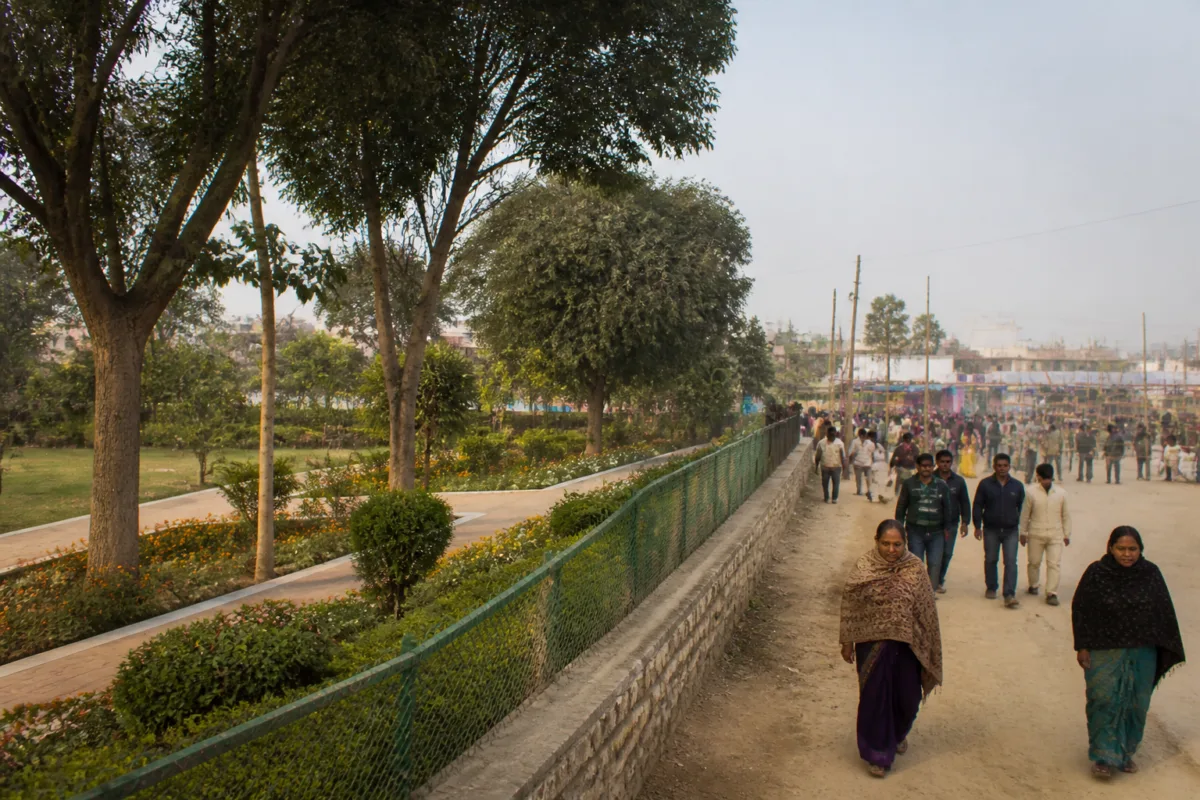
The Delhi High Court has refused permission to hold Chhath Puja at Chintu Park in Delhi’s Narayana village, ruling that a 23-year tradition of conducting the event there does not create a right to use a protected public green space. The court said the park is being maintained for the benefit of the general public and that an alternative location has already been provided for the festival.
Justice Jasmeet Singh rejected an application seeking permission to use around 1,000 square metres of the park for the evening arghya on 15 November and the morning arghya on 16 November. The application relied on the event’s long history at the site and offered to restore the park to its original condition after the celebrations.
The Delhi Development Authority opposed the request, telling the court that Chintu Park contains trees, plants and flowers and is being developed and preserved as a green area. The DDA argued that allowing the event could adversely affect the park’s maintenance and greenery, according to the report.
The court held that the duration of the programme, the limited area sought or the number of years for which it has been held could not by themselves justify allowing a religious event in the green space. The ruling places the condition and designated purpose of the park above the argument that the event has become an established local tradition.
The proceedings also considered a document titled “Chhath Puja 2026: Single Window Management, Central District”, which the applicant cited to support the request. The High Court said an administrative document or notification cannot override earlier directions issued by a court. It stated that an executive decision or an order issued by another authority cannot cancel or dilute the effect of a judicial order.
The case highlights the administrative challenge of accommodating large public gatherings in densely settled parts of Delhi without converting neighbourhood parks into temporary event sites. Parks often serve multiple urban functions, including everyday recreation, greenery and open space, while festivals require crowd management, access arrangements and post-event restoration. In this case, the court’s decision turned on the park’s designated green-space status and the availability of another location.
The court noted that the Delhi government had already designated a site near the Munak Canal for Chhath Puja and that necessary arrangements had been made there. The alternative location is therefore the site identified for the festival after the permission request for Chintu Park was rejected.

