


Tamil Nadu has announced stock limits for rice and pulses held by wholesale and retail traders, mill owners and importers, while asking residents to report suspected hoarding and black-market activity through two toll-free numbers, including 1967.
The measures are intended to help control price increases in essential commodities across the state. According to the government announcement reported by Dinamalar, limits have been prescribed for the quantities of rice, tur dal and urad dal that different categories of traders and businesses can keep in stock.
The report does not specify the quantity permitted for each commodity or business category. It states that the restrictions apply to wholesalers, retailers, mill owners and importers dealing in the commodities.
Separate conditions have been set for sugar. Traders cannot keep sugar in stock for more than 15 days from the date on which the stock was received, according to the report. The measure is part of the state’s effort to monitor supply and restrict practices that could contribute to artificial scarcity or higher retail prices.
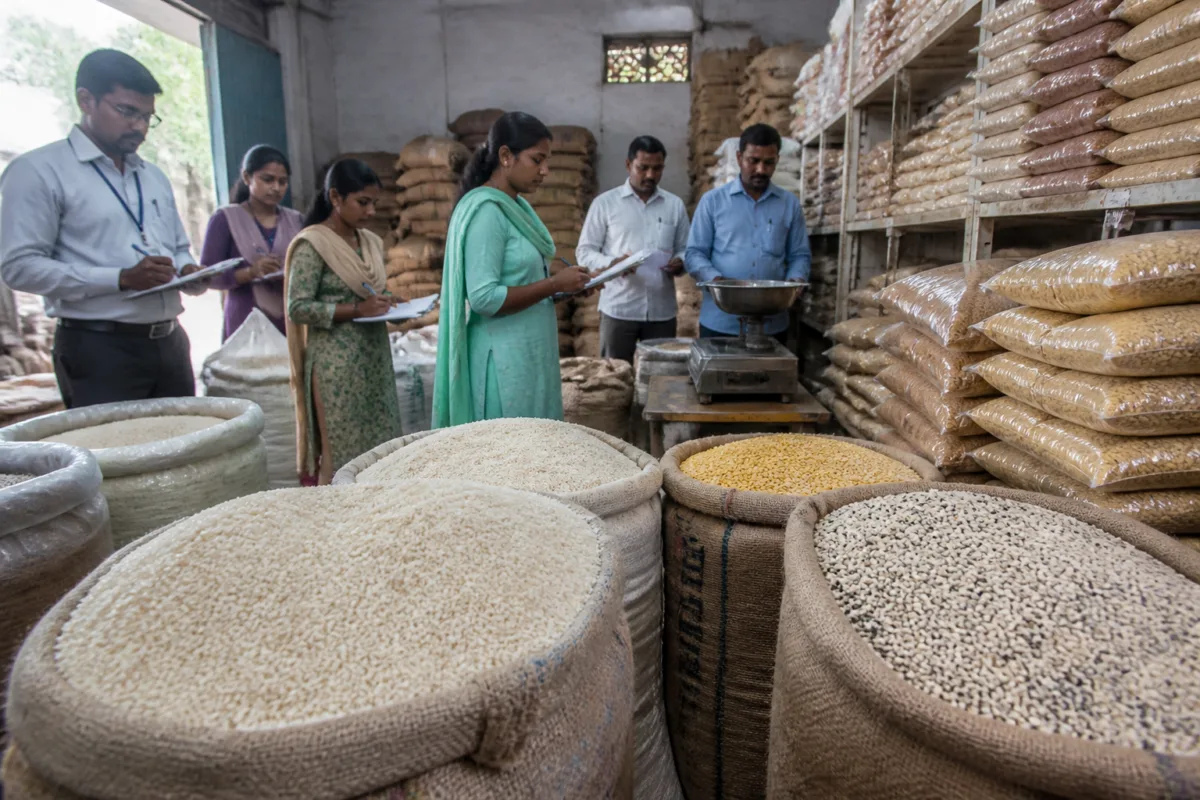
Tamil Nadu has also formed monitoring teams at the district level to track hoarding and black-market activity. The teams will function under the leadership of the district supply officer and will include the taluk supply officer and officials from the Civil Supplies and Consumer Protection Department’s Crime Investigation Wing.
Residents can submit complaints and information about suspected hoarding or illegal trading by calling 1967 or 1800 425 5901. Both numbers are described as toll-free complaint lines. Complaints may also be submitted to the supply officer of the concerned district.
The arrangement places district supply officials at the centre of enforcement. Their teams will be responsible for receiving information, monitoring stocks and coordinating action with civil supplies investigators. For consumers, the helplines provide a formal route to report cases where essential commodities appear to be withheld from the market or sold through unauthorised channels.
The announcement comes as governments use stock monitoring and trading controls to manage the availability and prices of essential food items. However, the information supplied in the report does not include the duration of the order, penalties for violations, inspection procedures or the number of complaints received so far.
The state’s stated next step is continued monitoring through the district-level teams and action on information received through the two toll-free numbers or from district supply offices.

