


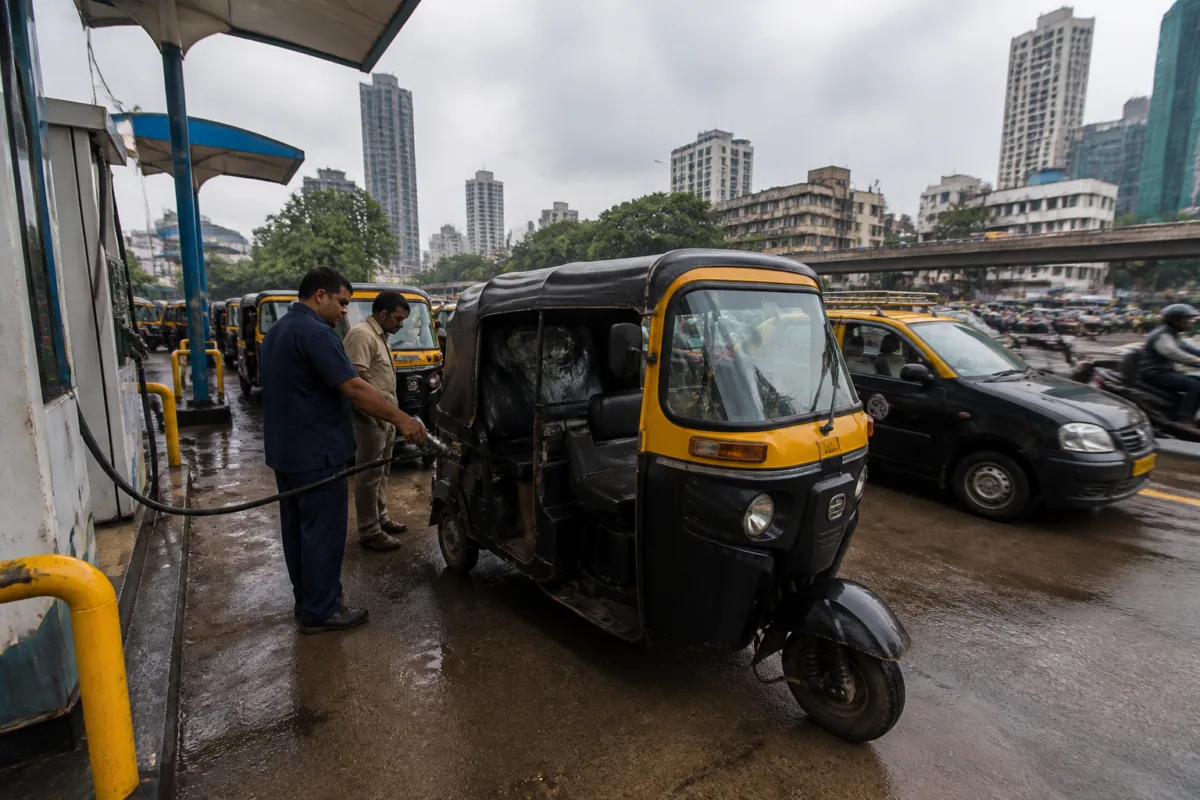
CNG prices across the Mumbai Metropolitan Region will rise by Rs 1.50 per kg from Sunday, taking the retail rate to Rs 91.50 and prompting autorickshaw unions to renew their demand for a higher minimum fare. The latest revision comes after a Rs 1 per kg increase on November 1, taking the total increase in 75 days to Rs 5.50 per kg.
Mahanagar Gas Ltd announced the latest price change on Saturday, revising CNG from Rs 90 to Rs 91.50 per kg across the MMR. The price of piped cooking gas remains unchanged, a decision that protects the bills of nearly 33 lakh households using the fuel for cooking.
For daily commuters, however, the increase could reopen the dispute over autorickshaw fares. Auto unions say repeated fuel price revisions have reduced the benefit of the recent fare increase granted to drivers. Mumbai Rickshawmen’s Union leader Thampy Kurien said the latest hike had effectively neutralised the benefit of the fare revision and raised concerns that drivers were facing higher operating costs before the new meters had been fully recalibrated.
Under the fare revision formula, unions estimate that the minimum autorickshaw fare should rise by another Rs 2, from Rs 27 to Rs 29 for the first 1.5 km. Any change would require action by the transport authorities and would directly affect passengers who depend on autos for short-distance journeys and connections to rail and metro stations.
The timing of the increase is significant because meter recalibration across the region is still in progress. The transport department has set November 30 as the deadline for completing the exercise following the previous fare revision. A further fare change could therefore create another round of administrative work for operators, transport officials and meter agencies.
MGL attributed the price revision to higher gas procurement costs. The company said the Middle East crisis, reduced domestic gas allocation and greater dependence on imported regasified liquefied natural gas had increased its input costs. Imported RLNG prices are linked to international markets. MGL said the increase was necessary to partly offset these costs while maintaining uninterrupted supply.
The impact extends beyond autorickshaws. The MMR has nearly 4.7 lakh autorickshaws, 2 lakh taxis and almost 6 lakh private cars running on CNG. The region has 529 CNG filling stations serving about 13.5 lakh CNG vehicles, making price revisions relevant to public transport operators, private motorists and the wider urban mobility system.
The immediate issue for commuters is whether the latest fuel increase will result in a formal fare proposal. For drivers, the pending question is whether the existing fare formula adequately accounts for fuel, maintenance and consumer price index-linked costs. The transport department’s November 30 meter-recalibration deadline remains the next stated implementation milestone.

