


The BAIF Development Research Foundation has presented its work on climate-resilient agriculture, renewable energy and rural livelihoods at COP31 in Antalya, Türkiye, placing its six-decade programme for vulnerable rural communities before an international climate audience.
According to a report by Sakal – Pune, BAIF participated in the 31st global climate conference held under the United Nations Framework Convention on Climate Change. Its research was presented on 13 November, during the conference scheduled from 9 to 20 November.
The organisation’s delegation includes Dr Manojkumar Aware, Dr Dinesh Raturi and Mahesh Lade. The delegation is presenting work on climate-resilient farming, methane-emissions management, renewable energy and sustainable rural livelihoods, while also discussing potential collaborations with institutions, experts and other stakeholders.
BAIF’s programme focuses on improving the livelihoods of small and marginal farmers, strengthening rural incomes and increasing the capacity of villages to respond to climate change. One of the models highlighted at COP31 is the Wadi model, which combines agriculture, horticulture and forestry. The model has been implemented in drought-prone areas, according to the report.
The organisation has also reported using grassland restoration, regenerative agriculture and nature-based solutions across more than 97,000 hectares of degraded and fallow land. These interventions are credited by BAIF with improving soil health and enabling the absorption and storage of about 2.24 million tonnes of carbon. The report also says that farm productivity has improved and farmers’ expenditure on costly fertilisers has declined.
Water management is another part of the model. Watershed development, rainwater retention, groundwater recharge and soil-and-water conservation have been used to increase water availability in villages, the report says. These measures are intended to make agricultural land more capable of adapting to changing climate conditions.
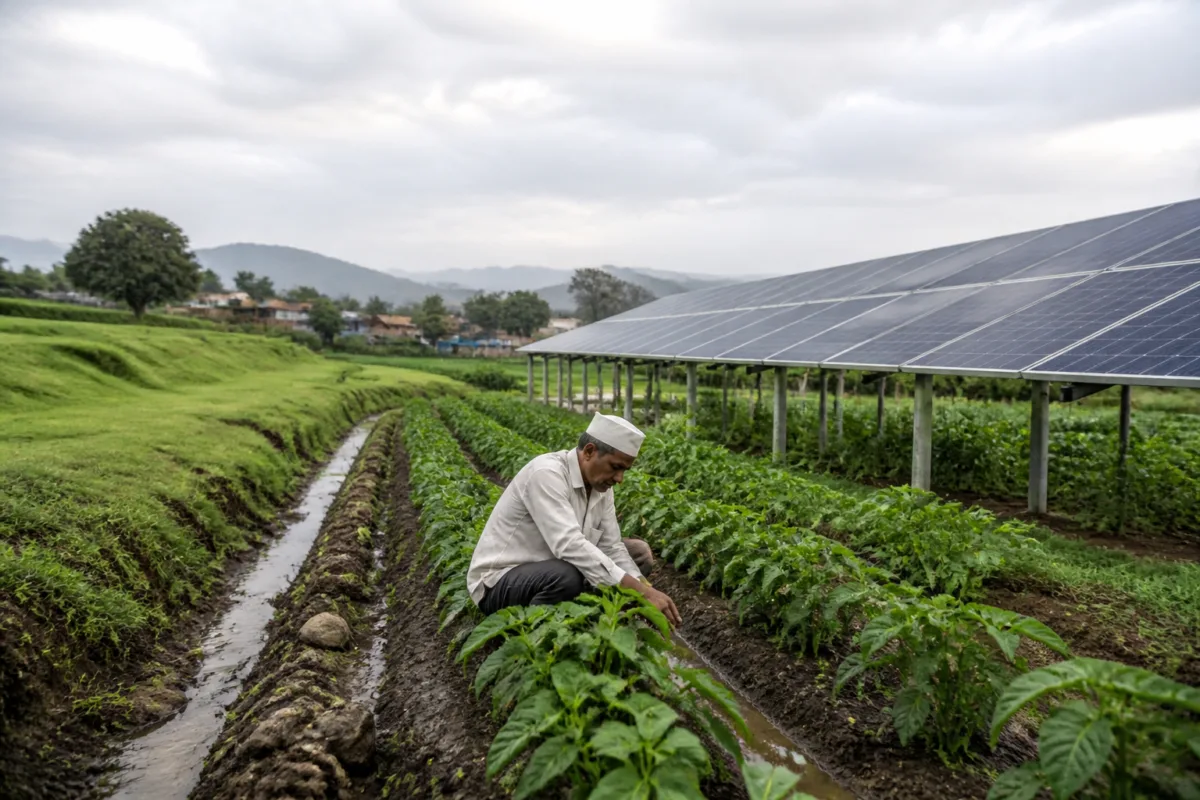
BAIF is also presenting its work on renewable energy, including agrivoltaic systems and decentralised energy systems. These approaches allow solar power to be generated while agricultural production continues on the same land, according to the organisation’s account. The model links clean energy access with more efficient land use and a bio-based circular economy.
The scale claimed by BAIF is significant within the report’s account of its work. Its community-led initiatives are said to have benefited more than five million families across 18 states and strengthened climate resilience among people in more than 100,000 villages. The COP31 presentation places these programmes within the wider question of how climate action can be delivered through local institutions, land management, water systems and rural energy access.
BAIF’s delegation is scheduled to continue its presentations and discussions at the conference through 20 November, with the stated objective of identifying new opportunities to make rural climate action in India more effective.

