


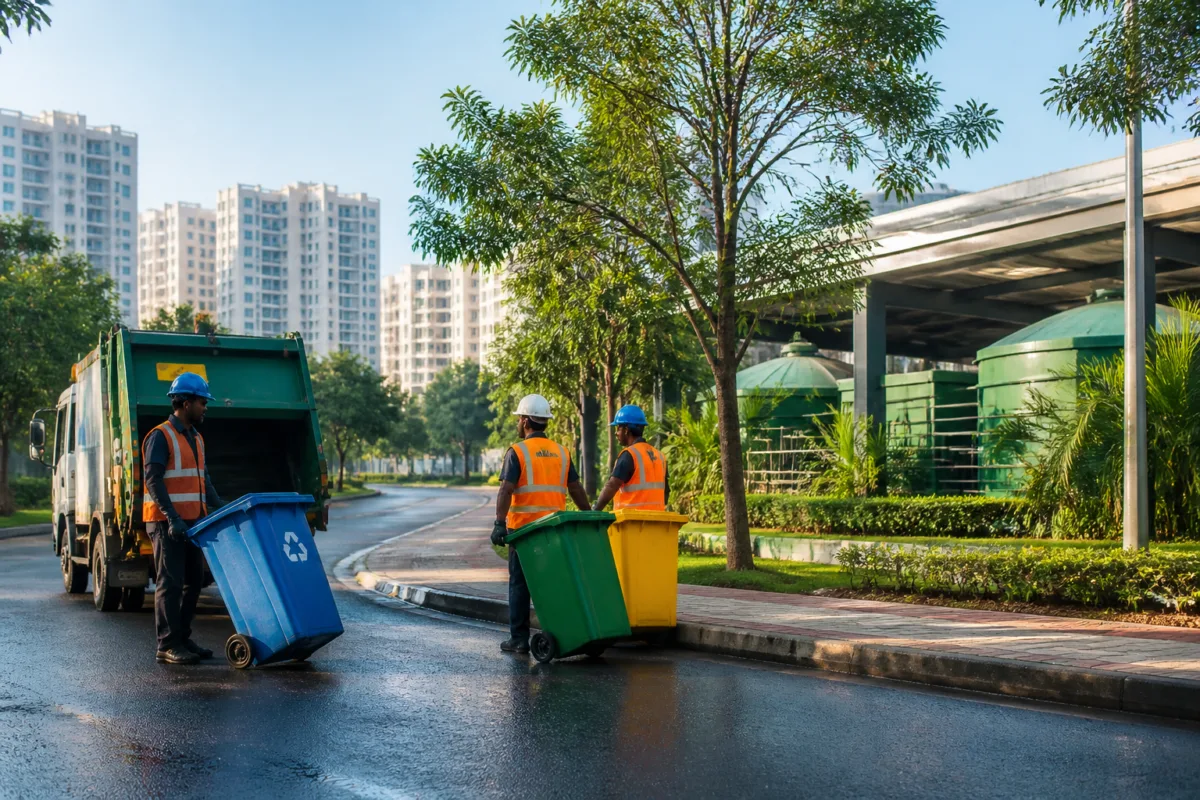
Navi Mumbai has secured the top cleanest city ranking in the Swachh Survekshan 2025-26, with the Navi Mumbai Municipal Corporation now setting a target of retaining the position for the next 10 years. The civic body attributed the result to sanitation infrastructure, modern technology, waste processing, the work of sanitation employees and citizen participation.
Mayor Sujata Patil received the award from President Droupadi Murmu at Vigyan Bhavan in New Delhi. After the ceremony, Patil, Deputy Mayor Dashrath Bhagat and Municipal Commissioner Dr Kailas Shinde reviewed the city’s sanitation, waste management and environmental conservation initiatives, according to the report by Loksatta – Navi Mumbai.
The municipal corporation said Navi Mumbai has also retained the highest seven-star rating under the garbage-free city category and the Water Plus rating under the open-defecation-free city classification. The ratings recognise the city’s waste management, sewage treatment, water reuse and sanitation systems, as well as the role of technology and public participation in their implementation.
The civic body said it is processing 100 per cent of the waste generated in the city through scientific methods. Its stated capacity includes facilities for processing 350 tonnes of wet waste and 400 tonnes of dry waste every day. Wet waste is converted into compost, while dry waste is processed into refuse-derived fuel, or RDF, which can be used as fuel in cement factories.
The administration said its next priority would be to increase citizen participation and ensure that cleanliness initiatives continue to be implemented effectively. The 10-year target places continuity at the centre of the civic body’s sanitation strategy, rather than treating the award as a one-time achievement.
Municipal officials also acknowledged the contribution of residents, sanitation employees, officers and staff, elected representatives and the media to the national recognition. The emphasis on sanitation workers is significant because the city’s reported outcomes depend not only on treatment facilities but also on daily collection, segregation and processing operations.
The award comes under the Swachh Bharat Abhiyan, the Union government’s national cleanliness programme. For Navi Mumbai, the municipal corporation’s stated approach combines waste processing capacity with sewage treatment, water reuse, technology and participation by residents. The authority has not provided, in the report, a year-by-year implementation schedule for its 10-year target. Its immediate stated focus is to sustain existing systems and widen public involvement in cleanliness programmes.

