


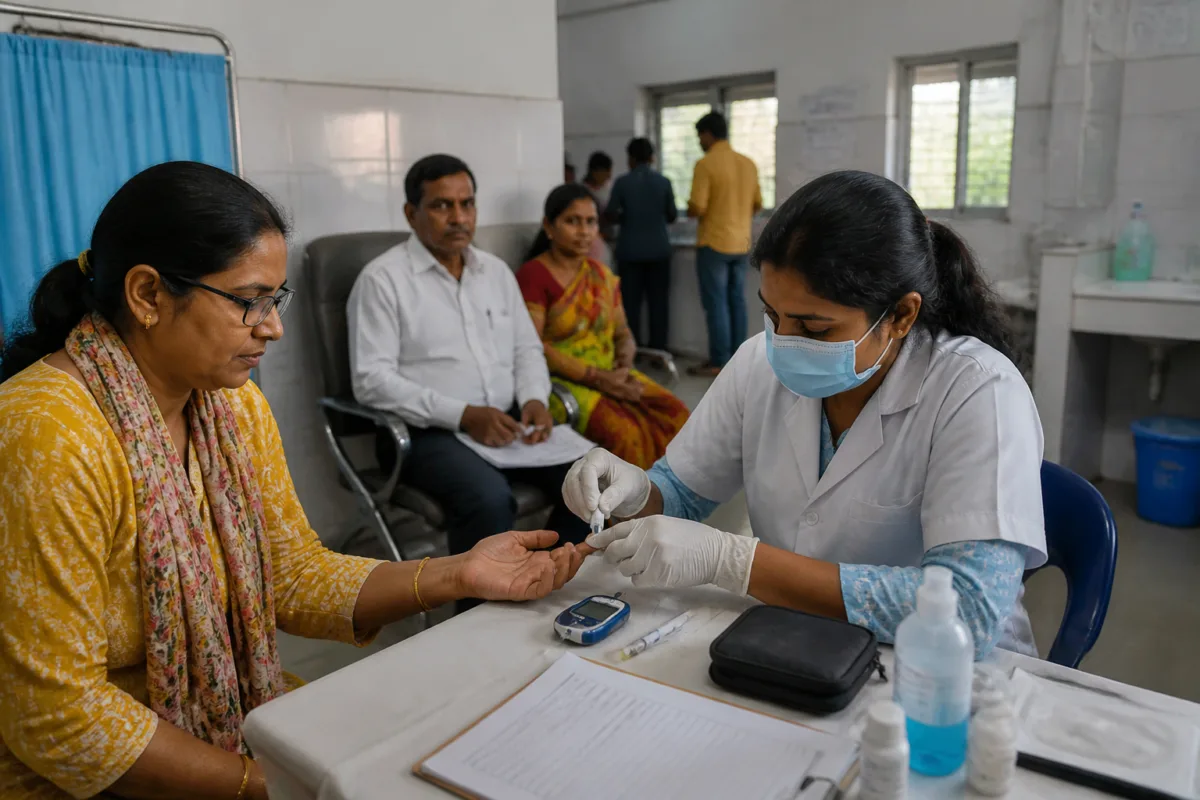
Jharkhand’s diabetes burden is rising faster in its cities, according to figures cited from the National Family Health Survey-6, revealing how urban living is becoming closely linked to the state’s preventive-health challenge. The survey data show that 21.8% of men and 15% of women aged 15 years and above either had blood sugar above 140 milligrams per decilitre or were taking medication to control it. In urban areas, the proportion rose to 26.6% among men and 19.2% among women.
The numbers matter because they describe more than an increase in a chronic disease. They point to a growing requirement for routine screening, long-term treatment and follow-up care in cities where residents may be more exposed to sedentary work, weight gain and unbalanced diets. The figures also show that the urban health challenge is not limited to older residents. A doctor quoted in the report said diabetes is increasingly affecting younger people as well.
Compared with NFHS-5, the share of men in the reported category increased by 7.7 percentage points, while the share of women increased by 4.8 percentage points. The report does not establish a single cause for the increase, but a doctor at Sadar Hospital, Dr Himālaya Jha, attributed the growing risk among younger people to low physical activity, increasing weight and unbalanced food habits. These factors are particularly relevant to how city residents travel, work, eat and spend their leisure time, although the supplied data do not quantify the contribution of each factor.
The urban-rural gap is clear. In cities, 26.6% of men and 19.2% of women were in the reported category. In rural areas, the corresponding figures were 20.4% for men and 14% for women. Urban men therefore recorded the highest proportion in the data, while urban women also had a higher reported level than women in rural areas. The comparison suggests that the state’s health system cannot treat diabetes as a uniform problem: the screening and care requirements of expanding urban settlements may differ from those of rural communities.
The measure used in the report combines two groups: people whose blood sugar was above the stated threshold and people already taking medication to control it. This is important when interpreting the figures. The data indicate the extent of elevated blood sugar or treatment, but they do not provide a separate count for newly diagnosed patients, people receiving regular care or those whose condition is uncontrolled. They also do not, in the supplied material, provide city-wise figures for Ranchi or other urban centres in Jharkhand.
That limitation does not reduce the significance of the trend. A chronic condition that often requires repeated testing and continuing treatment places demands on primary healthcare facilities, diagnostic services and referral networks. The report warns that persistently uncontrolled blood sugar can damage blood vessels and nerves. It identifies risks involving the heart, kidneys, eyes and limbs, including possible heart attack, stroke, declining kidney function, vision problems, numbness, wounds and infection.
The institutional question is whether urban healthcare is organised mainly to respond to illness after symptoms appear or to identify risk before complications develop. Dr Jha said many people may not show clear symptoms in the early stages, making routine testing important even when a person feels well. He specifically identified people with a family history of diabetes, those who are overweight and those who are physically inactive as groups that should receive regular blood sugar and HbA1c testing.
This shifts the focus from hospitals alone to the wider network of accessible, routine care. Screening must be available close to where people live and work, and positive results must connect patients to counselling, medicines and follow-up. The supplied report does not state how many facilities in Jharkhand provide these services, how frequently urban residents are screened or whether diagnostic access differs between neighbourhoods. Those unanswered questions are central to understanding whether the reported rise is being detected early or only after complications emerge.
The evidence also complicates a simple rural-versus-urban narrative. Rural rates in the report are lower, but they remain substantial: 20.4% of men and 14% of women fall within the combined elevated-blood-sugar-or-medication category. Urbanisation therefore does not create the state’s only diabetes challenge. Instead, the figures show a broad burden with a sharper concentration among urban men and higher levels among urban women than their rural counterparts.
For city administrations, the issue is connected to the everyday built environment, even though the supplied report does not measure neighbourhood design or transport patterns. Regular physical activity, weight management and balanced food are identified by doctors as important parts of diabetes management. Whether residents can incorporate those practices into daily life depends in part on access to safe places for activity, affordable food choices, time, information and nearby health services. The report establishes the health advice, but it does not establish how Jharkhand’s cities perform on these enabling conditions.
The same distinction applies to prevention. The report lists frequent thirst, frequent urination, tiredness, unexplained weight loss and blurred vision as possible warning signs. But it also notes that some people may have no symptoms. A public-health approach based only on self-reporting or late presentation would therefore miss part of the at-risk population. Regular testing becomes especially important for residents with recognised risk factors, while treatment decisions remain a matter for qualified medical professionals.
Medication is only one part of the management challenge. The report says that balanced food, regular exercise, adequate sleep and weight control can help manage blood sugar, alongside medicines where prescribed. It also recommends attention to blood pressure, cholesterol, kidney health and eye health. This broader set of checks reflects the way diabetes can affect multiple organs over time, but the source does not provide data on how routinely these associated conditions are being monitored in Jharkhand.
The NFHS-6 figures therefore offer a warning signal rather than a complete diagnosis of the state’s urban health system. They show a marked increase from the previous survey and a higher reported burden in urban areas, particularly among men. They also indicate that women and younger residents cannot be treated as outside the risk group. What remains unclear is how the figures break down by individual city, income, age, neighbourhood and access to care, and whether local services are equipped for early detection and continuous management.
The next policy question is not only how many people have elevated blood sugar, but whether cities can provide the routine testing, counselling, treatment and follow-up needed to prevent avoidable complications. The supplied report points to regular screening, lifestyle management and medical care as the immediate response. The scale and distribution of the NFHS-6 findings make the availability of those services across Jharkhand’s urban settlements the key issue to monitor.

