


Delhi ministers Manjinder Singh Sirsa and Pankaj Kumar Singh have directed their respective departments to implement a 50 per cent work-from-home arrangement as air pollution in the national capital worsens and the city’s Air Quality Index reaches the severe category.
Sirsa, who holds the Environment portfolio, and Health Minister Pankaj Kumar Singh issued the instructions to reduce the number of vehicles travelling to government offices and limit emissions. The directions apply to their respective departments and are intended to encourage remote working while ensuring that essential services continue without disruption.
The move follows Delhi’s Winter Action Plan, which came into effect on November 1 and includes a provision to cap the physical attendance of government employees at 50 per cent. Under the plan, all administrative secretaries and heads of departments are required to attend office regularly, with no more than half the staff strength physically present.
The remaining employees are expected to work from home under the arrangement. However, administrative secretaries and heads of departments can call officials into the office whenever necessary to maintain the uninterrupted delivery of essential and emergency public services.
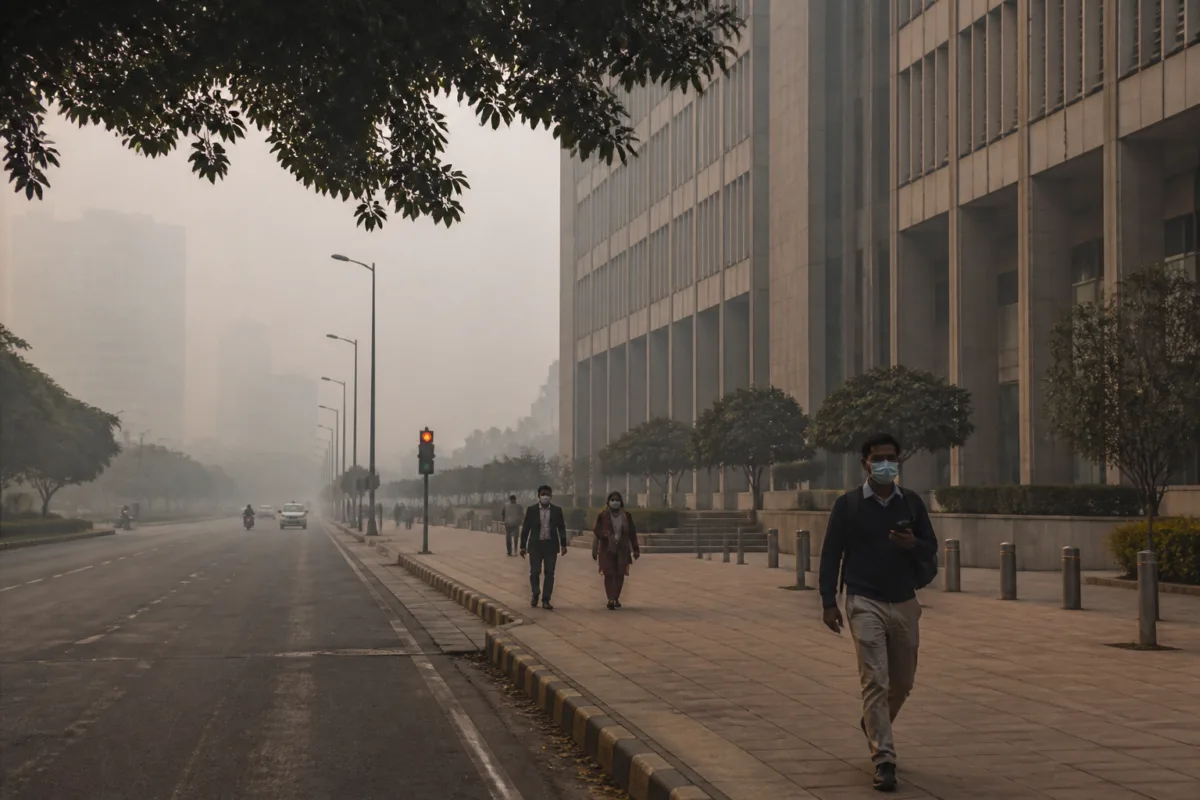
The departmental directions come as Delhi’s pollution levels remain high. The city’s AQI touched 403 on Friday morning, placing it in the severe category, before showing some improvement later in the day. Dense smog and unfavourable weather conditions have continued to restrict the dispersal of pollutants across the capital.
Work from home is one element of Delhi’s winter pollution-control strategy, which seeks to reduce vehicular emissions alongside measures addressing pollution from multiple sources. By limiting the number of employees travelling to offices, the arrangement is intended to reduce daily vehicle movement on city roads during periods of poor air quality.
The instructions also place operational responsibility on department heads. While the physical attendance cap is intended to reduce office-related travel, senior officials retain the authority to require staff to report in person where necessary. The plan therefore combines remote working with an exemption for essential and emergency functions.
The latest directions come amid continuing concerns over the impact of severe air pollution on public health and the functioning of the capital. For government departments, implementation will depend on maintaining remote access to work while ensuring that services requiring physical presence remain available. The Winter Action Plan’s 50 per cent attendance provision and the departmental instructions will guide operations during the current pollution episode.

