


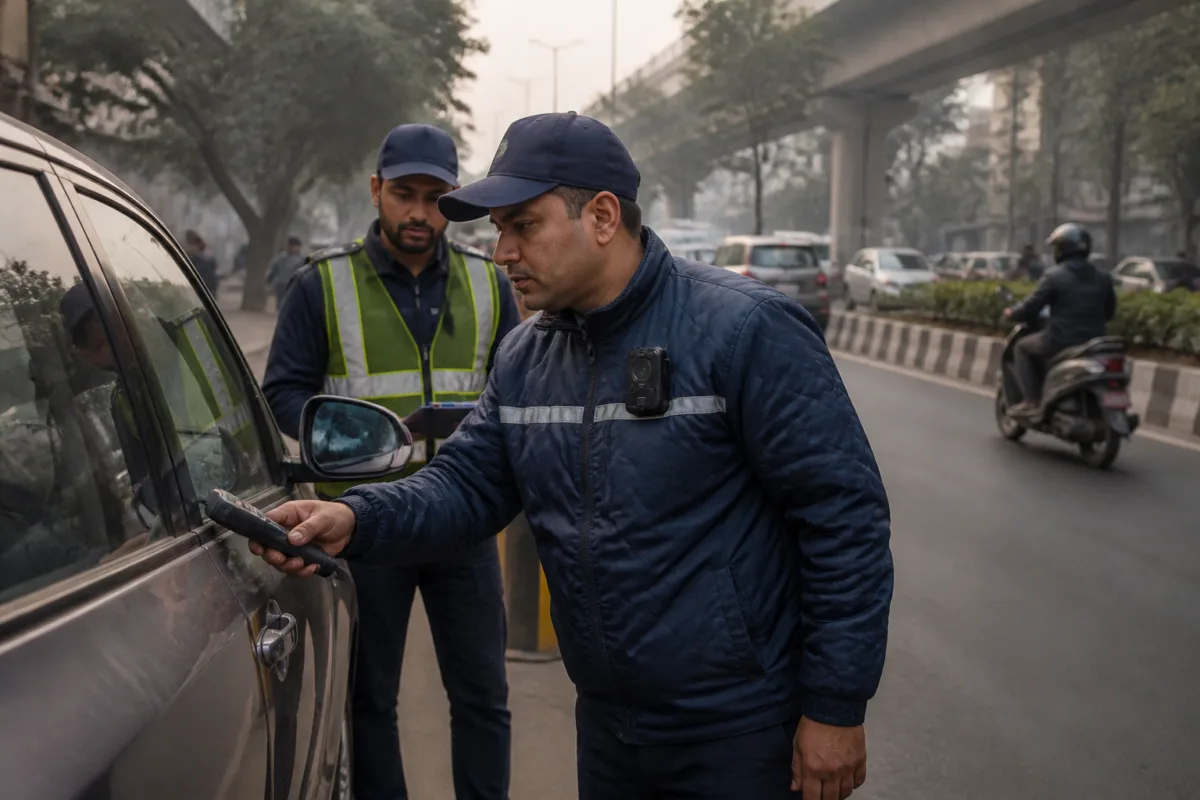
Delhi air pollution teams will be equipped with 100 body-worn cameras to record enforcement activity and transmit live footage to the city’s Integrated Command and Control Centre, as the government moves to strengthen transparency and accountability during pollution-control operations.
The cameras will be assigned to one member of each of 100 enforcement teams. Officials have said the devices will have to remain switched on while teams are carrying out field action. The system is intended to create a real-time record of inspections, enforcement drives and responses to complaints related to pollution.
According to the report, the cameras will be used when teams act on pollution-related complaints, inspect different locations and take action against activities that violate pollution-control rules. Live footage from the field will be visible to officials monitoring operations at the Integrated Command and Control Centre, allowing them to track team movements and enforcement activity as it happens.
The Delhi government expects the arrangement to reduce the scope for negligence during inspections and enforcement. It also aims to make the handling of complaints more accountable by enabling senior officials to monitor how field teams conduct operations and respond to reported violations.
The move comes as Delhi relies on joint enforcement teams to monitor pollution-control compliance across the capital. More than 300 such teams are currently deployed under the name ‘Vayu Rakshak’. The teams include personnel from the Delhi Pollution Control Committee, the Municipal Corporation of Delhi and the Civil Defence.
These teams are responsible for round-the-clock monitoring of pollution-control rules and action in cases of violations. The proposed camera system will initially cover 100 teams, meaning the equipment will not immediately be assigned across the entire Vayu Rakshak network. The report does not specify the procurement cost, deployment date or the rules governing storage and access to the recorded footage.
The live-monitoring model places the enforcement process within Delhi’s wider command-and-control infrastructure. Its immediate administrative purpose is to give officials a direct view of field operations rather than relying only on written reports or post-action accounts. The government’s stated focus is transparency, oversight and accountability during pollution-control enforcement.
The next step is the purchase and allocation of the 100 body-worn cameras. Once deployed, the cameras are expected to be used during complaint responses, inspections and enforcement campaigns by the designated Vayu Rakshak teams.

