


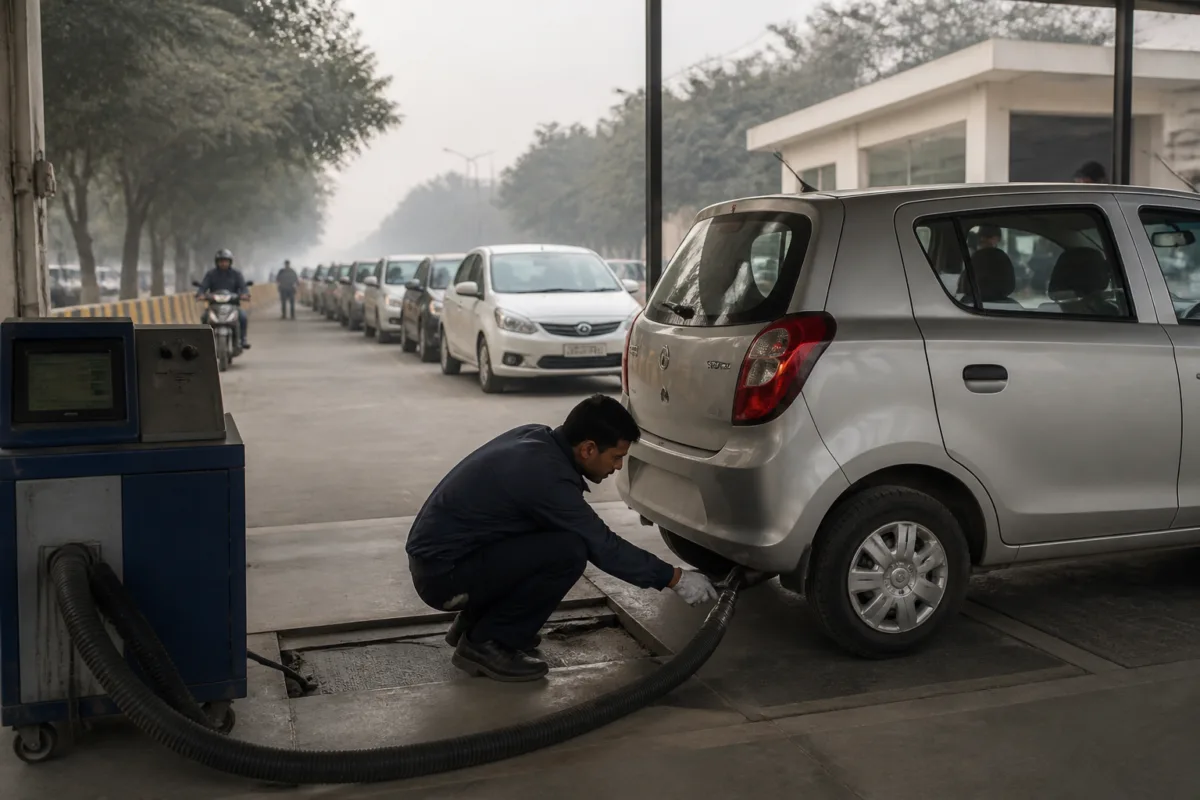
Delhi residents may face closer checks of vehicle Pollution Under Control Certificates (PUCC) amid worsening post-Diwali air pollution, according to a report by Jagran – New Delhi. The report says enforcement has become stricter and that artificial intelligence-enabled cameras are being used at 500 locations to check vehicle documents, but the supplied material does not include a Delhi government, transport department or traffic police statement confirming those figures.
The report also says vehicles from other states below the BS-VI emission standard are barred from entering Delhi. It does not specify the order, notification, dates, enforcement agency or scope of the restriction. These details are important because vehicle restrictions in the National Capital Region can depend on pollution levels, vehicle category, fuel type and directions issued by competent authorities.
A valid PUCC certificate is required for vehicles operating on public roads and is issued through authorised pollution testing centres, the report says. It describes the certificate as evidence that a vehicle’s emissions are within prescribed limits. The report further states that the certificate is generally valid for one year, although vehicle owners should confirm the applicable validity period and testing requirements through the official transport system or an authorised centre.
The report advises motorists to have their vehicles checked before visiting a testing centre. Suggested checks include cleaning or replacing a dirty air filter, examining spark plugs in petrol vehicles, and inspecting fuel injectors in diesel and compressed natural gas vehicles. It also recommends checking engine oil and the catalytic converter, both of which can affect emissions when they are not functioning properly.
According to the report, contaminated or poor-quality fuel may increase emissions, while warming up a vehicle before testing can help the catalytic converter reach its operating temperature. These are maintenance suggestions rather than a substitute for the official emissions test. A vehicle’s compliance is determined by the authorised testing process and the applicable emission limits.
The practical effect of any intensified PUCC enforcement would depend on how checks are conducted, whether camera systems are linked to transport databases, and what penalties or follow-up procedures are applied to vehicles found without valid certificates. The supplied report does not provide details on the locations of the alleged camera network, the number of enforcement notices issued, the fine amount, or the authority responsible for operating the system.
Delhi’s air-quality response frequently combines measures aimed at construction activity, industrial emissions, road dust and vehicle pollution. Vehicle documentation checks are one part of that system, but their public impact depends on clear rules, reliable testing centres and accessible information for motorists. Confirmation from the Delhi Transport Department, traffic police or another competent authority is still required for the specific enforcement claims in this report.

