


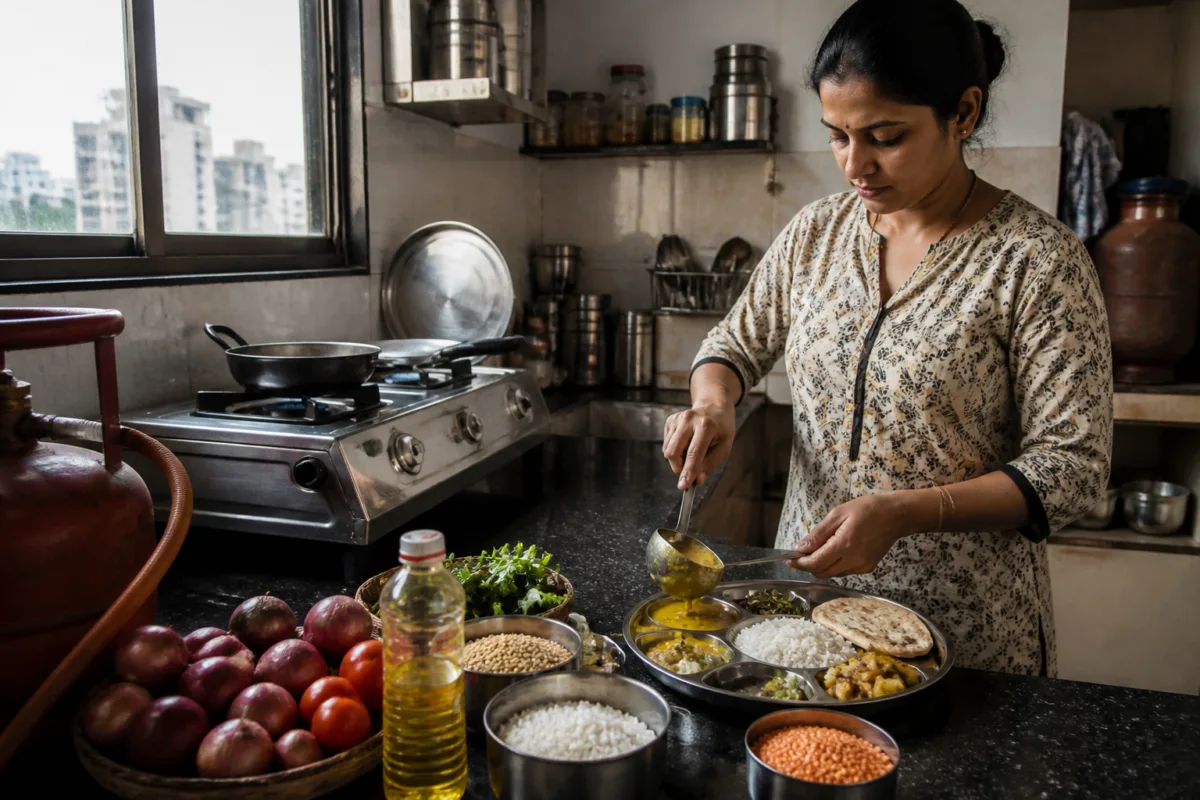
The cost of a home-cooked vegetarian thali rose 12 per cent year-on-year in October to Rs 31.2, as higher prices of onion, tomato, rice, vegetable oil and LPG increased household food expenses, according to Crisil’s monthly Roti Rice Rate report cited by PTI.
The cost of the vegetarian meal stood at Rs 27.8 in October last year. On a month-on-month basis, it increased 1 per cent during October, the report said.
The increase was led by onion prices, which more than doubled year-on-year to Rs 53 per kg. Crisil attributed the rise to a 5-6 per cent decline in rabi production, depleted inventories and delayed kharif arrivals, which generally begin in October.
Tomato prices rose 6 per cent year-on-year because arrivals from key producing regions in southern and western India were delayed. Festive demand also contributed to the increase, according to the report.
Rice prices increased 10 per cent year-on-year. The report linked the rise to a 40 per cent decline in October arrivals caused by delayed harvesting, along with market speculation about a shortage of fine and super-fine varieties.
Vegetable oil prices rose 13 per cent year-on-year, supported by geopolitical uncertainty and concerns about the effect of El Nino conditions on palm oil production. The increase adds to the cost of a basic meal prepared at home, particularly for households that rely on cooking oil, cereals and vegetables as regular staples.
The cost of a non-vegetarian thali rose at a slower pace of 9 per cent over the same period, increasing from Rs 54.4 to Rs 59.2. Broiler prices, which account for nearly half the cost of the non-vegetarian meal, rose 5 per cent year-on-year, limiting the overall increase.
On a month-on-month basis, the non-vegetarian thali became 1 per cent cheaper in October. Broiler prices declined 2 per cent during the month because of weaker demand during the festive period, more than offsetting increases in the prices of other ingredients, Crisil said.
The report highlights how household food costs are shaped by conditions across the supply chain, from crop production and harvesting schedules to inventory levels, market arrivals and global edible-oil conditions. For urban households, these changes are reflected directly in the cost of preparing everyday meals, even when the overall change in a single ingredient varies by market and season.
Crisil’s report did not provide a forecast for the next month or specify how long the pressure on individual food items would continue. Its October assessment was based on the year-on-year and month-on-month movement in the ingredients used to calculate the vegetarian and non-vegetarian thali costs.

