


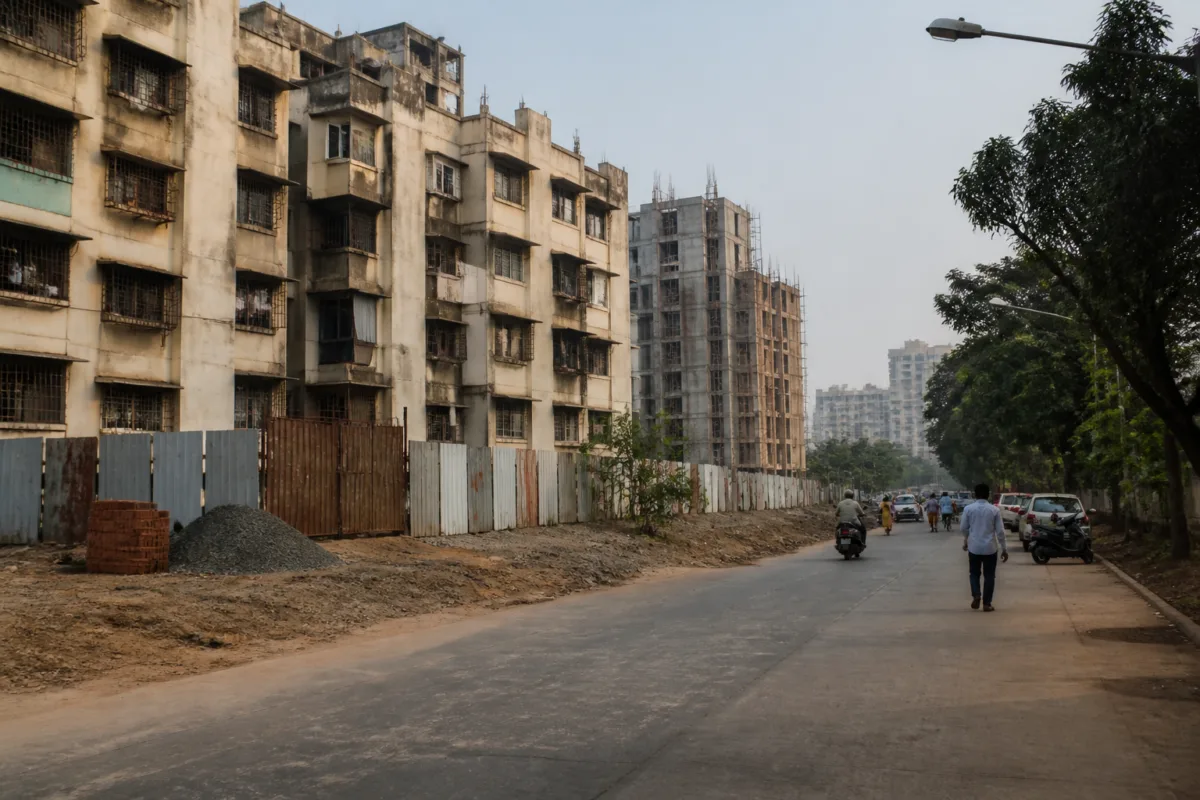
A proposal to place redevelopment approvals for CIDCO-built buildings in Navi Mumbai entirely under CIDCO has been advanced by Shiv Sena (Eknath Shinde) Navi Mumbai district chief Kishor Patkar, who has also sought Special Planning Authority status for CIDCO for cluster redevelopment schemes.
Patkar said construction permissions for the redevelopment of buildings built by CIDCO should be handled by CIDCO itself, rather than requiring housing societies to depend on multiple departments of the Navi Mumbai Municipal Corporation. He argued that CIDCO owns many of the buildings and, in several locations, the underlying land, making it the more appropriate agency to manage planning and construction permissions for their redevelopment.
The proposal relates to a large stock of older CIDCO-built buildings in Navi Mumbai. According to Patkar, redevelopment currently involves intervention from several municipal departments, which can make the approval process more complicated. He has called for the planning and building-permission responsibilities for these buildings to be assigned to CIDCO.
Patkar has also sought SPA status for CIDCO to enable it to plan and approve cluster redevelopment projects. Under the proposal, redevelopment and cluster planning would be handled through a single authority. The demand is intended to reduce what he described as municipal interference in the redevelopment process and create a more streamlined approval mechanism.
The proposal also raises questions about the division of responsibility between the planning authority and the civic body. Patkar has said that development charges should continue to be deposited with the municipal corporation because the civic body would remain responsible for roads, water supply, sewage and other urban services.
That distinction would leave CIDCO with responsibility for planning and construction permissions while retaining the municipal corporation’s role in providing and maintaining essential infrastructure. The proposal therefore seeks a change in who approves redevelopment without transferring the full civic-service burden away from the municipal authority.
Patkar has further alleged that local elected representatives sometimes exert pressure to select particular developers during redevelopment. He said the decision on which developer to appoint should be taken by the concerned housing societies and should not be influenced by municipal councillors.
The demand places the redevelopment decisions of housing societies at the centre of the proposed process. While the societies would continue to choose their developers, CIDCO would be expected to provide the planning and construction approvals under the suggested arrangement.
The reported proposal does not indicate that any formal government decision has yet been taken to grant CIDCO SPA status or transfer redevelopment permissions. It is a demand for an administrative change covering CIDCO-built buildings and cluster redevelopment schemes in Navi Mumbai. Any change would need to define the respective approval, revenue and infrastructure responsibilities of CIDCO, the municipal corporation and housing societies.

