


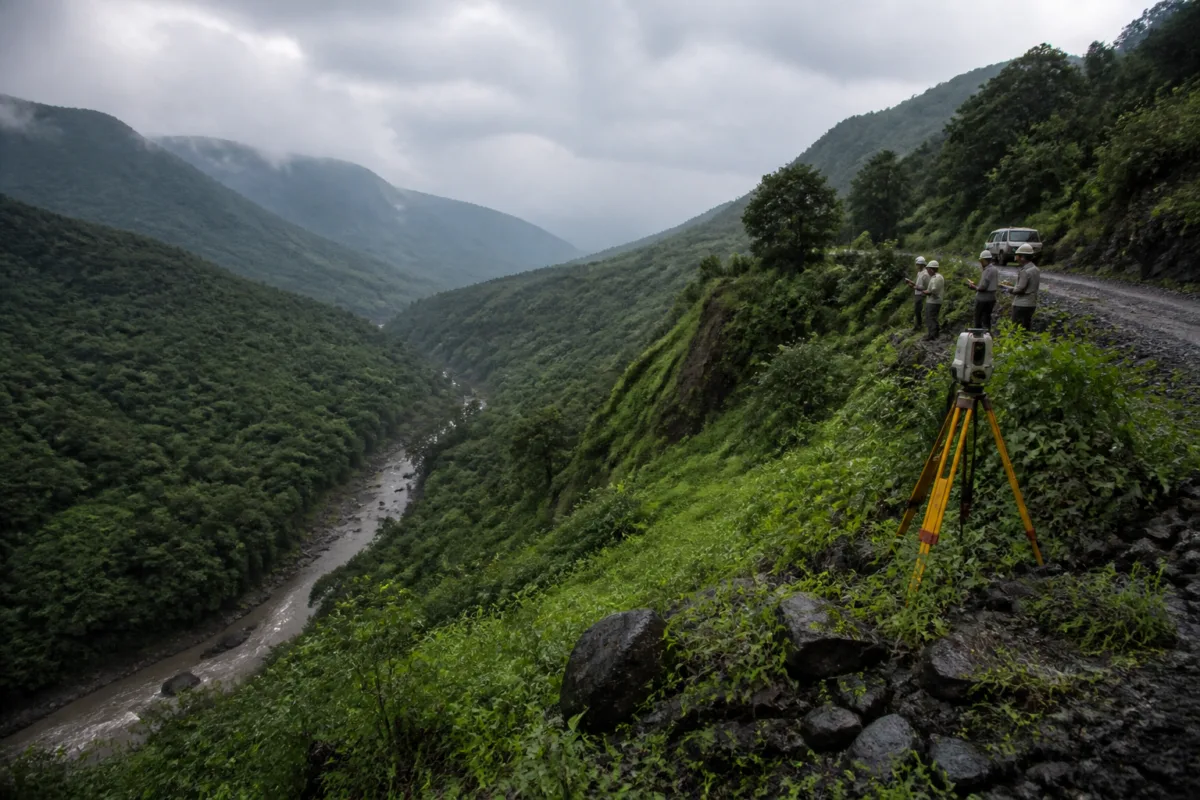
A proposed cost revision for Adani Green Energy’s 1,500 MW hydropower project in Maharashtra’s Satara district has triggered a government inquiry because it reduces the project estimate from Rs 5,675 crore to Rs 56.75 crore and, consequently, the reported wildlife conservation payment from Rs 227 crore to Rs 2.27 crore. The episode places the administrative mechanics of environmental compliance at the centre of a project that would be located in a sensitive landscape linked to the Sahyadri Tiger Reserve.
The issue is not simply whether a company can revise the estimated cost of a project. It is whether a change in the cost base can automatically alter a conservation payment calculated as a proportion of that cost, and whether the authorities independently tested the revised figure before accepting it. The supplied report says the Union Ministry of Environment, Forest and Climate Change ordered the Maharashtra forest department on 6 November to conduct a priority inquiry after a complaint about the revision.
Adani Green Energy reportedly submitted an affidavit to the Maharashtra forest department on 8 September seeking approval for the revised project cost of Rs 56.75 crore. An earlier proposal submitted for environmental clearance on 11 February 2025 had stated the project cost as Rs 5,675 crore. The difference between the two figures is one hundredfold, making the revised estimate the central factual and administrative question in the case.
According to the report, the state wildlife board had required the company to deposit Rs 227 crore for the Sahyadri Tiger Reserve. The payment was linked to a rule under which projects in environmentally sensitive areas may be required to contribute up to 4% of project cost for wildlife conservation and protection. After the revised estimate was accepted by the forest department, the reported payment fell to Rs 2.27 crore. The report also refers to the amount as approximately Rs 2.275 crore in the complaint.
That arithmetic explains why the dispute has moved beyond a disagreement over accounting. When a conservation contribution is linked to a project’s declared cost, the valuation of the project becomes part of the environmental compliance framework. A change in valuation therefore affects not only the company’s financial obligation but also the resources available for conservation measures associated with the project. The supplied material does not establish whether the revised estimate was a typographical or administrative error, a legitimate restructuring of the project cost, or a calculation supported by a new technical assessment. That is precisely what the inquiries are expected to clarify.
The complaint was filed by Rohan Bhate, described in the report as Satara district’s honorary wildlife warden. He submitted complaints through the Prime Minister’s grievance portal and the Maharashtra government’s Aaple Sarkar portal on 30 October. His stated concern was that a project cost reduced from Rs 5,675 crore to Rs 56.75 crore required examination because the revised figure was one hundred times lower than the original estimate.
The Union ministry’s intervention also illustrates the division of responsibility in India’s environmental governance system. The ministry reportedly told the state’s principal chief conservator of forests that the primary responsibility for wildlife protection, conservation and management lies with the state or Union Territory government. It directed the state authorities to investigate the matter on priority, take appropriate action and send the complainant a direct response, with a copy to the ministry.
A separate state-level process was also set in motion. Following a complaint to the chief minister, the deputy director of the Koyna Wildlife Sanctuary was instructed on 5 November to investigate the matter and proceed according to the rules. The involvement of both the state forest administration and the sanctuary-level authority means that the case is being examined through more than one administrative channel, although the supplied report does not say whether either inquiry has reached a conclusion.
The institutional sequence matters because environmental approvals are rarely determined by one department alone. A project proposal can involve the project proponent, the state forest department, wildlife authorities, environmental clearance procedures and, where protected landscapes or wildlife corridors are implicated, conditions intended to offset or manage ecological impacts. In this case, the conservation payment appears to have been tied to a declared project cost. The strength of the system therefore depends on how that cost is scrutinised, recorded and amended.
The available figures reveal the scale of the administrative consequence. The original project estimate was Rs 5,675 crore. The revised estimate is Rs 56.75 crore. The related conservation payment moved from Rs 227 crore to Rs 2.27 crore. On the figures reported, a 100-fold reduction in the project estimate produced a similar reduction in the payment obligation. The report says the complainant believes the change effectively created a concession of about Rs 225 crore, although that characterisation remains part of the complaint and has not been established as an official finding.
The report attributes the revised cost request to an affidavit submitted by Adani Green Energy and says the Maharashtra forest department approved the revised cost before the complaint prompted the subsequent inquiries. It does not provide the affidavit’s explanation for the reduction, a detailed project cost breakdown, the text of the forest department’s approval, or a response from the company to the allegations. Those documents will be important to determine whether the two figures refer to comparable scopes of work or whether the lower figure resulted from an error in the filing or approval process.
The case also raises a broader question about how conservation finance is administered around large infrastructure projects. A payment calculated as a percentage of cost is straightforward only when the cost estimate is stable, transparent and independently reviewable. If the estimate changes substantially after an environmental or wildlife condition has been imposed, authorities need to establish which version governs, why the change is justified and whether the revised amount continues to reflect the ecological risk associated with the project. The supplied material records the inquiry but does not establish what standards were applied when the revised estimate was accepted.
For citizens, the immediate issue is not only the proposed hydropower capacity but the credibility of the conditions attached to development in ecologically sensitive areas. The project is reported to be located in Satara district and associated with the Sahyadri Tiger Reserve. Where public agencies require conservation payments, those payments are intended to support protection, conservation and management. A sharp change in the obligation can therefore invite scrutiny of both the project’s financial disclosures and the state’s verification process.
The central facts now confirmed by the supplied report are that two substantially different project costs were submitted, the reported conservation payment changed accordingly, a complaint was filed, and the Union environment ministry and Maharashtra authorities ordered inquiries. What remains unresolved is why the estimate changed, whether the revised figure is technically and administratively valid, whether the forest department followed the applicable procedure, and what final conservation payment should apply. The next significant development will be the findings and responses issued by the state forest authorities, the Koyna Wildlife Sanctuary administration and the Union ministry.

